
Building site of I. G. Farben — History & Facts
When did color learn to lie? In this unsettling landscape, hues of industry and decay intertwine, revealing a truth painted over with shades of optimism. The vibrant palette contrasts sharply with the shadows of mortality that linger in the corners of our perception. Look to the foreground where strong lines of steel rise, their angular forms drawing your eye upward toward the construction site. Notice how the bright reds and yellows of machinery clash against the muted grays of concrete, creating a visual tension that echoes the conflicting narratives of progress and destruction.
The way light fractures between the structures hints at a deeper fragility, reminding us that what is built is often as ephemeral as what is destroyed. In the background, you might catch a glimpse of workers, their figures dwarfed by the industrial giants they seek to erect. The juxtaposition of human scale against this monumental construction highlights an unsettling truth: the relentless march of industry may overshadow the very lives it employs. The painting whispers of the lives at stake, the dreams built on the promise of progress, and the ominous shadow of what lies ahead, a duality rooted in the heart of human endeavor. Created in 1928, this work emerged during a time of immense change in Europe, as the echoes of World War I still reverberated in the socio-political landscape.
At this point, Kowarzik was navigating her artistic voice amidst the rise of modernism, reflecting the anxieties of a continent grappling with the consequences of industrialization. Each brushstroke captures not just a moment in time, but a critical commentary on the era's aspirations and fears.
More Artworks by Pauline Kowarzik
Browse all →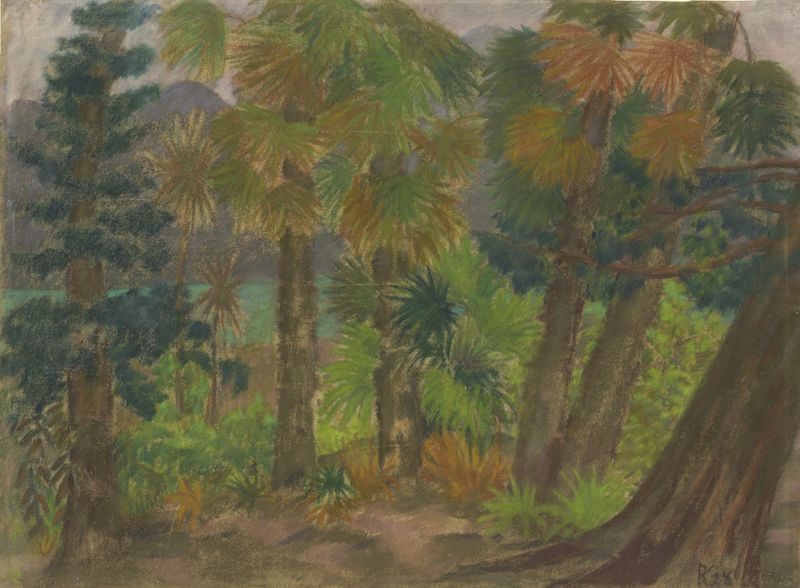

More Architecture Art
Browse all →
The statue of Liberty
Frédéric Auguste Bartholdi

View of Houses in Delft, Known as ‘The Little Street’
Johannes Vermeer

View of Houses in Delft, Known as ‘The Little Street’
Johannes Vermeer

The Cathedral in Rouen. The portal, Grey Weather
Claude Monet

The yellow house
Vincent van Gogh

The Church in Auvers-sur-Oise, View from the Chevet
Vincent van Gogh