California Cliffs — History & Facts
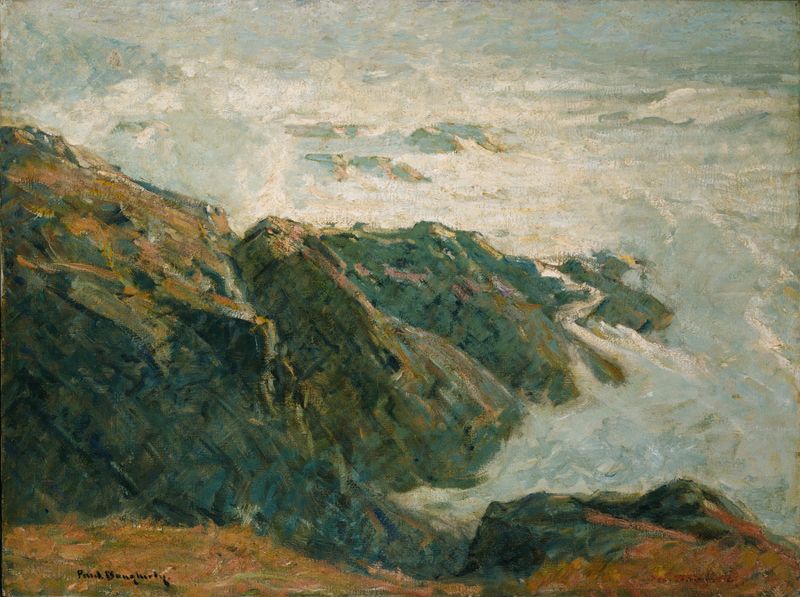
It is within the embrace of nature that we find hope, a glimmer of possibility against the backdrop of life’s challenges. Look to the left at the jagged contours of the cliffs, where shadows dance under the warm embrace of the setting sun. Notice how the artist blends shades of ochre and blue, creating a vibrant dialogue between land and sky. The interplay of light across the textures of the rock makes the scene almost tactile, inviting viewers to reach out and feel the ruggedness of each stroke.
The horizon stretches in a delicate gradient, guiding the eye toward a promise of what lies beyond. Amidst this beauty lies a poignant contrast: the stability of the cliffs against the ephemeral nature of the twilight sky. The warm tones exude an inviting warmth, yet the sharp edges evoke a sense of fragility. Each wave crashing below further amplifies this tension, a reminder that beauty often exists alongside turmoil.
This duality encapsulates the human experience, where hope and uncertainty intermingle in our journeys. In the years following 1935, the artist sought refuge in the coastal landscapes of California, a period marked by personal reflection amidst the broader currents of modernism in America. As the world grappled with the aftermath of the Great Depression, Dougherty's work evolved, channeling a blend of realism and emotional resonance that would resonate with an audience yearning for solace in nature. This painting stands as a testament to that quest for hope, shaped by the artist’s own experiences and the world around him.