
Camarda — History & Facts
In a world where grief shapes our existence, how do we hold onto the echoes of those we’ve lost? Look to the center of the canvas, where vibrant strokes of crimson clash with somber blues, creating a visceral dialogue that draws the viewer into a whirlwind of emotion. The texture of the paint, thick and impassioned, reveals the artist’s hand at work, crafting a sense of urgency and sorrow. Notice how the contrasting colors pulsate against one another, each stroke imbued with a sense of weight, inviting reflection on the fragility of life and memory. The juxtaposition of light and shadow serves as a poignant reminder of the duality of grief: the brightness of love lost intertwined with the darkness of absence.
Small, intricate details—the subtle curves of the brushwork—hint at a personal narrative, possibly a tribute to a loved one. The chaotic yet deliberate composition mirrors the tumultuous journey of loss and remembrance, urging viewers to confront their own stories of love and pain. In 1918, Robert Russ found himself amidst the echoes of a world reshaped by war, grappling with his own experiences of loss and separation. During this time, he painted Camarda, channeling the collective grief of a generation while exploring his personal reflections on love and mortality.
The aftermath of conflict loomed large, influencing the emotional depth and expressive technique inherent in his work, as he sought to articulate the complexities of human emotion in a time of upheaval.
More Artworks by Robert Russ
Browse all →
Helgoland
Robert Russ
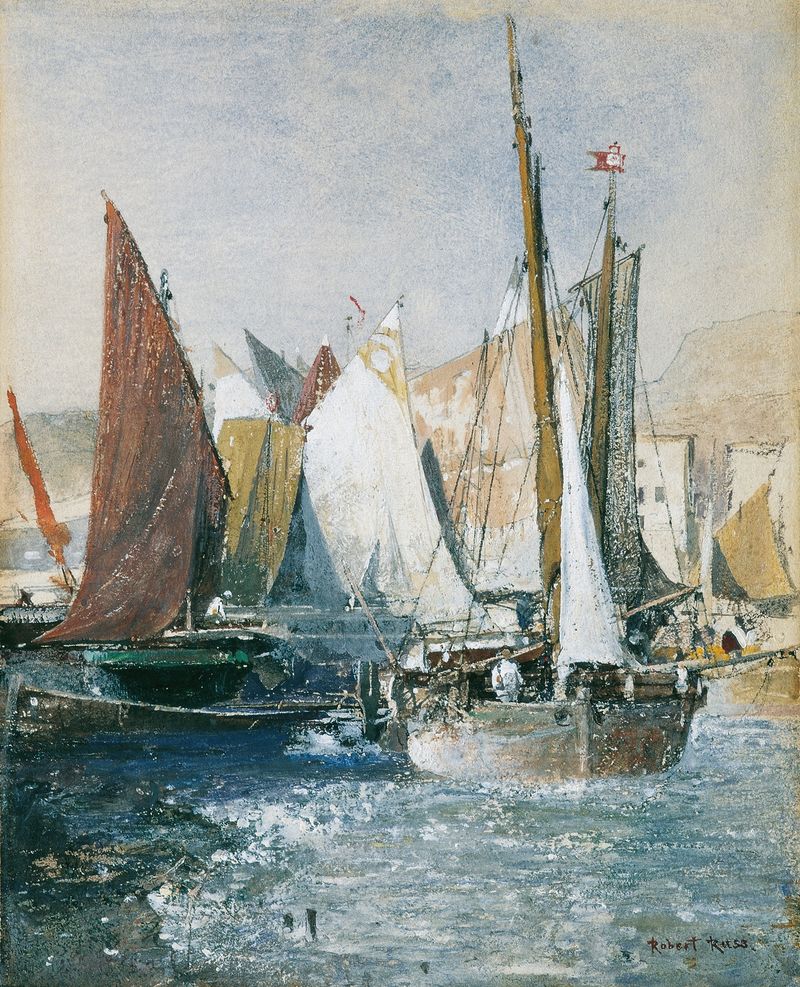
Segelboote
Robert Russ
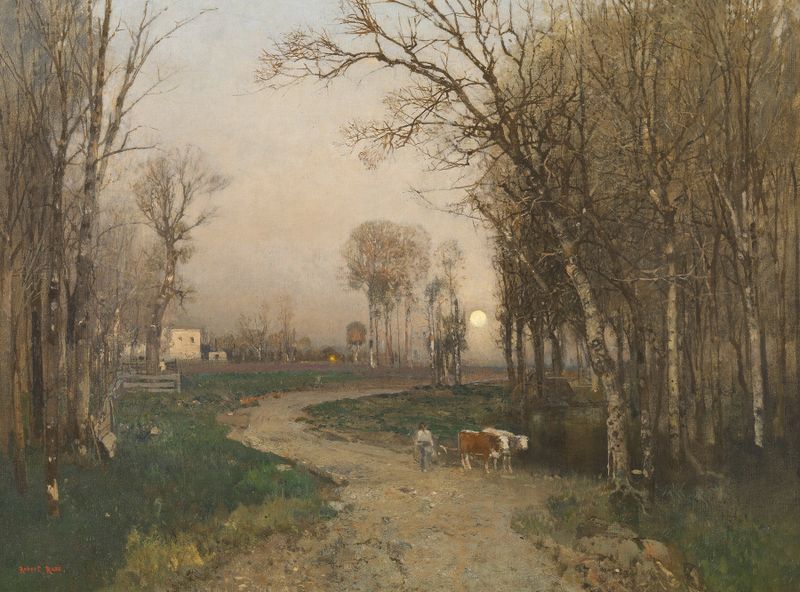
Penzinger Au
Robert Russ

Aus Dürnstein
Robert Russ

Lake Garda, Arco
Robert Russ

Partie aus dem Val Lagarina
Robert Russ

The Harbour of Riva on Lake Garda
Robert Russ

Punta San Vigilio, Lago di Garda
Robert Russ
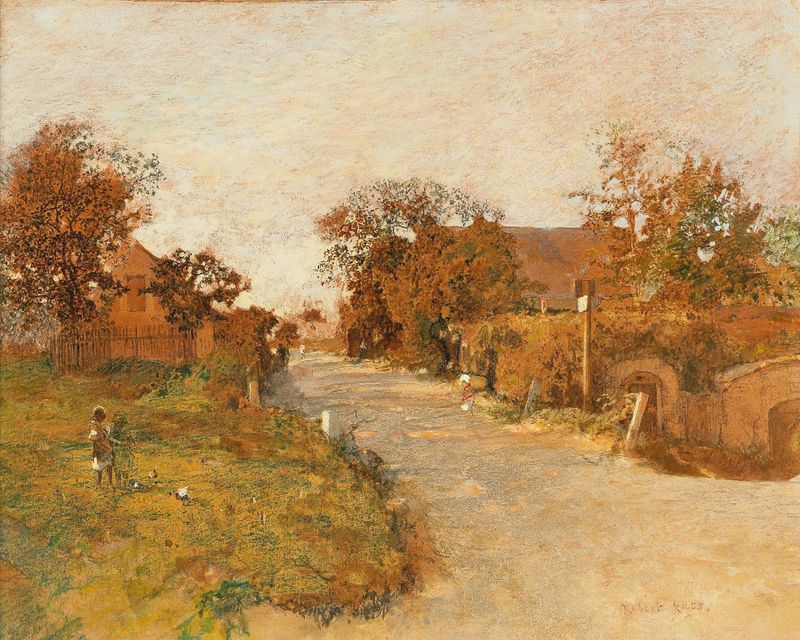
Tierstudie – Motiv aus Feldsberg
Robert Russ

Hof der Fürstenburg in Burgeis
Robert Russ





