Camp at Pungarehu — History & Facts
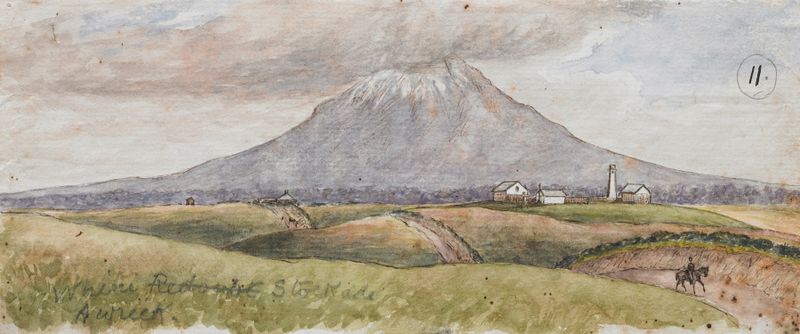
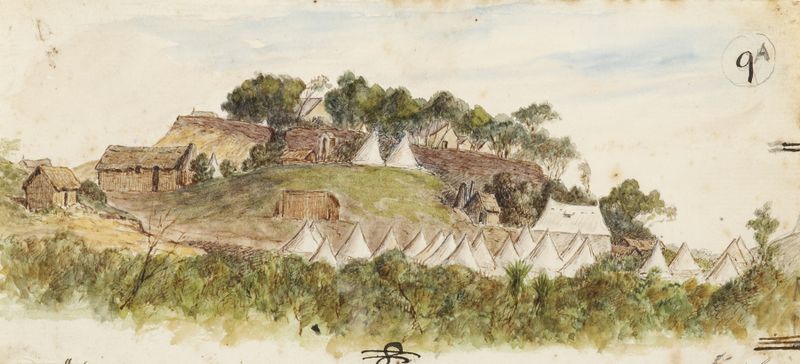
In the hushed stillness of nature, silence can speak louder than words. It envelops the viewer, inviting contemplation of moments both profound and intimate. Look to the foreground, where the gentle curve of the land leads your gaze toward the distant mountains, softened by the morning haze. The muted colors of the landscape—a palette of greens and browns—draw you in, while the dappled sunlight plays upon the tents of the camp, hinting at the presence of life within.
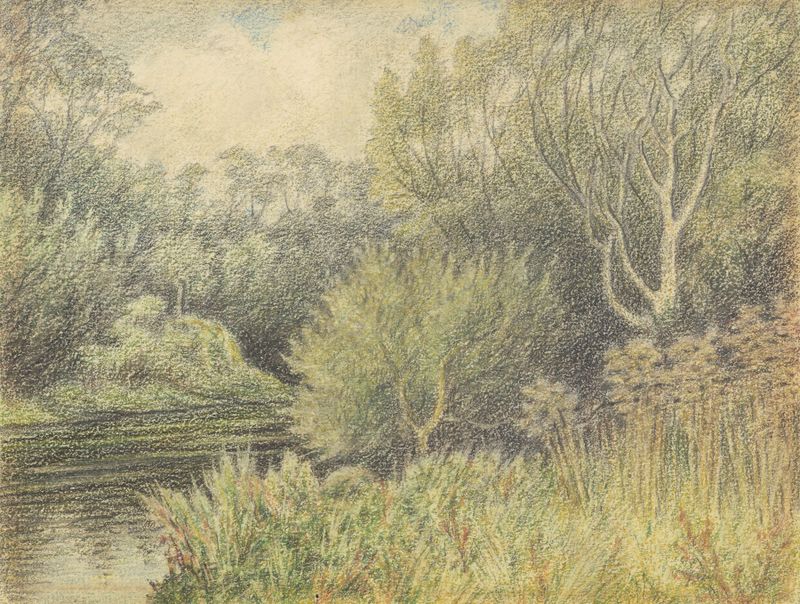
Notice how the brushwork mimics the delicate rustle of leaves and the quiet murmur of a stream, creating a sense of tranquility that contrasts with the underlying stories waiting to unfold. Each detail adds layers to the narrative: the angled tents stand ready but unoccupied, evoking a sense of anticipation and solitude. The towering trees loom like silent sentinels, embodying the weight of stillness amidst the vibrancy of life. This juxtaposition between the prepared camp and the absence of activity reflects the fragility of existence and the ephemeral nature of human endeavors in the vastness of the world. In 1881, George Sherriff painted this serene landscape while residing in New Zealand.
At this time, he was grappling with his position as an artist amid a growing interest in capturing the natural beauty of the region. Influenced by the Impressionist movement, he sought to portray the emotion of a place, emphasizing the subtle beauty and silent stories of the New Zealand wilderness.