Canal Towpath (At New Hope) — History & Facts
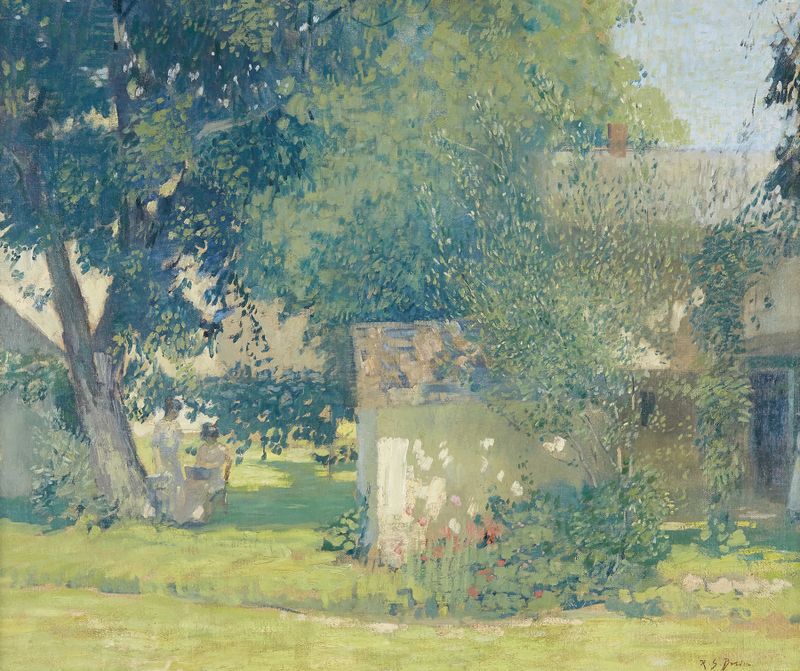
What secret hides in the quiet of the canvas? In Canal Towpath (At New Hope), serenity envelops the viewer, inviting a moment of reflection amidst the gentle beauty of nature. Look to the left at the serene canal, its surface mirroring the soft hues of the sky above. The muted greens of the trees frame the path, guiding the eye toward the figures strolling leisurely. Notice how the dappled sunlight filters through the foliage, casting playful shadows on the ground.
The subtle brushwork captures the stillness of the moment, allowing the viewer to breathe in the tranquility of the scene. An emotional tension simmers beneath the surface of this idyllic landscape. The path, while inviting, suggests a journey—one that may be both literal and metaphorical. The figures, small and almost insignificant against the grandeur of nature, evoke feelings of solitude and contemplation.
Each element, from the rippling water to the rustling leaves, seems to whisper a story of connection to the land and to oneself. In 1925, Rae Sloan Bredin painted this work during a time when American art was shifting towards a greater appreciation for natural landscapes. Living in New Hope, Pennsylvania, a community known for its artistic vibrancy, Bredin captured the essence of his surroundings while navigating his own artistic path. This period was marked by a burgeoning interest in capturing the serene beauty of everyday life, contrasting with the tumultuous events shaping the world beyond his canvas.