Castel Fusano — History & Facts
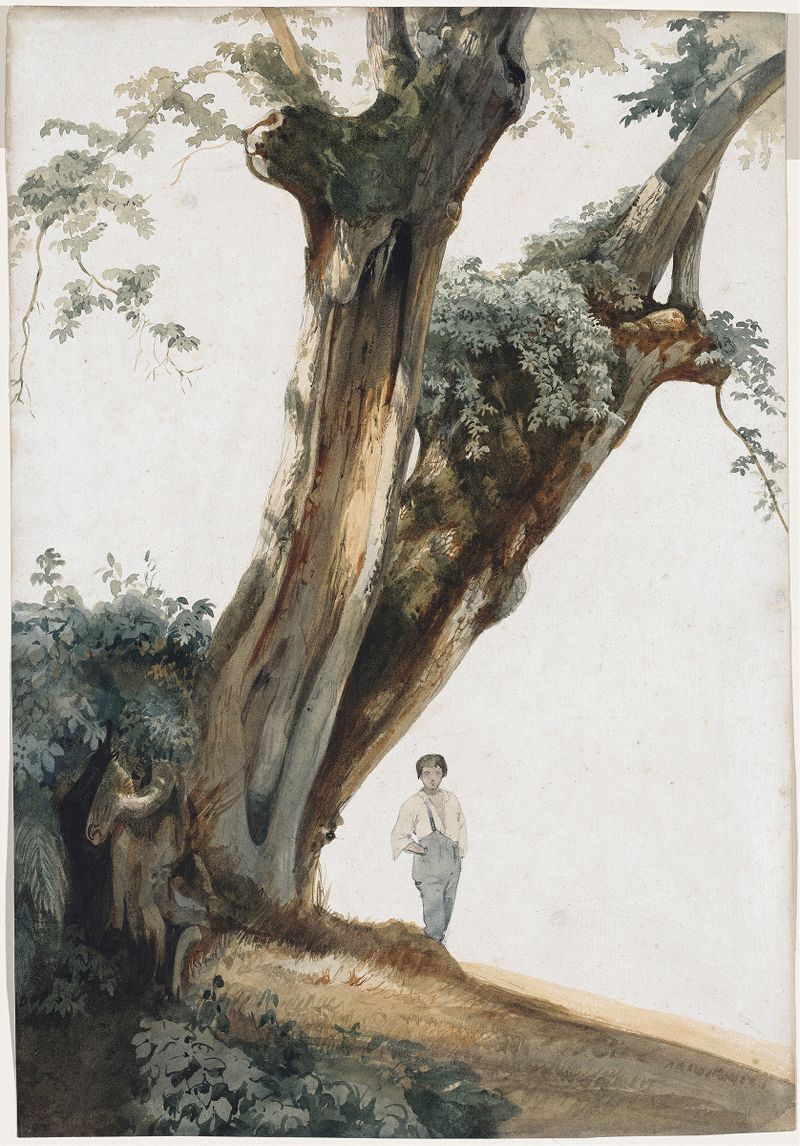
Can beauty exist without sorrow? In Giovanni Costa's work, Castel Fusano, the delicate interplay of light and shadow evokes a landscape steeped in fragile beauty, inviting contemplation of both joy and melancholy. Look to the foreground, where the gentle curve of the path invites you to stroll into the scene, leading the eye toward the serene waters reflecting the sky. Notice how the soft, muted greens and earthy tones create a sense of tranquility, contrasting with the vivid blue of the water, which seems to pulse with life. Wisps of clouds float languidly above, their reflections shimmering like whispers on the surface, while the distant castle looms, its stoic presence suggesting both history and mystery. In this painting, the interplay of light and dark becomes a metaphor for life’s transience.
The bright highlights on the water's surface signify ephemeral joy, while the shadows cast by the trees hint at the inevitable sorrows that accompany beauty. The castle, a symbol of strength, stands vulnerable against nature’s elements, prompting reflections on the fragility of human creations and emotions alike. Each brushstroke reveals a tension between stability and impermanence, urging viewers to consider the delicate balance of existence. Costa created this piece during a time of personal exploration and artistic development in the late 19th century.
Working in Italy, he was influenced by the Romantic movement, which celebrated nature's sublime beauty and the complexities of human emotion. Amidst a rapidly changing artistic landscape, he sought to blend realism with an emotional depth, capturing the essence of fleeting moments and inviting viewers to reflect on their own experiences of beauty and sorrow.