
Castle And Bridge Of St. Angelo, Rome — History & Facts
Memories linger in the stillness of ancient stones, whispering truths only time can reveal. The architecture of a moment transcends the ages, inviting us to reflect on our own pasts intertwined with the passage of history. Look to the center, where the majestic Castle of St. Angelo rises against a backdrop of soft, pastel skies.
Notice the delicate brushstrokes that bring life to the fortress, each nuance capturing the interplay of light and shadow. The bridge gracefully leads the eye, its arching form elegantly connecting the two sides of the canvas, while figures in motion add a sense of scale and human presence amid the grandeur. Delve deeper into the contrasts at play: the sturdy stone of the castle represents permanence, while the flowing river beneath hints at the ephemeral nature of life. The distant figures symbolize fleeting moments, each lost in their individual journeys, yet unified by the timelessness of their surroundings.
This juxtaposition evokes a quiet tension between the eternal and the transient, allowing the viewer to ponder their own memories and the legacies they leave behind. David Roberts painted this scene in 1860 while he was residing in London, having recently returned from extensive travels throughout Europe and the Middle East. During this period, the artist was deeply influenced by the Romantic movement, which emphasized emotion and individual experience, as well as a fascination with historical sites. His work reflects a desire to capture the essence of places, inviting viewers to explore the layers of time and memory embedded within each landscape.
More Artworks by David Roberts
Browse all →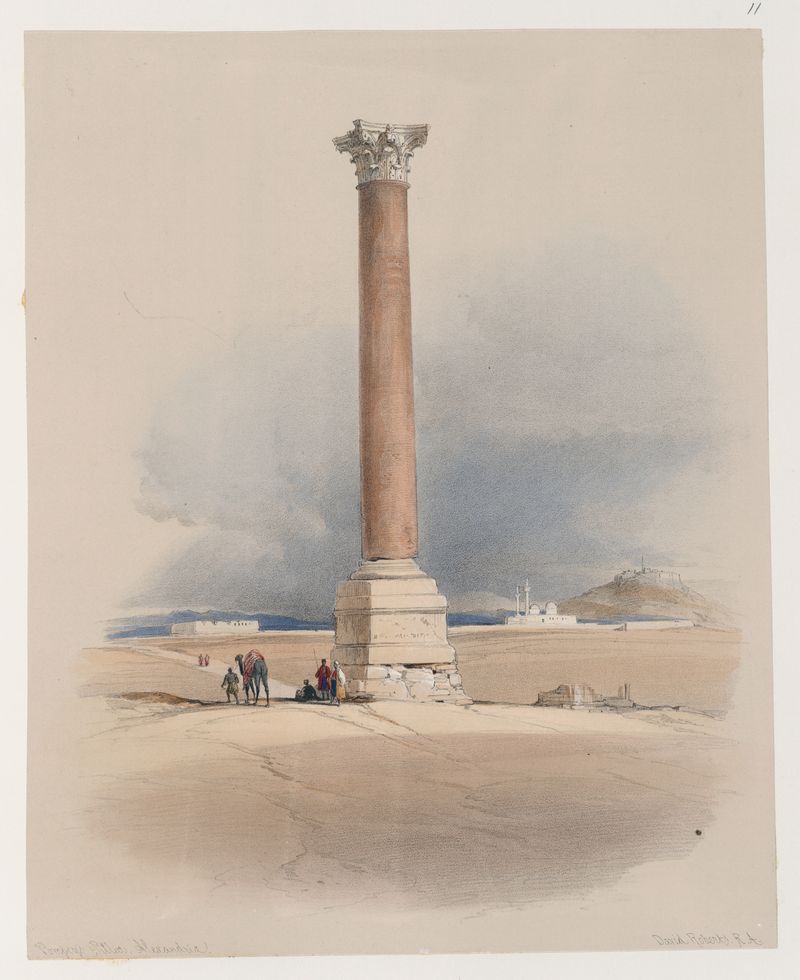
Pompey’s Pillar, Alexandria.
David Roberts

Approach to the Fortress of Ibrim.
David Roberts

Karnac [Karnak]. Nov. 29th, 1838.
David Roberts
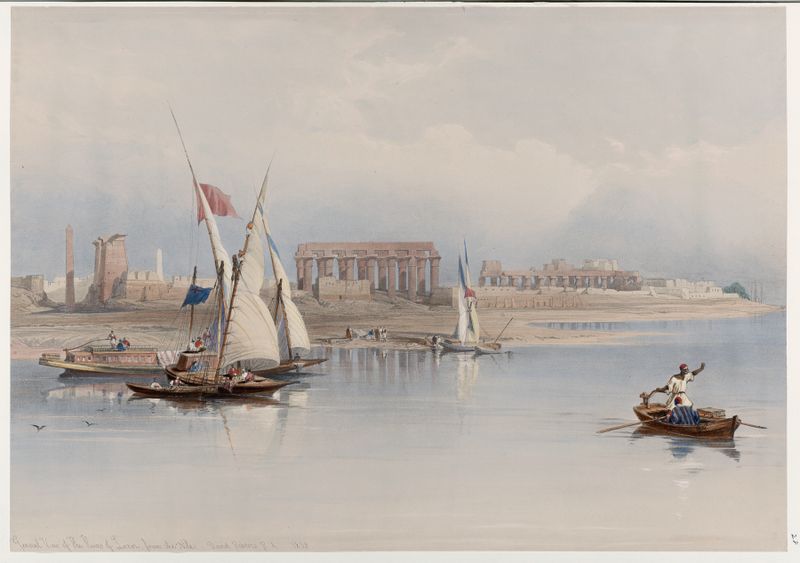
General view of the ruins of Luxor, from the Nile. 1838.
David Roberts

Statues of Memnon at Thebes, during the inundation.
David Roberts

Entrance to the tombs of the kings of Thebes. Bab-el-Malouk [Bîbân al-Mulûk].
David Roberts

The Fortress of the Alhambra, Granada
David Roberts
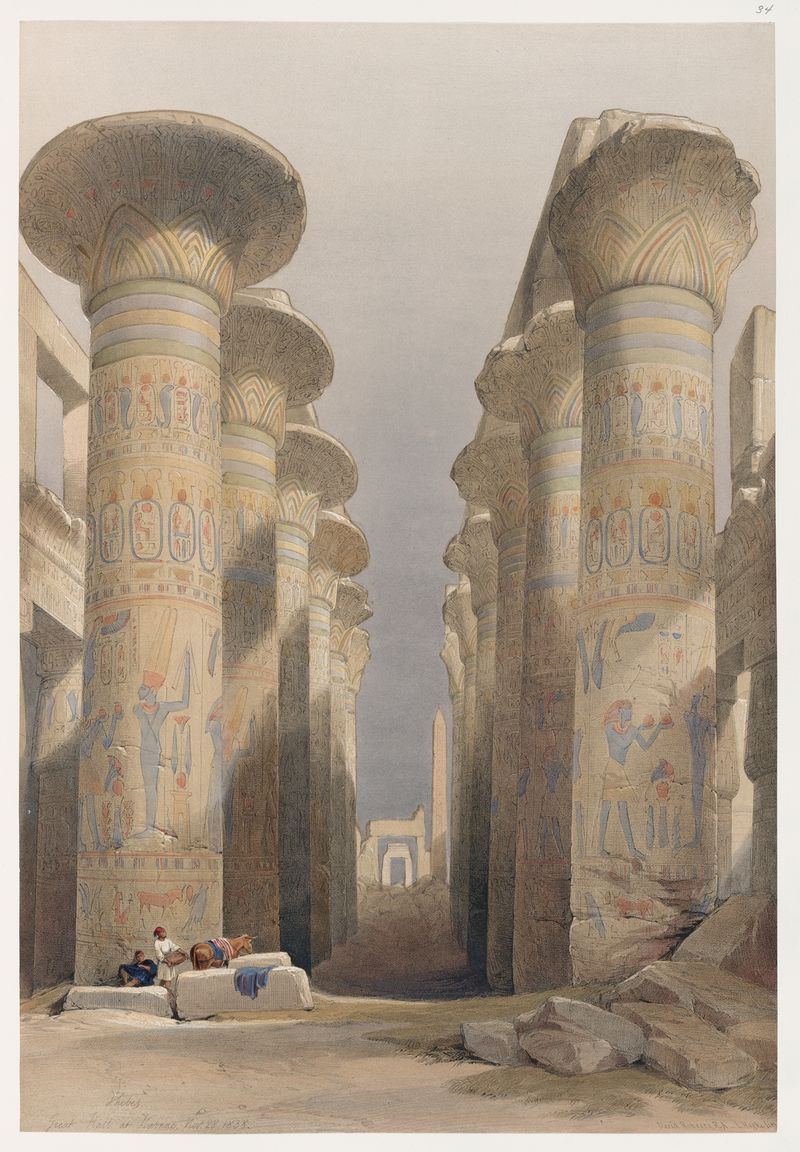
Thebes. Great Hall at Karnak. Nov. 28, 1838.
David Roberts
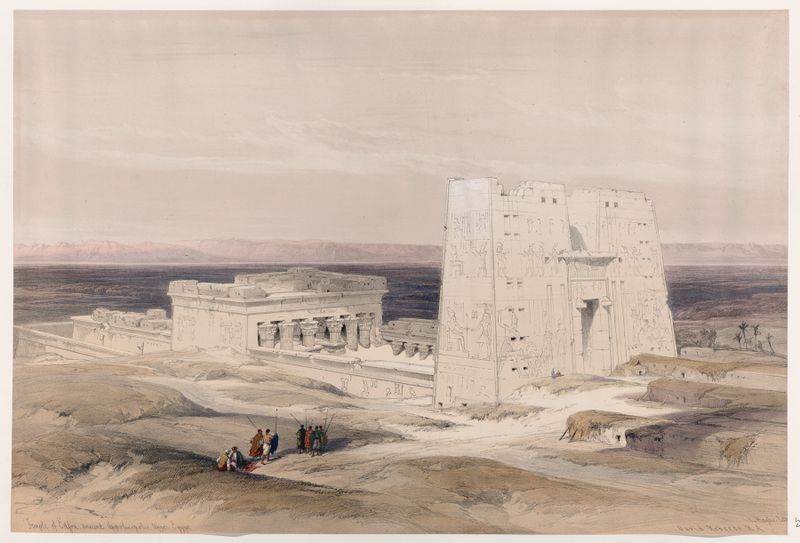
Temple of Edfou [Idfû], ancient Appolinopolis, Upper Egypt.
David Roberts

Temple of Kalabshee [Kalabsha, Kalâbishah], Nubia. Nov. 1838.
David Roberts
More Architecture Art
Browse all →
The statue of Liberty
Frédéric Auguste Bartholdi

View of Houses in Delft, Known as ‘The Little Street’
Johannes Vermeer

View of Houses in Delft, Known as ‘The Little Street’
Johannes Vermeer

The Cathedral in Rouen. The portal, Grey Weather
Claude Monet

The yellow house
Vincent van Gogh

The Church in Auvers-sur-Oise, View from the Chevet
Vincent van Gogh