Castle at Wemmel — History & Facts
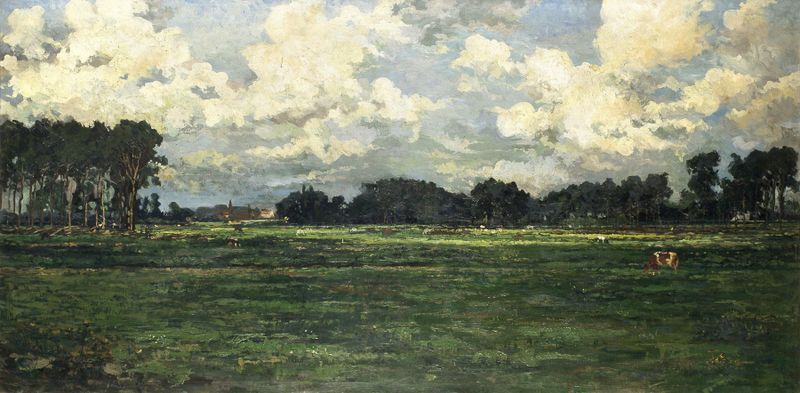
In the stillness of a moment steeped in nostalgia, one can’t help but feel the weight of time pressing upon the landscape before them, a silent cry for remembrance. Focus on the sweeping horizon, where the ethereal outline of the castle stands proud against the soft pastels of dusk. The brushstrokes, both fluid and textured, create a sense of movement in the trees that circle the structure, while the delicate interplay of light and shadow draws the eye toward the castle’s weathered stone. Notice how the subtle hues of orange and blue blend seamlessly, evoking the fleeting nature of twilight and inviting the viewer to linger in its embrace. Hints of nostalgia emerge in the worn facade of the castle, each crack and crevice telling stories of ages long past.
The surrounding landscape, lush yet slightly melancholic, mirrors the tension between memory and reality, suggesting a longing for what once was. It evokes a sense of place that transcends time, where the viewer is both an observer and a participant in the tale woven into the fabric of the canvas. During the 20th century, when this piece was created, Alfons Dessenis was immersed in an era marked by significant artistic movements, including Impressionism and Post-Impressionism. Living in Belgium, he explored the interplay of light and color, reflecting the tensions of a world grappling with modernity while simultaneously yearning for the past.
This painting stands as a testament to that struggle, encapsulating both the beauty and transience of memory.