Cattle Grazing — History & Facts
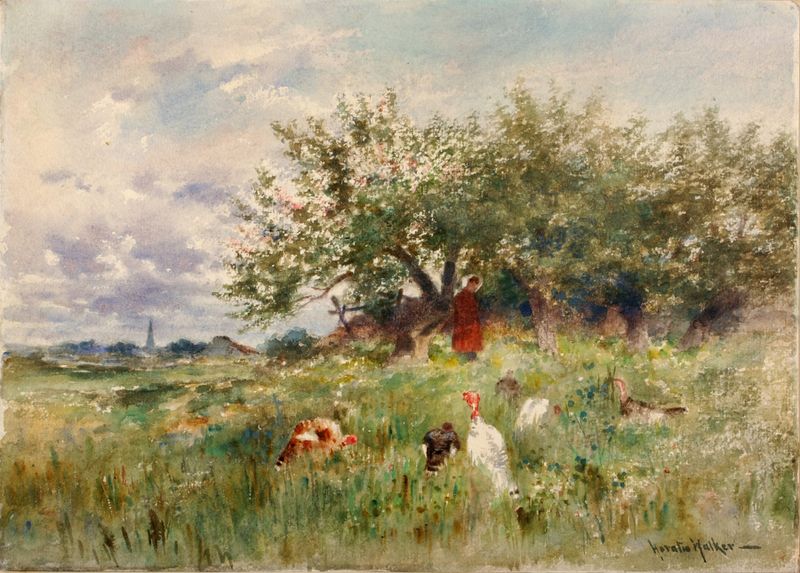
What if beauty was never meant to be finished? In the gentle sway of the grass, there lies a quiet obsession—the endless pursuit of harmony between nature and the observer. Focus on the lush expanse of green to the left, where the grass ripples like a vibrant sea under the dappled sunlight. Notice how the warm hues of the cattle’s coats contrast subtly with the verdant backdrop, inviting your gaze to wander among the grazing figures. The careful brushwork captures not just the texture of the animals but also the interplay of light and shadow, grounding the scene in a palpable reality while hinting at a deeper connection between all living things. Within this serene pastoral image, the cattle are more than mere livestock; they symbolize a larger theme of coexistence and the delicate balance of life.
The gentle slopes of the landscape create a sense of tranquility, yet the viewer can’t help but feel a yearning for a hidden narrative that transcends the simplicity of the scene. Are they content? Is the land, too, aware of its role in this delicate dance? Each blade of grass, each patch of sunlight, whispers of untold stories woven into the fabric of the earth. Horatio Walker painted this piece in the year 1900, during his time in Canada, where he often found inspiration in the pastoral beauty of rural life. It was a period marked by the transition from an agrarian society to industrial advancement, as artists sought to capture the last vestiges of a fading world.
Walker's work reflects this tension, revealing both an admiration for the tranquil landscapes and an underlying concern for their preservation amid the encroaching changes of modernity.