Cattle in the Roman Campagna — History & Facts
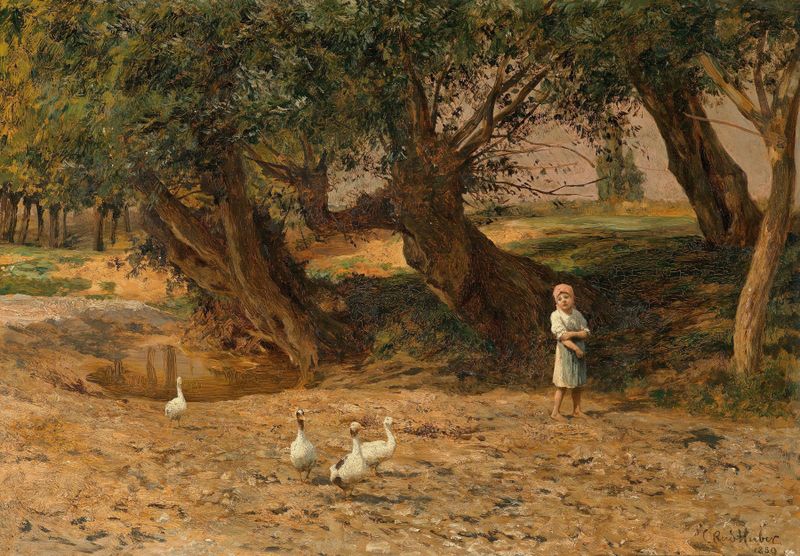
Where does light end, and longing begin? In a landscape bathed in the golden glow of late afternoon, the line between earthly beauty and a divine longing blurs. Look to the center of the canvas, where a herd of cattle grazes peacefully, their forms softened by the warm light that spills over the undulating hills. Notice how the artist captures the interplay of light and shadow across the animals’ coats, each brushstroke breathing life into this pastoral scene. The soft blues and greens create a sense of tranquility, while the widening horizon invites the eye to wander into the distance, evoking a feeling of expansive freedom. As you delve deeper, consider the symbolism of the cattle, often associated with sacrifice and nourishment, representing both the mundane and the sacred.
The harmony of nature contrasts with the human desire for connection, grounding the viewer in a moment that feels both transient and eternal. The light, casting a divine aura upon the scene, hints at the spiritual significance of the landscape, urging us to contemplate the relationship between the earthly and the ethereal. In 1872, while painting Cattle in the Roman Campagna, Carl Rudolf Huber was exploring the interplay of light and nature, looking to capture the essence of rural life in Italy. During this period, the art world was transitioning into Impressionism, yet Huber remained deeply rooted in realism, seeking to portray the beauty of the countryside while reflecting the broader romantic idealism of his time.
This work embodies that delicate balance, inviting viewers to experience the divine in the everyday.