Cavalier — History & Facts
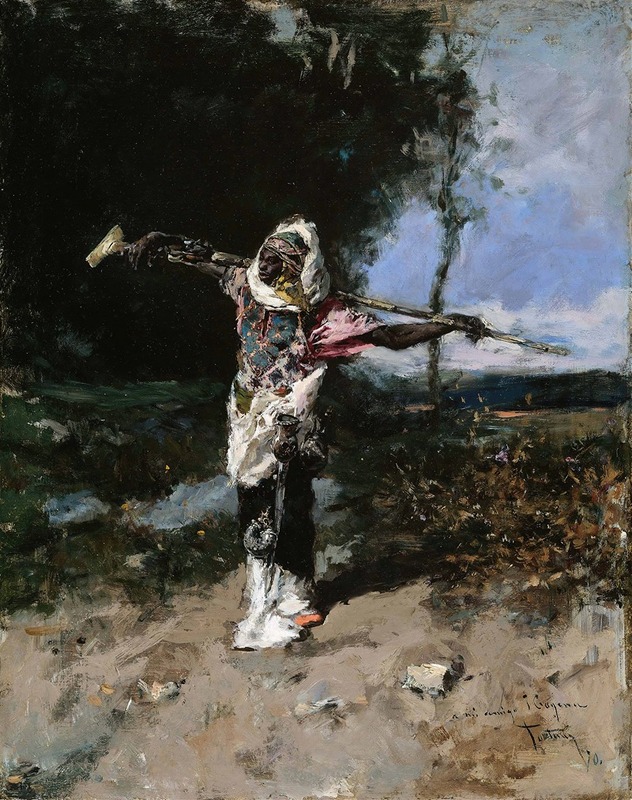
Who listens when art speaks of silence? In Cavalier, the luminous interplay of light transcends mere representation, inviting the viewer to delve into a moment suspended in time. Look to the figure at the center, clad in rich, flowing garments, illuminated by an ethereal glow that seems to emanate from within. Notice how the soft brushstrokes create a sense of movement in the fabric, capturing the essence of a fleeting moment. The background, a tapestry of muted tones, envelops him, drawing attention to his poised stance and thoughtful expression, where every detail whispers a narrative of contemplation. Beneath the surface, the artwork wrestles with themes of identity and presence.
The contrast between the vibrancy of the cavalier's attire and the subdued hues of the backdrop signals a tension between external bravado and internal reflection. The play of light not only highlights physical features but also suggests the emotional depth of the figure, prompting viewers to ponder what lies beneath the surface of appearance — a silent story waiting to be told. Mariano Fortuny y Marsal created Cavalier around 1871, a period marked by his burgeoning fame as a painter in the Spanish art scene. During this time, he was deeply influenced by the techniques of the old masters and contemporary movements, exploring the interplay of light and shadow that would define his legacy.
The world was evolving rapidly, yet Fortuny remained rooted in a romantic vision of the past, merging emotion with technical prowess in his works.