Central Park — History & Facts
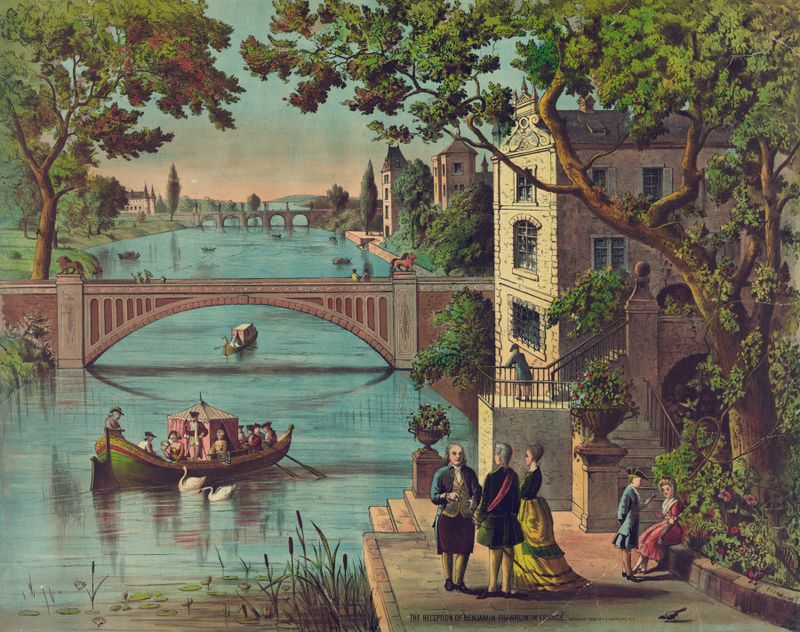
In the quiet echo of a sunlit park, memories linger among the trees, each leaf a whisper of the past, each shadow a fleeting moment encapsulated in time. Focus on the vibrant green of the foliage that envelops the canvas, guiding your gaze toward the soft, shimmering water where reflections dance like ghosts of long-forgotten afternoons. The gentle interplay of light and shadow reveals the artist's deftness, employing an impasto technique that adds texture and depth, capturing the vitality of the scene. Notice how the dappled sunlight filters through the branches, illuminating patches of the secluded path, inviting viewers to walk into this idyllic tableau. Yet beneath the surface beauty lies an intricate web of emotional resonance.
The juxtaposition of vibrant colors against the soft, muted tones of the path speaks to the contrast between the vibrancy of life and the inevitability of time. The solitary figure in the distance, seemingly lost in thought, acts as a poignant reminder of the transient nature of memory, evoking both nostalgia and longing. Each brushstroke pulses with the weight of a moment cherished yet evanescent. The artist painted this work in 1882, during a transformative period for American art, where the influence of Impressionism began to take hold.
The Brothers, known for their ability to capture the essence of modern life, found themselves amidst the bustling scenes of urbanity and nature, seeking to bridge the divide between the two. This piece not only reflects their artistic evolution but also mirrors the changing landscape of New York City, where sprawling parks offered a sanctuary from the frenetic pace of industrialization.