Champ d’orge et de coquelicots à Pontgivart — History & Facts
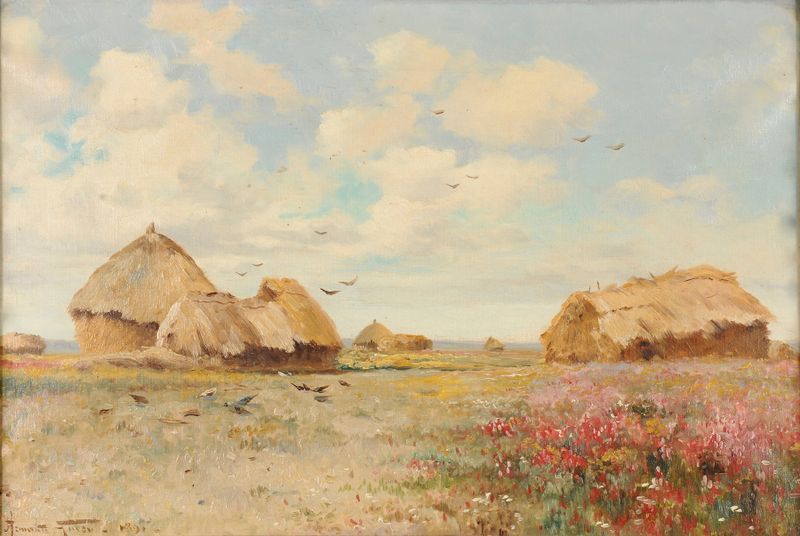
What secret hides in the quiet of the canvas? In a world bursting with color and life, the stillness of this idyllic landscape whispers of longing and memories yet to be formed. Look to the right at the vibrant poppies swaying gently in the breeze, their fiery petals a stark contrast against the muted greens and golds of the barley field. This vivid use of color draws the viewer's eye, inviting you deeper into the scene, where the gentle undulations of the land create a rhythmic dance of nature. Notice how the light filters softly through the clouds, casting a serene golden hue that beckons a sense of calm and nostalgia, evoking the tranquil beauty of rural life. As you linger, consider the juxtaposition between the vivid colors of the foreground and the distant, hazy horizon.
The poppies, so alive and bold, represent fleeting moments of joy, while the expansive fields reflect the weight of time and unfulfilled dreams. Each brushstroke captures an essence of yearning, conjuring feelings of both solace and melancholy—an echo of a life lived in rhythm with the earth, yet always reaching for something just out of grasp. In 1905, Guéry painted this work amidst a time of dynamic change in the world of art, as Impressionism was giving way to Post-Impressionism, and artists were increasingly experimenting with color and form. Working in Pontgivart, a serene rural area where he found inspiration, he sought to encapsulate the ephemeral beauty of nature while also reflecting his personal aspirations, bridging the gap between fleeting moments and enduring memories.