
Christmas Service — History & Facts
Could beauty survive in a century of chaos? The question lingers in the air, echoing through the halls of history, as art strives to capture the essence of hope amidst turmoil. Look closely at the gentle interplay of light and shadow that envelops the serene scene, guiding your gaze to the warm glow emanating from the central figures. The delicate brushwork captures the essence of a festive gathering, with an ornate altar adorned in rich colors that vibrate with life. The figures, dressed in their Sunday best, exude a palpable sense of reverence and joy, drawing the eye toward their tender gestures and expressions of faith. Amidst the harmonious arrangement, notice the juxtaposition of solemnity and celebration; the quiet prayer shared by one figure contrasts with the laughter of children nearby, embodying the tension between hope and despair.
The use of vibrant reds and deep greens not only reflects the season but also symbolizes the enduring spirit of joy, even when placed against the backdrop of a world struggling with uncertainty. These small yet significant details weave together a narrative that speaks to the resilience of the human heart. In 1867, the artist found himself amidst a burgeoning art world that wrestled with the aftermath of revolutions and the shifting social landscape. Painted during a time when traditional values were challenged, the work resonates with a deep yearning for connection and solace.
This period marked a significant moment in Smith's career, as he endeavored to bring forth messages of hope and beauty during an era often consumed by darkness.
More Artworks by Thomas Lochlan Smith
Browse all →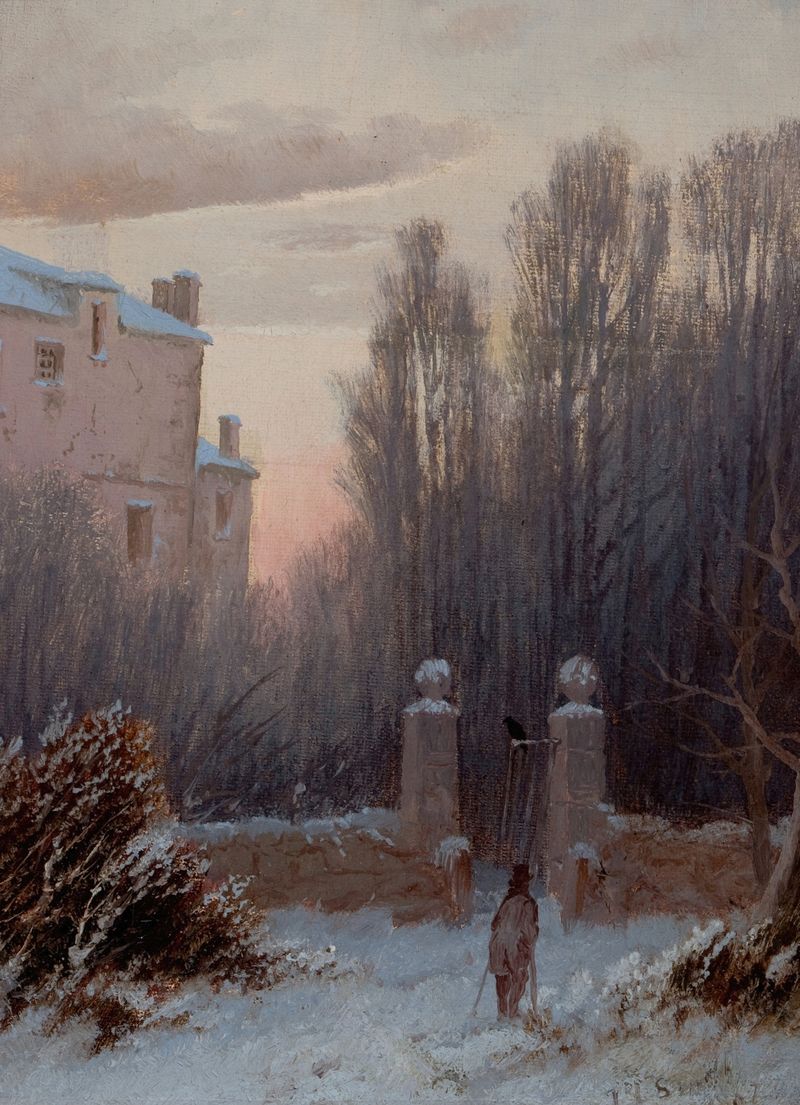
More Religious Art
Browse all →
The Return of the Prodigal Son
Rembrandt van Rijn

The Garden of Earthly Delights
El Bosco

Count Orgaz’ funeral
El Greco

The Hundred Guilder Print: the central piece with Christ preaching, the plate arched
Rembrandt van Rijn

The Descent from the Cross
Rogier van der Weyden

The return of the prodigal son
Rembrandt van Rijn