The Old Estate in Winter — History & Facts
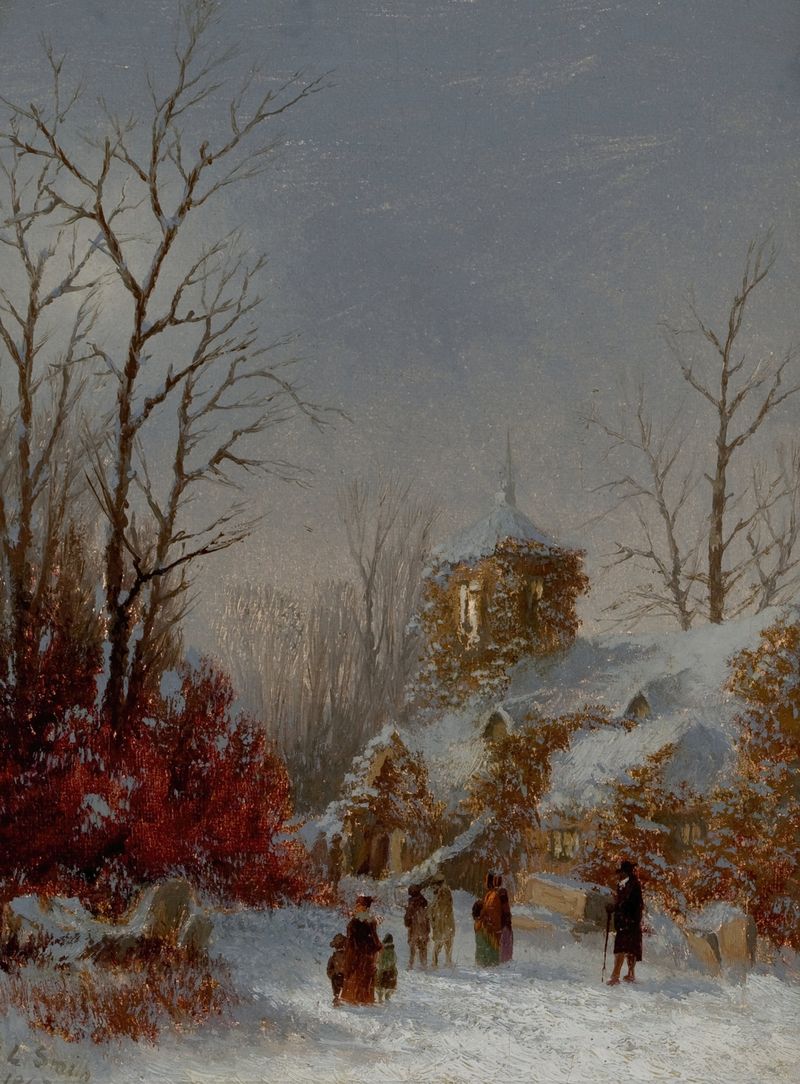
In the stillness of winter, a profound serenity awaits those who dare to pause. Here, amidst the cold embrace of snow, lies the heart of a forgotten estate, whispering stories of time and memory. Look to the center of the canvas where a stately mansion rises, its muted hues harmonizing with the surrounding landscape. The architecture is defined by delicate lines, evoking both grandeur and decay.
Notice how the soft twilight casts a silvery glow across the scene, and the subtle interplay of light and shadow enhances the contours of the building. The palette, dominated by cool blues and grays, invites contemplation, drawing the viewer deeper into this tranquil moment. Yet beneath this quiet surface, emotional tensions stir. The stark contrast between the vibrant life that once thrived within these walls and the somber reality of its present state elicits a sense of nostalgia.
The gentle falling of snowflakes, adorned with their delicate patterns, mirrors the passage of time, transforming the estate from a bustling home to a haunting relic. Smith captures a fleeting moment, where nature blankets the remnants of humanity, rendering them both beautiful and melancholic. In 1867, Thomas Lochlan Smith painted this piece while residing in the rural outskirts of New England, a time when artists were increasingly drawn to the themes of nature and the changing seasons. This era, marked by the decline of the Romantic movement, saw a shift towards capturing the sublime in everyday landscapes.
Smith, influenced by his contemporaries, sought to convey a sense of peace amid the chaos of modern life, and this work encapsulates that yearning for serenity.