
Christus doopt in de Jordaan — History & Facts
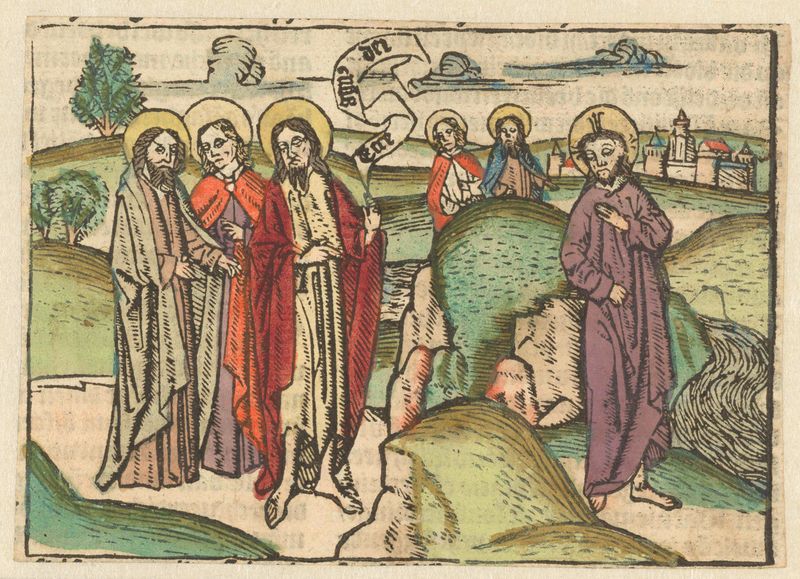
Each brushstroke captures a moment timeless in its depth, inviting the viewer to explore the delicate intricacies of creation itself. Focus on the gentle flow of water as it glimmers in the light, revealing the miracle of baptism. The figure of Christ, poised and serene, draws the eye to his tranquil expression, evoking a sense of divine purpose. Notice how the soft hues of blue and green envelop the scene, contrasting with the warmth of the skin tones, creating an atmosphere of harmony and spiritual awakening. Subtle yet profound details abound: the onlookers' expressions reflect both awe and reverence, while the ripples in the water suggest a transformative moment.
The juxtaposition of Christ's ethereal quality against the earthly figures emphasizes a bridge between the divine and the mundane. This tension, woven into the fabric of the scene, speaks to the eternal significance of this ritual in the human experience. Created between 1483 and 1486, this piece emerged during a time of significant religious and artistic transformation in Europe. The artist, working in Haarlem, was part of the Northern Renaissance, a period marked by evolving perspectives on faith and identity, as well as a growing emphasis on realism in art.
This painting reflects those currents, encapsulating not only the act of baptism but also the broader quest for understanding and connection within a rapidly changing world.
More Artworks by Meester van Haarlem
Browse all →
More Religious Art
Browse all →
The Return of the Prodigal Son
Rembrandt van Rijn

The Garden of Earthly Delights
El Bosco

Count Orgaz’ funeral
El Greco

The Hundred Guilder Print: the central piece with Christ preaching, the plate arched
Rembrandt van Rijn

The Descent from the Cross
Rogier van der Weyden

The return of the prodigal son
Rembrandt van Rijn