
Christus kiest zijn discipelen — History & Facts
"Is it not strange how emptiness can wear the guise of elegance?" In Christus kiest zijn discipelen, the viewer’s gaze is immediately drawn to the central figure of Christ, whose serene expression contrasts starkly with the surrounding figures’ varying emotional states. Look closely at the rich hues of deep gold and crimson that envelop the scene, suggesting a divine light that bathes the moment in a warm, almost suffocating glow. Each garment is meticulously painted, layered with texture that invites the eye to wander through the intricate folds and subtle shadows, revealing the artist’s extraordinary command of the medium. Yet beneath the opulent surface lies a profound emptiness.
Notice how the figures, though physically present, appear disconnected, as if caught in a silent struggle between faith and doubt. The disciples’ postures convey uncertainty; their hands are raised but not in unity, suggesting a hesitance to embrace their calling. The background, a subtle blur, further emphasizes their isolation, serving as a reminder of the weight of their choices.
The lavish colors may shimmer, but they cannot conceal the underlying tension of disquietude. This painting was created by the Meester van Haarlem between 1483 and 1486, during a period when Northern Renaissance art was flourishing, marked by a growing interest in religious themes combined with intricate realism. The artist, largely anonymous, contributed to the development of early Netherlandish painting, exploring human emotion in a way that resonated with the societal and spiritual uncertainties of the era. This work reflects the complexities of faith and the ever-present void that accompanies the pursuit of belief.
More Artworks by Meester van Haarlem
Browse all →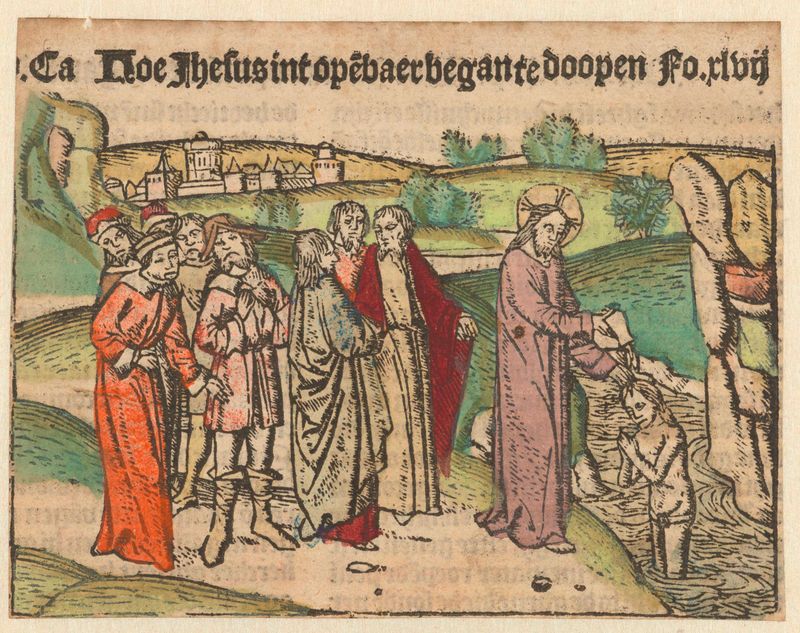
More Religious Art
Browse all →
The Return of the Prodigal Son
Rembrandt van Rijn

The Garden of Earthly Delights
El Bosco

Count Orgaz’ funeral
El Greco

The Hundred Guilder Print: the central piece with Christ preaching, the plate arched
Rembrandt van Rijn

The Descent from the Cross
Rogier van der Weyden

The return of the prodigal son
Rembrandt van Rijn