
Christus in de hof van Getsemane en musicerende hovelingen — History & Facts
Can beauty exist without sorrow? In the brushstrokes of this work, a palpable melancholy lingers, inviting contemplation of the duality of existence—an interplay of joy and grief. Look to the center where the figure of Christ is poised amidst an aura of stillness, illuminated by soft, ethereal light. His expression radiates a profound resignation, surrounded by the music-making courtiers whose animated gestures contrast sharply with his somber presence. The rich, muted palette of earthy tones grounds the scene, while delicate highlights draw your gaze toward the delicate textures of their garments, suggesting a moment caught between reality and transcendence. Delve deeper into the emotional landscape where the surrounding figures, lost in their melodic reverie, seem oblivious to the weight of the moment.
The juxtaposition of vibrant music and Christ’s silent anguish crafts a narrative that speaks of isolation amidst companionship. Each detail—the fluttering of a sleeve, the gentle strumming of a lute—speaks volumes about the burdens of beauty, hinting at an unspoken understanding of impending sacrifice that blankets the harmonious atmosphere with a softer, sorrowful undertone. Pieter de Jode (I) created this artwork in 1630, a period marked by the flourishing of Baroque art and its emotional intensity. Working in Antwerp, he was influenced by both Flemish traditions and emerging Dutch themes, a reflection of a world grappling with religious and existential questions.
This piece embodies the complexity of his era, where art served as a mirror to the intricate dance of human experience—beauty intertwined with sorrow.
More Artworks by Pieter de Jode (I)
Browse all →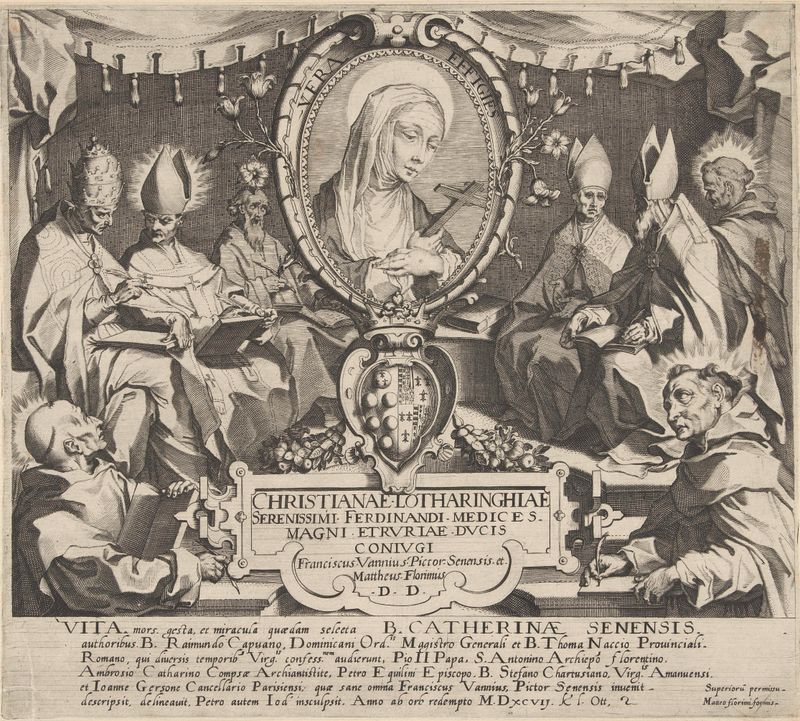
Titelprent voor een serie met scènes uit het leven en wonderen van de Heilige Catharina van Siena
Pieter de Jode (I)

Laatste avondmaal
Pieter de Jode (I)
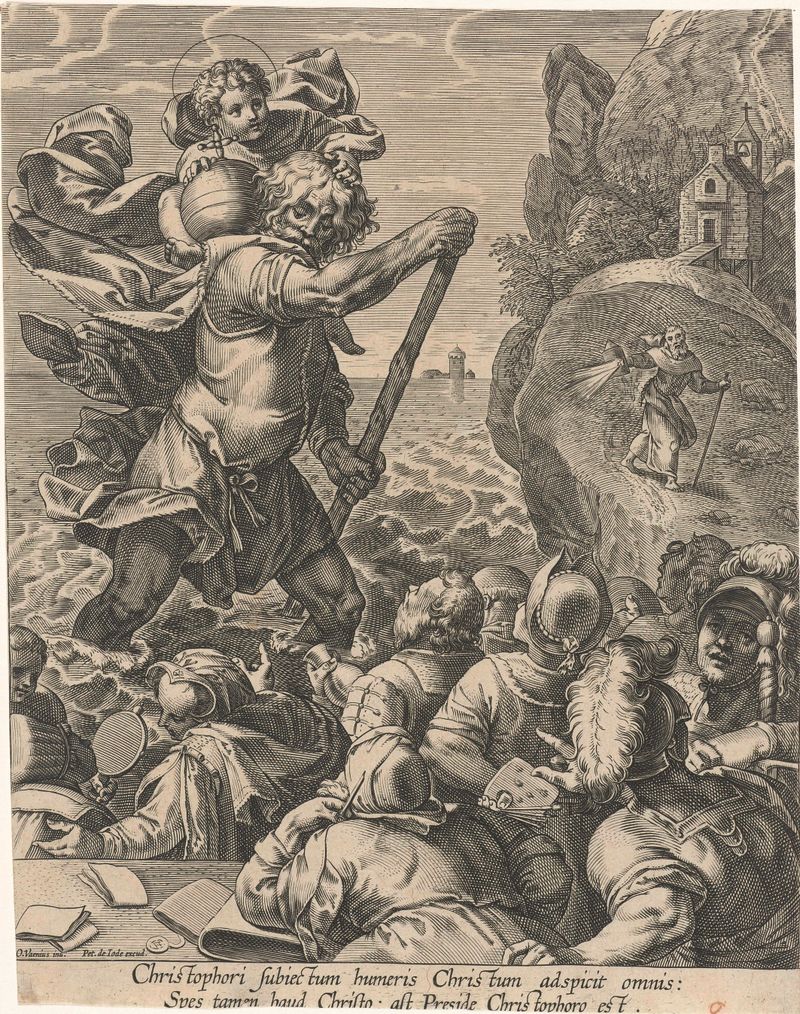
De heilige Christoffel en toeschouwers
Pieter de Jode (I)
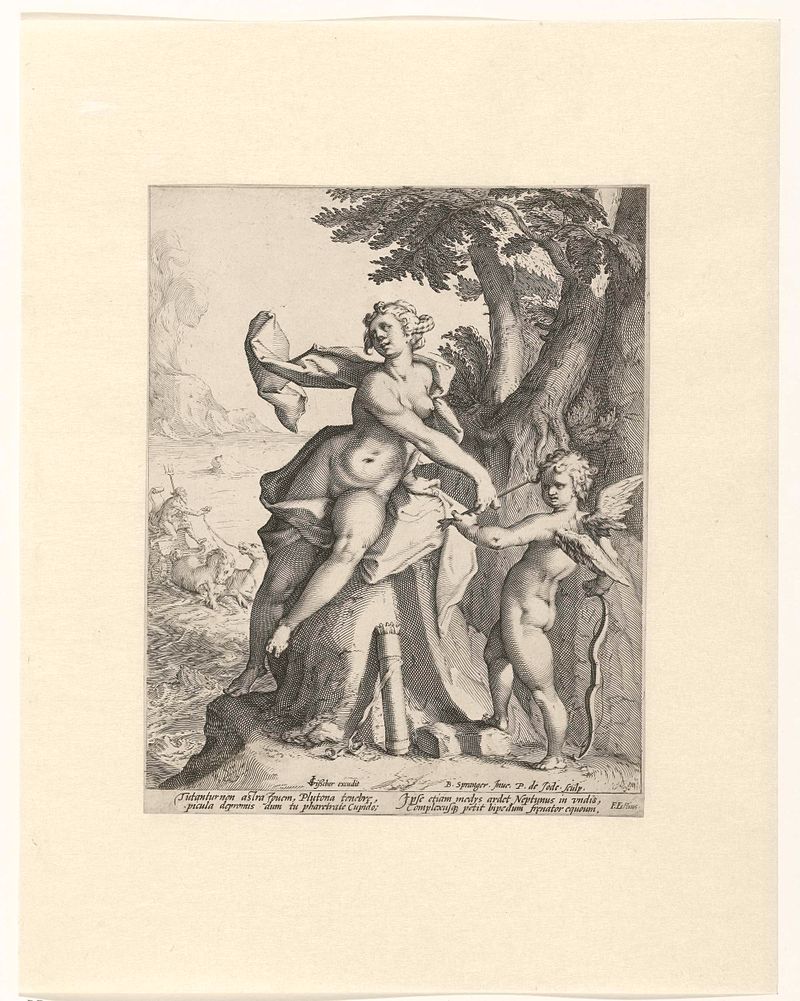
Landschap met Venus en Amor
Pieter de Jode (I)
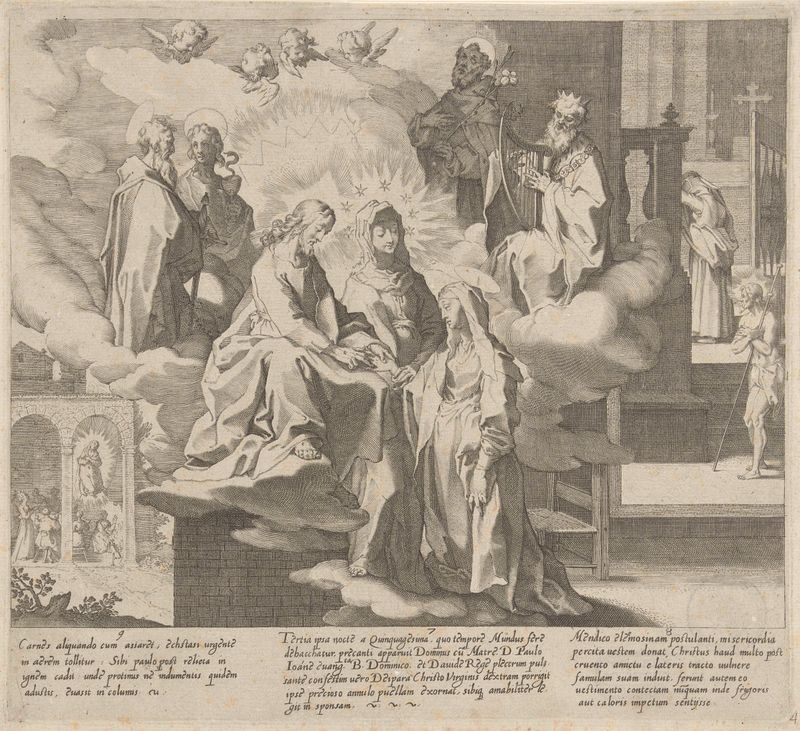
Catharina verschijnt / huwelijk van Catharina / Catharina deelt haar mantel
Pieter de Jode (I)
More Religious Art
Browse all →
The Return of the Prodigal Son
Rembrandt van Rijn

The Garden of Earthly Delights
El Bosco

Count Orgaz’ funeral
El Greco

The Hundred Guilder Print: the central piece with Christ preaching, the plate arched
Rembrandt van Rijn

The Descent from the Cross
Rogier van der Weyden

The return of the prodigal son
Rembrandt van Rijn