Church and farm cottages by a river — History & Facts
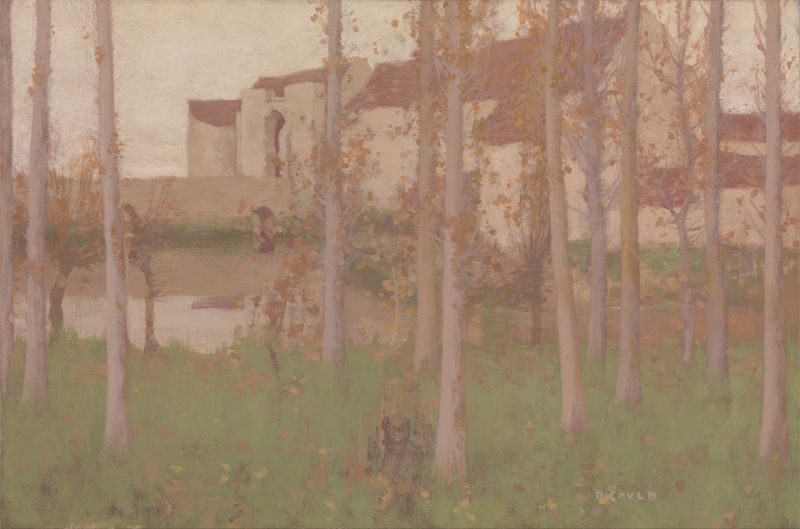
Could beauty survive in a century of chaos? In the delicate interplay of architecture and nature, the answer seems to be a resounding yes. Look to the left at the gentle curve of the river, its surface shimmering with the soft light, inviting you to trace its path toward the horizon. The quaint cottages nestled beside the church, their earthy tones harmonizing with the greens of the landscape, draw the eye. Notice how the painter's brushstrokes evoke the texture of the thatched roofs and the weathered stone of the church, bringing warmth and life to the scene.
The meticulous detail in the windows reflects an inviting glow, suggesting a sense of home and community amidst the tranquility of rural life. Beneath this serene surface lies a poignant contrast. The peaceful cottages and church juxtaposed against the flowing river symbolize a delicate balance between stability and change. The river, a force of nature, suggests movement, a reminder of time's relentless passage and the cycles of life.
The overall composition captures not only the beauty of the landscape but also hints at the fragility of existence in a world that is constantly in flux. David Gauld created this work during a tumultuous period for art, with the early 20th century grappling with rapid industrialization and social upheaval. Working primarily in Scotland, he sought to reconnect viewers with the pastoral beauty of rural life, often focusing on the small, intimate moments that characterized everyday existence. In this painting, he encapsulates a yearning for creation and beauty, reminding us that even in chaos, there exists a sanctuary of peace.