City View in the Winter — History & Facts
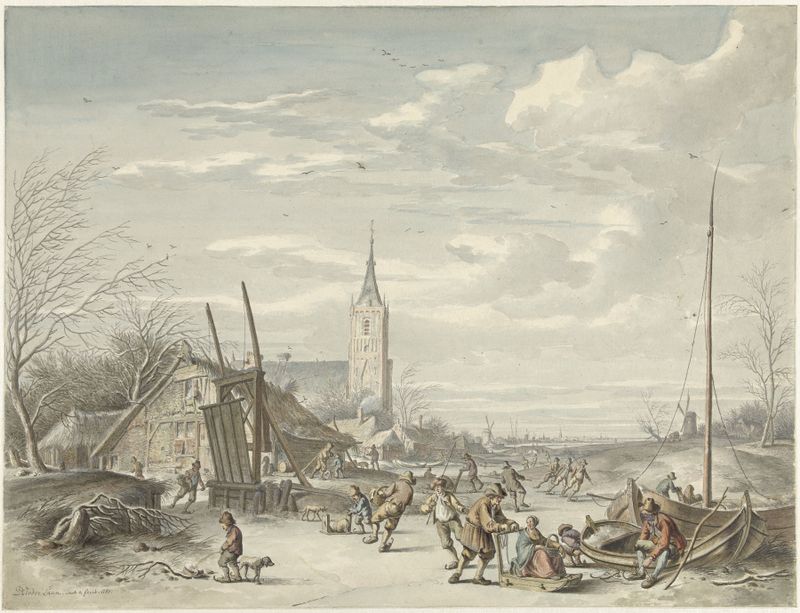
Can beauty exist without sorrow? The answer lies within the delicate interplay of light and shadow in this serene winter landscape. Look to the horizon, where layers of mist gently envelop the distant city skyline, creating a dreamlike quality. The artist employs soft blues and whites to evoke the chill of the season, while the subtle warmth of golden sunlight peeks through, illuminating rooftops and casting long shadows across the snow. Notice the intricate detail in the foreground, where frost clings to bare branches, reminding us that even in desolation, life holds a quiet resilience. The juxtaposition of bustling city life with the stillness of nature speaks of the tension between human ambition and the serene acceptance of winter's embrace.
In this composition, there’s a whisper of nostalgia, a reflection on passing time and the transient beauty of scenes that might otherwise go unnoticed. Each brushstroke captures a moment that balances joy and melancholy, suggesting a deeper truth about existence and the human experience. During the period from 1790 to 1813, van der Laan painted in the Netherlands amid social and political upheaval, including the impacts of the French Revolutionary Wars. The art world was evolving, with Romanticism gaining traction, emphasizing emotion and the sublime in nature.
In this context, the artist sought to capture the essence of his surroundings, creating a poignant reflection on both the beauty and the inherent sorrow of life itself.