Cityscape — History & Facts
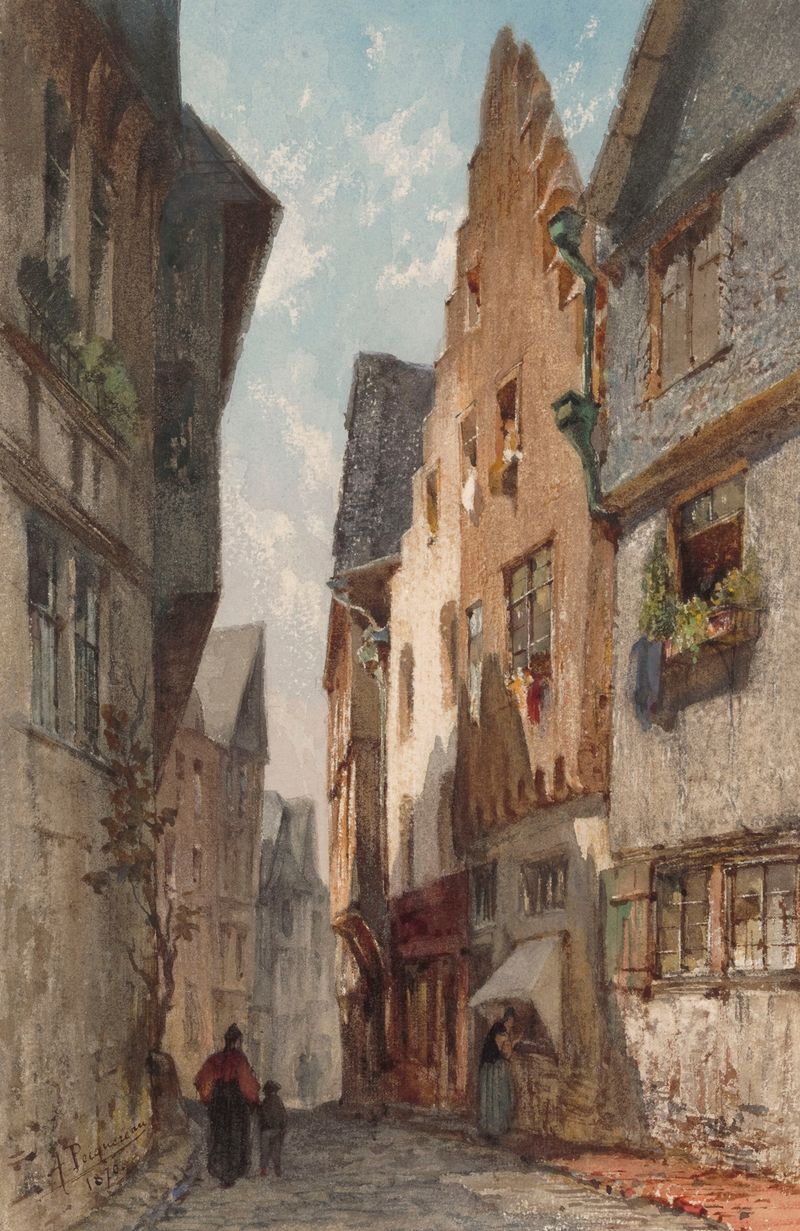
Did the painter know this moment would outlive them? A fleeting glimpse of life captured on canvas, where the echoes of an urban symphony resound through time. Focus on the horizon where buildings rise and fall, their silhouettes a testament to human ambition. Notice how the subtle gradients of blues and grays blend harmoniously, illuminating the sky and casting soft shadows on the streets below. The meticulous brushwork invites the viewer's gaze to wander, as if one could move through the bustling city.
Sharp details in the architecture contrast with the gentle haze, creating a visual rhythm that speaks of both vitality and melancholy. This cityscape is more than just a mere representation; it embodies the tension between progress and nostalgia. The juxtaposition of robust structures against the delicate interplay of light hints at the transience of human endeavors. In the foreground, a solitary figure stands, evoking a sense of isolation amidst the bustling urban life, a poignant reminder of individual memory lost within the collective pulse of the city. In 1867, during a period marked by rapid industrialization in France, the artist found himself exploring the complexities of urban modernity.
As society evolved, so did artistic expressions, and Pecquereau was part of a movement that sought to redefine the visual narrative of everyday life. This work reflects his engagement with contemporary themes, capturing a moment that resonates far beyond its time.