
Cliff Houses On The Rio Mancos, Colorado — History & Facts
In the stillness of a moment captured, silence speaks volumes, whispering the ancient stories of the earth. Notice how the viewer’s gaze is immediately drawn to the rugged cliffs that dominate the composition. The earthy tones of ochre and deep brown intertwine, creating a sense of texture and solidity. Look closely at the way Holmes employs delicate strokes to depict the interplay of light and shadow that dances across the rocky surfaces, hinting at the timelessness of nature.
The quiet river meanders through the scene, a silver ribbon of tranquility, inviting reflection on its significance amid the stark, unyielding landscape. Beneath the surface lies a juxtaposition of permanence and transience. The cliff houses, perched precariously yet defiantly, serve as a reminder of human resilience against the vastness of nature. Each structure, seemingly carved into the rock, hints at stories of inhabitants who once navigated this rugged terrain, their lives echoing in the stillness.
The surrounding landscape, though majestic and unchanging, contrasts with the fleeting nature of time, where memories are etched into the earth’s canvas. William Henry Holmes painted this evocative scene in 1875, during a period of burgeoning exploration and artistic expression in the American West. As a member of the Wheeler Survey, he was deeply engaged in documenting the landscapes of the frontier, influenced by the movement towards realism and a desire to connect with the nation’s natural heritage. This work reflects not only the artist’s dedication to capturing the essence of his surroundings but also the broader cultural fascination with the American landscape during that era.
More Artworks by William Henry Holmes
Browse all →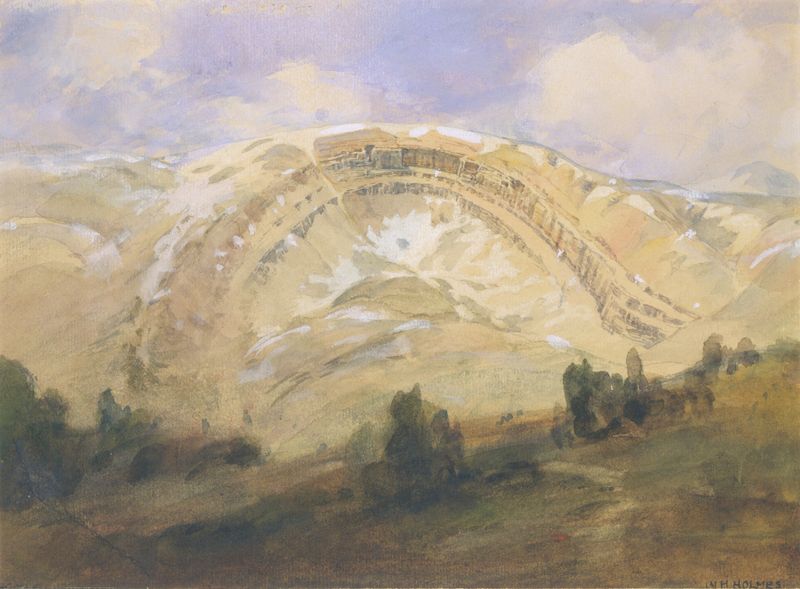
Folded Strata, A Great Geological Arch, Colorado
William Henry Holmes
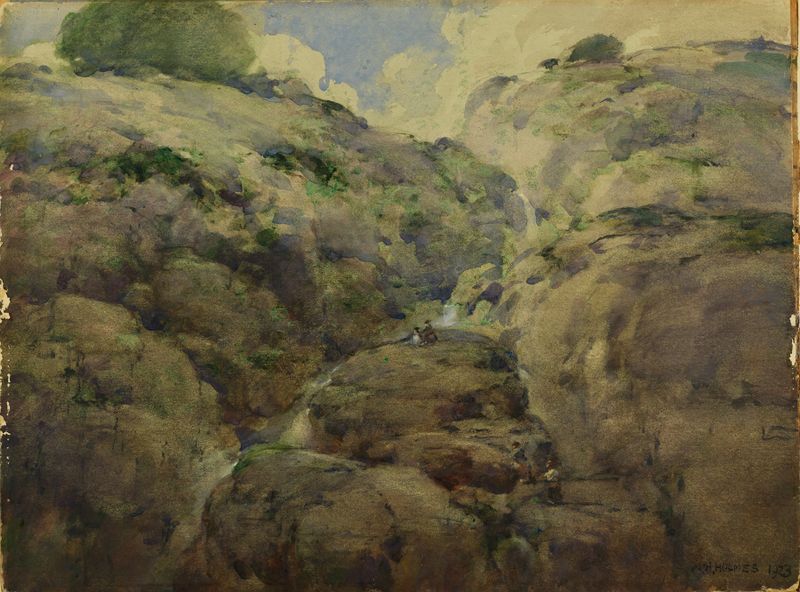
Mountain Gorge, Colorado
William Henry Holmes
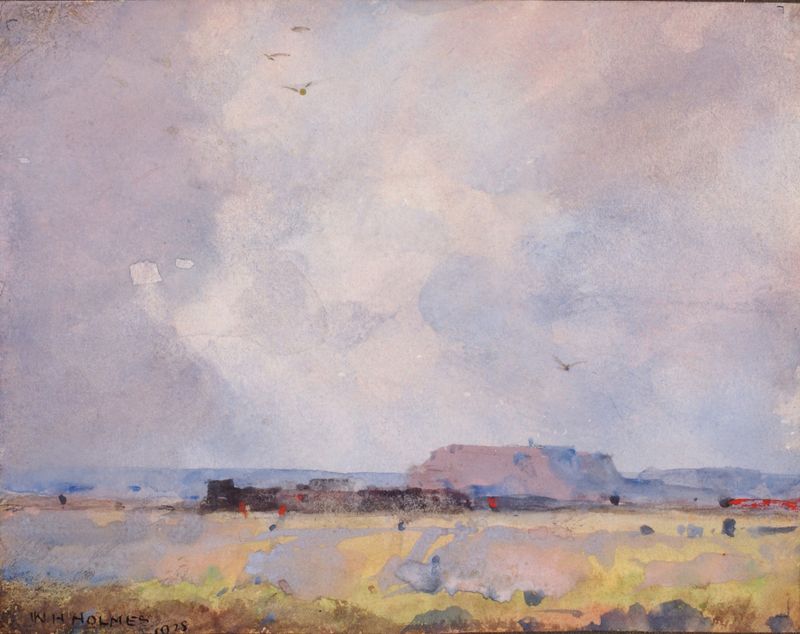
In The Plateau Country, With An Inhabited Pueblo
William Henry Holmes
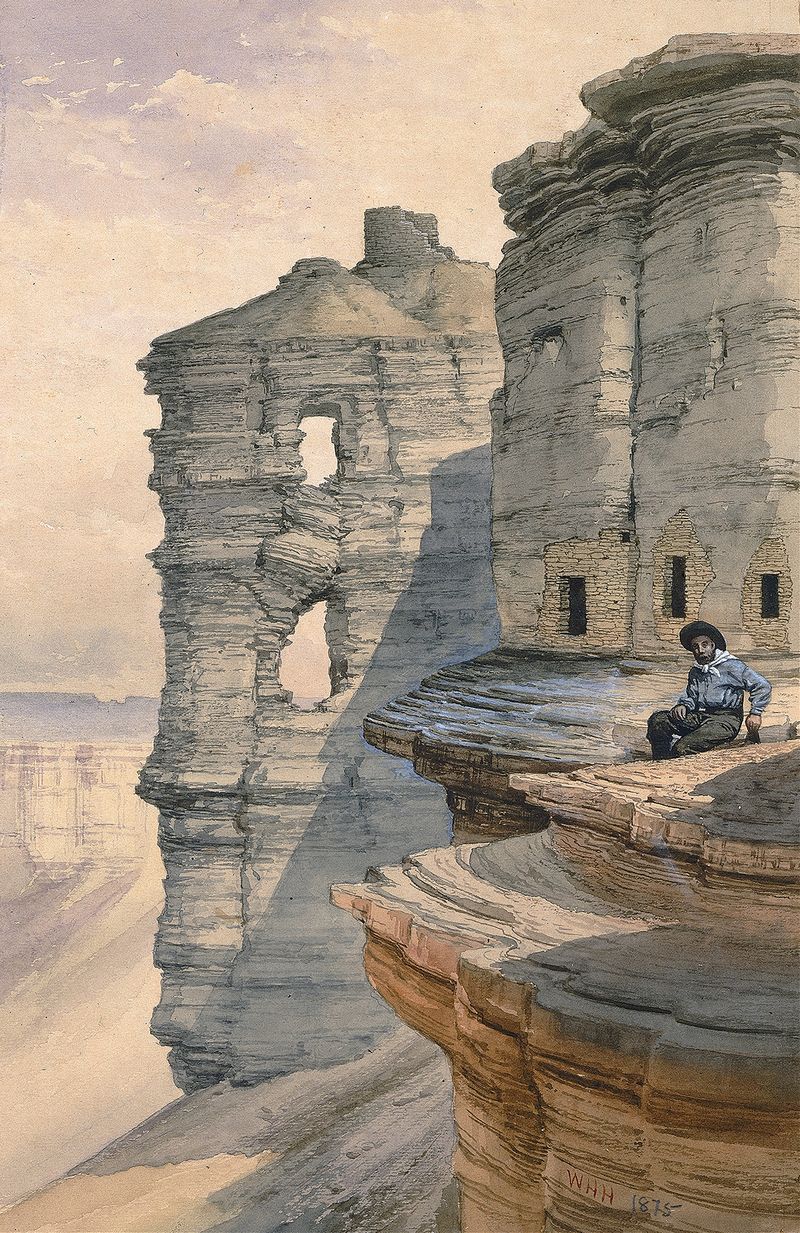
Cliff Houses on the Rio Mancos, Colorado
William Henry Holmes
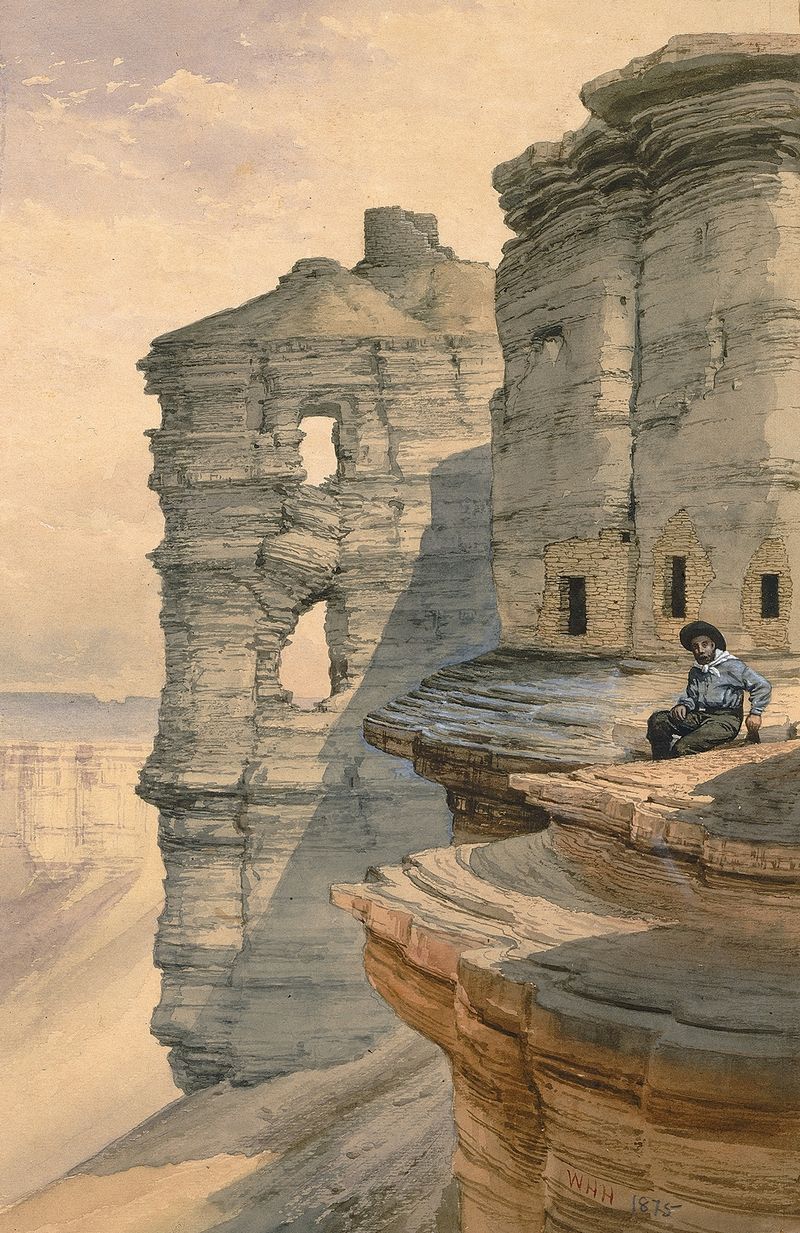
Cliff Houses On The Rio Mancos, Colorado
William Henry Holmes
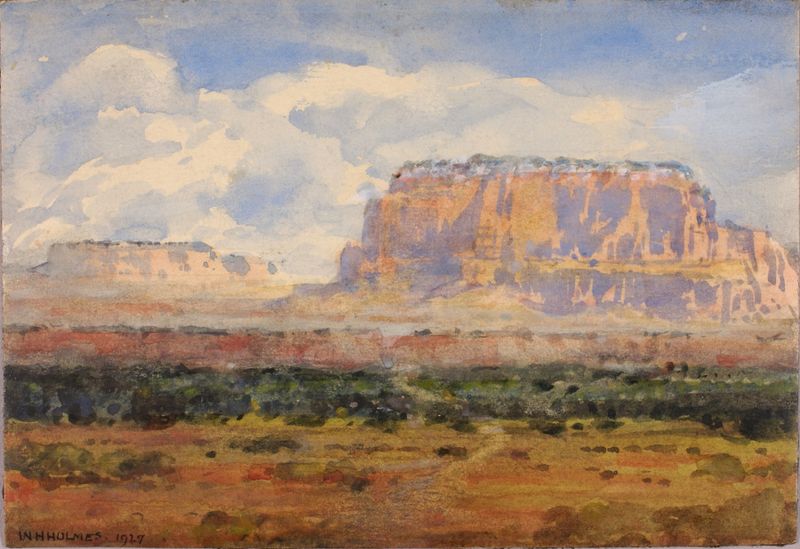
The Enchanted Mesa
William Henry Holmes
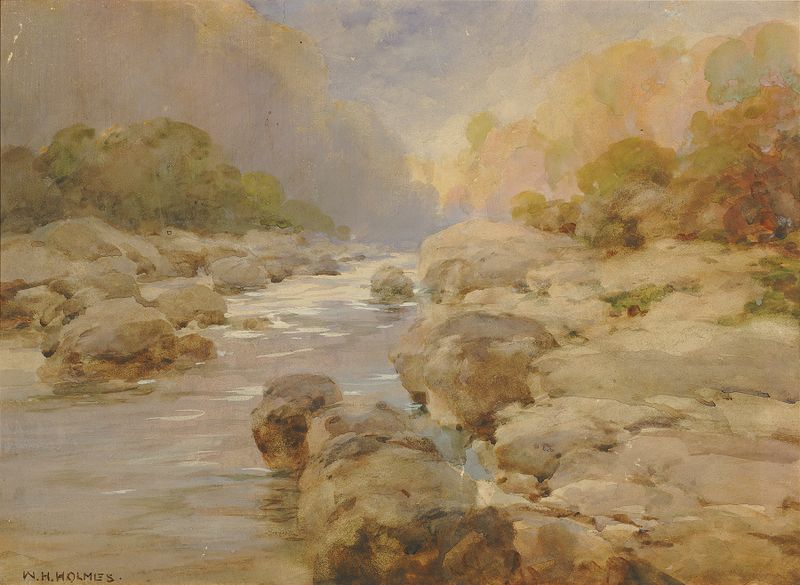
Unmodified Rock Creek, About 1910
William Henry Holmes
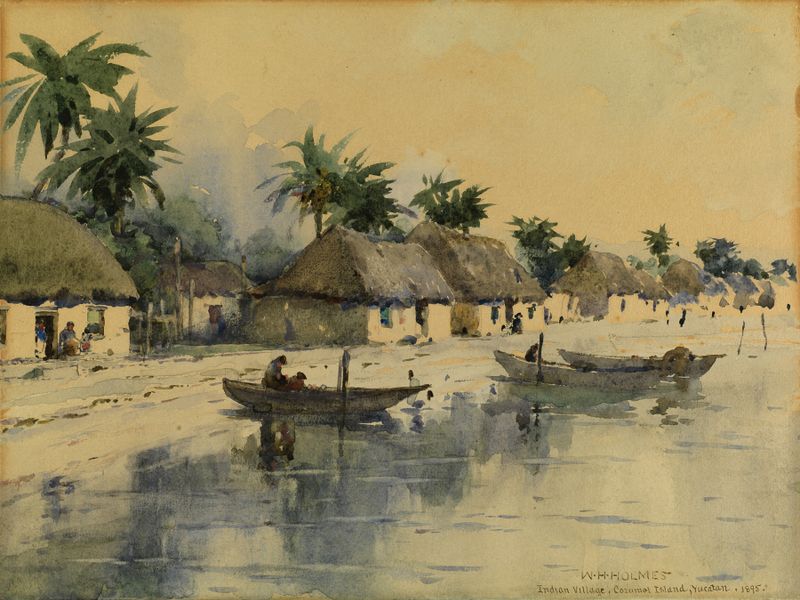
Indian Village, Cozumel Island, Yucatan
William Henry Holmes
The Almighty’s Own, An Impression Of The High Andes
William Henry Holmes
In The Plateau Country, Colorado
William Henry Holmes





