Cloudy Weather in the Black Forest — History & Facts
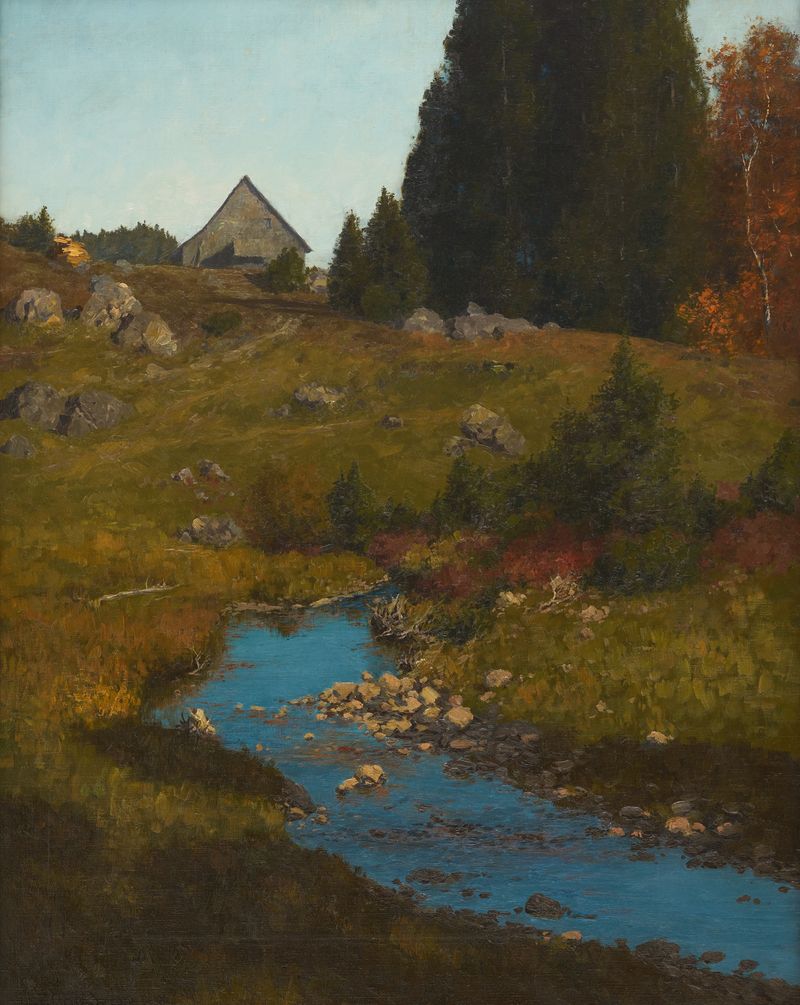
In the interplay of shadow and light, we find the fragile boundary between melancholy and hope, where nature whispers its secrets to those willing to listen. Focus first on the muted horizon, where the clouds stretch like a heavy blanket across the sky, their soft grays and blues punctuated by brief flashes of warm sunlight. Notice how the trees rise defiantly below, their dark silhouettes absorbing the somber atmosphere, yet hinting at resilience through the rich greens nestled within. The subtle brushwork creates a sense of movement, as if the wind carries whispers of both burdens and dreams through the forest. Delve deeper into the contrasts within this composition: the weight of the clouds juxtaposed with the vibrant hope of the foliage below.
The gentle light peeking through the clouds serves as a metaphor for optimism, suggesting that even in the thickest gloom, brightness can emerge. Each stroke of paint encapsulates a moment of introspection, inviting viewers to reflect on their own struggles and the fleeting nature of joy amid adversity. Ludwig Zorn painted Cloudy Weather in the Black Forest in 1904, a period marked by an exploration of the natural world and its emotional resonance. Living in Germany, Zorn was influenced by the Symbolist movement, which sought to capture deeper meanings hidden beneath the surface.
This artwork reflects not only his personal experiences but also a broader artistic dialogue that sought to reconcile beauty with the complexities of human emotion.