Coin de plage — History & Facts
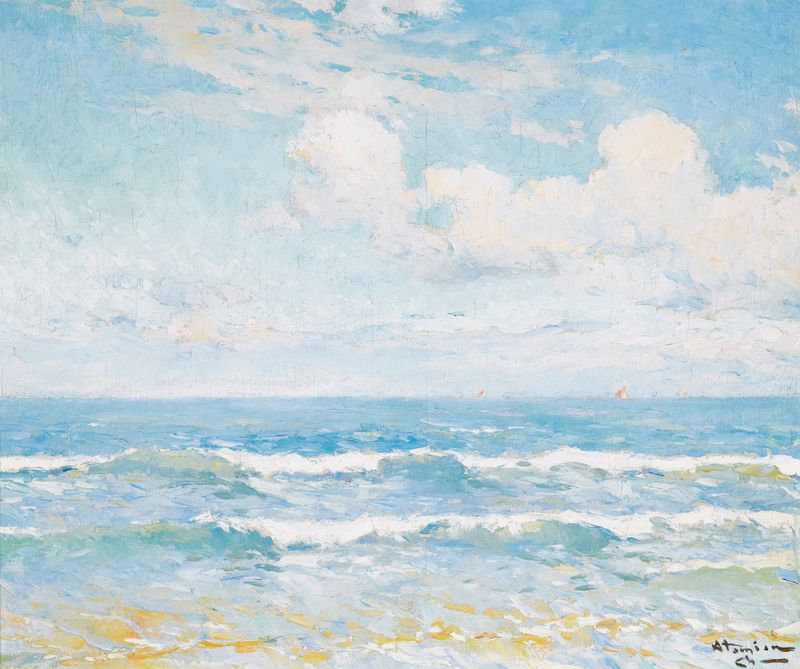
Where does light end, and longing begin? A fleeting moment captured in time, Coin de plage resonates with the profound ache of nostalgia and the haunting beauty of solitude. Look to the left at the shimmering sand, where the delicate brushstrokes paint grains that glimmer like tiny stars caught in a twilight glow. The horizon stretches infinitely, blending soft blues and muted beiges, invoking both serenity and isolation. Notice how the sun breaks through the clouds, casting ethereal light that dances on the water’s surface, each ripple reflecting a longing for connection.
It’s a scene where nature's tranquility meets the longing of the human spirit—calm yet deeply stirring. At first glance, the painting celebrates the natural beauty of a beach, but dive deeper to discover its emotional undertones. The subtle contrast between the vibrant colors of the coastline and the shadowy depths of the water conveys a sense of yearning, as if the viewer is caught between the allure of the shore and the mystery of the ocean. Each wave whispers secrets of lost moments, while the empty expanse evokes the melancholic silence of unfulfilled desires, leading us to ponder our own journeys and what remains just out of reach. Charles Atamian painted Coin de plage during a period of personal exploration and artistic development, likely in the late 19th or early 20th century.
As the world around him was embracing modernity and new artistic movements, he sought solace in familiar landscapes, imbuing them with poignant emotion. Atamian's work reflects his introspective nature and the search for beauty, even amid a changing world, marking a significant contribution to the realm of French landscape painting.