Columbia Heights, Brooklyn — History & Facts
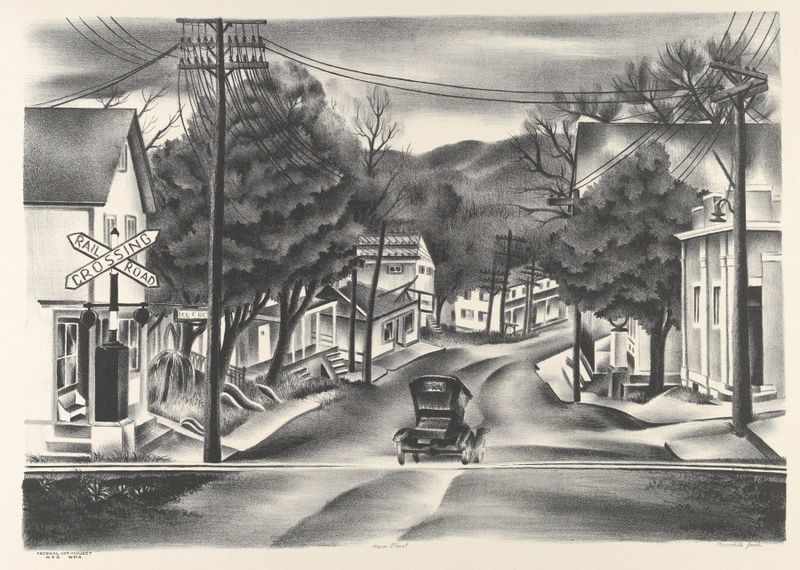
Look closely at the center, where the warm golden hues of the setting sun blend seamlessly with the deeper blues of twilight creeping in. The vibrant buildings of Columbia Heights stand tall and resolute, yet there's a palpable tension in the way the light interacts with the architecture; it casts elongated shadows that hint at stories untold. Notice how Good meticulously layers brushstrokes, creating a textured surface that draws the eye across the canvas, revealing both the vibrancy of the community and the sense of isolation that underlies it. As you explore the painting, consider the juxtaposition between the lively colors and the somber undertones.
The contrast between light and dark not only shapes the physicality of the scene but also speaks to the fears lurking beneath the surface of everyday life. Small details, such as distant figures underscored by an air of uncertainty or the way windows reflect both light and solitude, resonate with the viewer, evoking a sense of nostalgia mingled with trepidation. Each element contributes to the emotional landscape that Good has masterfully crafted. In 1939, Minetta Good was navigating the complexities of her own artistic journey while living in New York.
The city was on the brink of societal changes that would soon reshape its landscape, both physically and culturally. Surrounded by the burgeoning movements in art and the looming political climate, Good’s work during this time reflected her keen awareness of the shifting dynamics, capturing the spirit of an era marked by both promise and fear.