Corpo di Cava — History & Facts
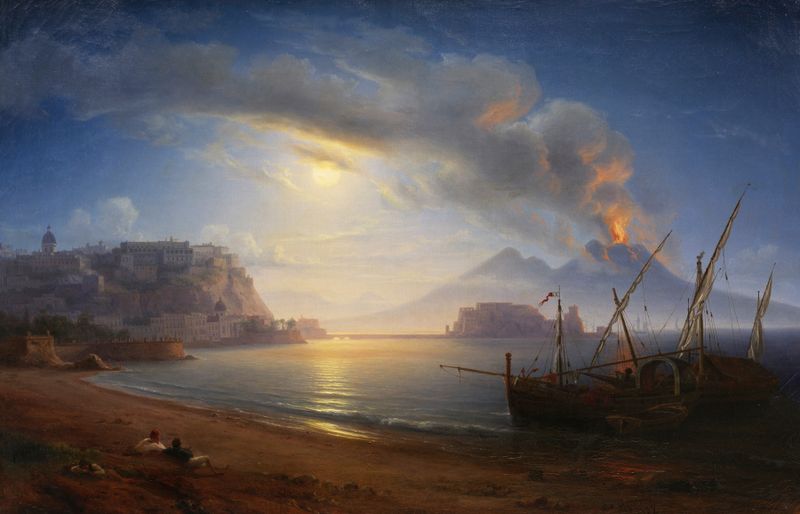
Could a single brushstroke hold eternity? In the delicate interplay of hues and forms, Corpo di Cava invites us into a dreamlike realm where time feels suspended. Look to the center of the composition, where an ethereal light bathes the landscape in a soft glow, illuminating the serene beauty of the cavernous landscape. The subtle gradation of colors—from deep shadows to radiant highlights—creates a sense of depth, drawing the viewer’s eye deeper into the canvas. Notice how the contours of the rocks are rendered with meticulous detail, evoking both the ruggedness of nature and an almost lyrical quality, as if the landscape is whispering secrets just beyond our grasp. Within this tranquil scene lies a tension between solidity and ephemerality.
The cavern’s stillness contrasts with the fluidity of the light, suggesting a moment caught between reality and reverie. Small details, such as the delicate texture of the stone and the shimmering reflections, hint at the artist's contemplation of nature's sublime beauty and transience. Each brushstroke contributes to an atmosphere that feels both inviting and elusive, urging the viewer to linger in this enchanted space. In 1844, Eduard Agricola was immersed in the romantic currents of his time, painting in Italy where he found inspiration in the mystical landscapes.
This period saw a blossoming of interest in the interplay of light and nature, reflecting broader trends in the art world that sought to convey emotion and the sublime. Agricola's work embodies this quest, capturing not only the physical structure of the environment but also its emotional resonance.