Costessy Hall, Norfolk — History & Facts
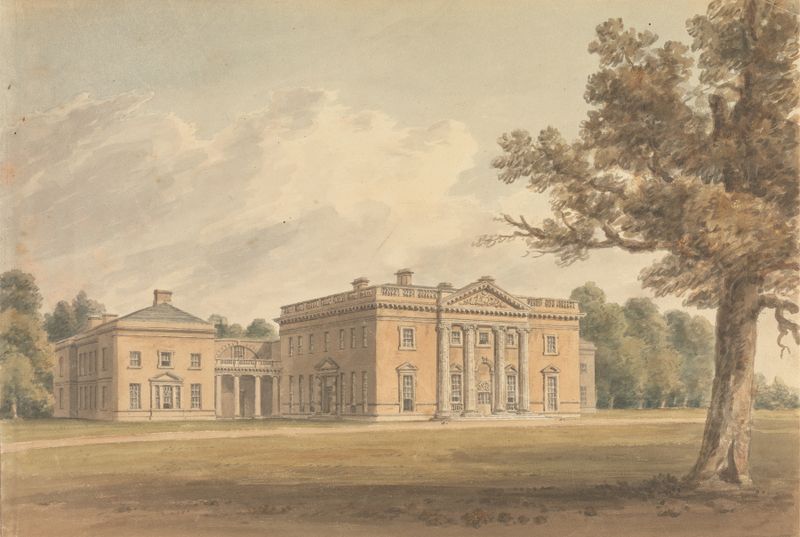
In the interplay of light and shadow within this artwork, the unspoken stories of history linger, inviting viewers to ponder the past that haunts these walls. Look to the left where the intricate architectural details of Costessy Hall rise majestically, framed by a canopy of trees whose leafy shadows dance upon the ground. The warm, earthy tones of the building contrast with the cool blues and greens surrounding it, drawing the eye to the serene yet imposing structure. Notice how the sunlight delicately kisses the façade, illuminating the stonework while casting elongated shadows that evoke a sense of mystery and reverence. Within this composition lies a tension between permanence and transience.
The shadows suggest the passage of time, hinting at stories of joy, sorrow, and forgotten moments sheltered by the hall’s walls. The lush vegetation, thriving yet restrained, mirrors the duality of life within the estate, a sanctuary that both nurtures and conceals. This delicate balance expresses an emotional depth that resonates, reminding us of the legacies we create and the secrets we leave behind. In 1831, John Chessell Buckler painted this piece during a period of significant architectural interest in England, where the Gothic revival was in full swing.
Buckler, an architect himself, sought to capture not only the beauty of Costessy Hall but also the essence of its enduring presence amidst a changing landscape of art and society. His meticulous attention to detail and strong sense of place reflect both the aspirations of the era and his own personal journey through the world of architecture.