Cour du Dragon, Paris — History & Facts
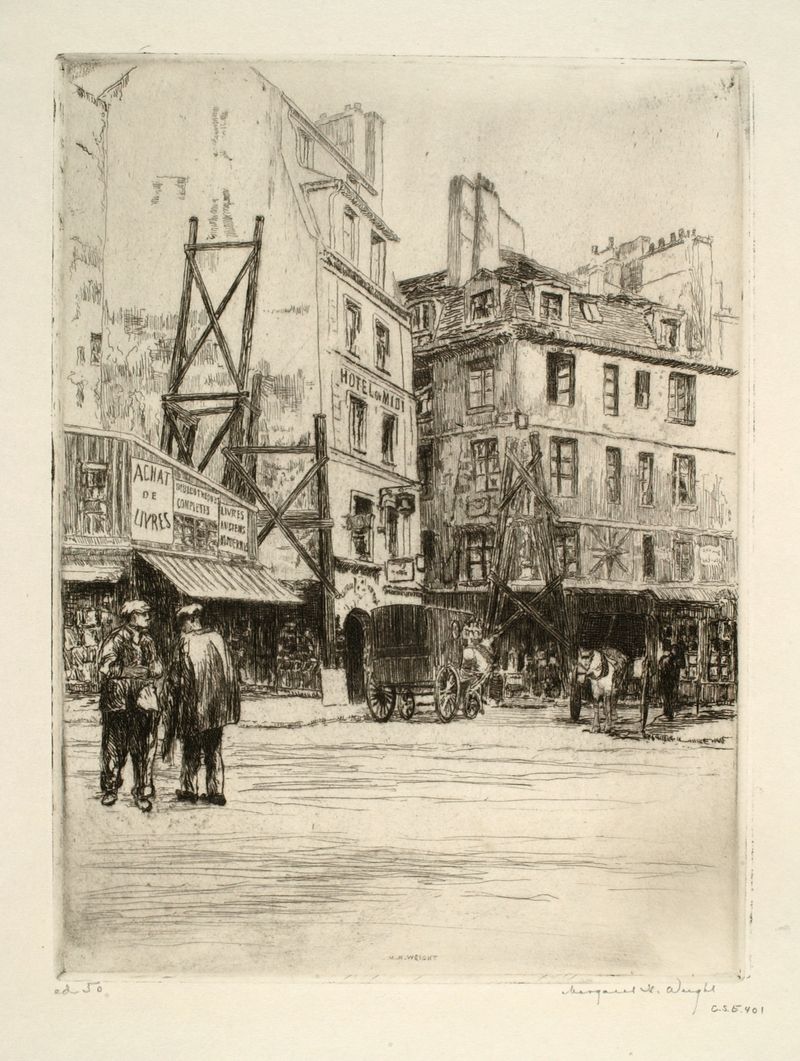
This haunting reflection lingers in the mind as we gaze upon the canvas, where moments of melancholy are captured in ethereal strokes. Here, the essence of a forgotten Paris emerges, urging us to confront the fleeting nature of existence. Look to the left at the shadowed archway, where the muted colors bleed into one another, creating a sense of depth and inviting the viewer into the courtyard. The soft play of light dances across weathered stone, illuminating the intricate details of wrought iron and cobblestone, evocative of a by-gone era.
The palette is restrained, imbued with blues and grays that evoke a sense of nostalgia, reinforcing the somber atmosphere. Hidden within the composition lies an emotional tension between solitude and the remnants of life. The almost ghostly figures that linger in the background suggest stories untold, their presence linking the past to the present. Each element of the courtyard speaks to the weight of history, imbuing the scene with a sense of loss and longing, as if inviting the audience to both remember and mourn what has faded away. Created at an unspecified time, the artist found inspiration in a Paris that had witnessed both cultural vibrancy and deep despair.
During her artistic journey, which coincided with significant shifts in the art world, she sought to capture the ephemeral beauty of urban spaces. The result is a poignant reminder of history's imprint, a snapshot of life that resonates with the viewer's own experiences of love, loss, and reflection.