Courtyard in Zvolen — History & Facts
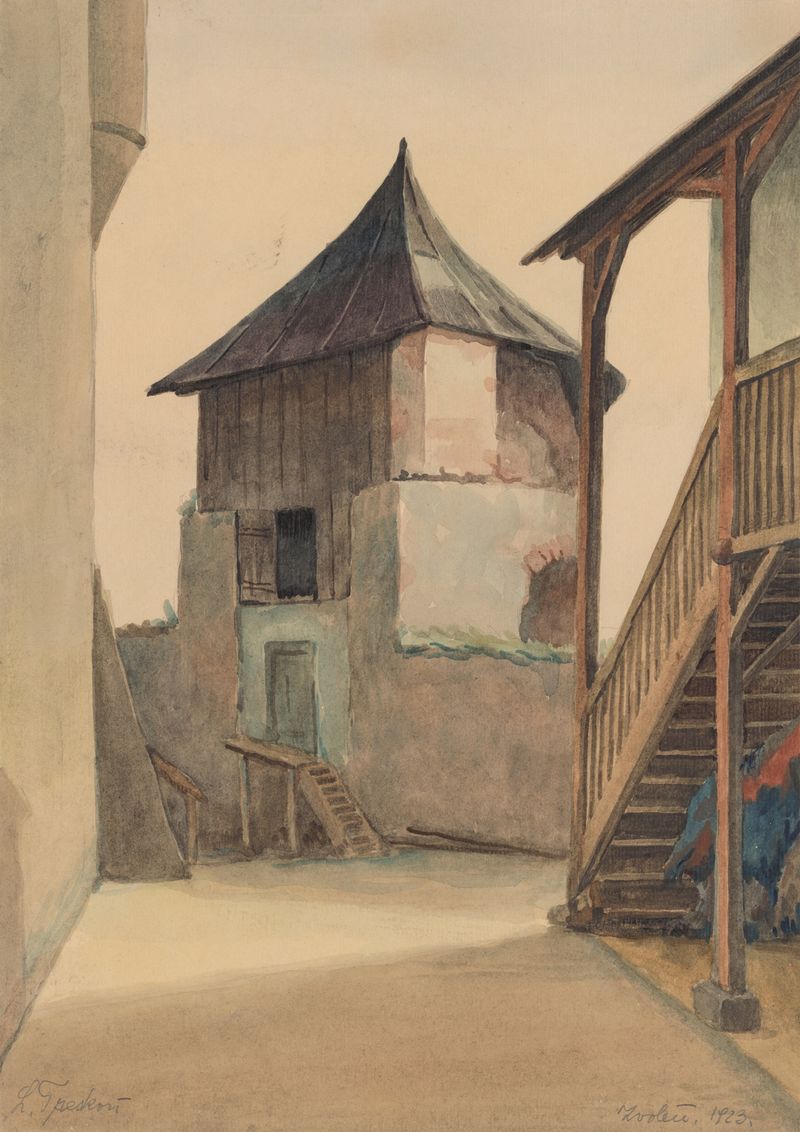
In the stillness of a courtyard, echoes of unspoken fears linger, soft yet palpable, like shadows hiding in the corners. Look to the center of the canvas, where an inviting pathway meanders through the sunlit courtyard, beckoning yet foreboding. The warm earth tones of the tiled ground contrast sharply with the deep greens of the surrounding foliage, a visual representation of safety intertwined with unease. Simple structures frame the scene, their muted colors hinting at stories untold, as light dapples through the leaves, creating a mosaic of brightness and shadow that heightens the tension. Amidst this tranquil setting, subtle details reveal deeper layers of meaning.
The stillness of the scene belies a sense of anticipation, as if the viewer is on the brink of witnessing an untold narrative. The almost oppressive silence of the courtyard stirs an undercurrent of fear, provoking questions about who may or may not inhabit this space. Treskoň expertly juxtaposes light and dark, evoking feelings of both comfort and vulnerability, capturing the duality of a peaceful moment tainted by the unknown. Created in 1923, this work emerged during a period of significant change in Central Europe, marked by post-World War I upheaval.
Ladislav Treskoň, influenced by the evolving art scene, sought to encapsulate the complexities of human emotion through seemingly simple settings. Living in the aftermath of conflict, he adeptly reflected the lingering tensions of his time, inviting viewers to confront their own fears within the ordinary.