Courtyard of the Villa Pliniana — History & Facts
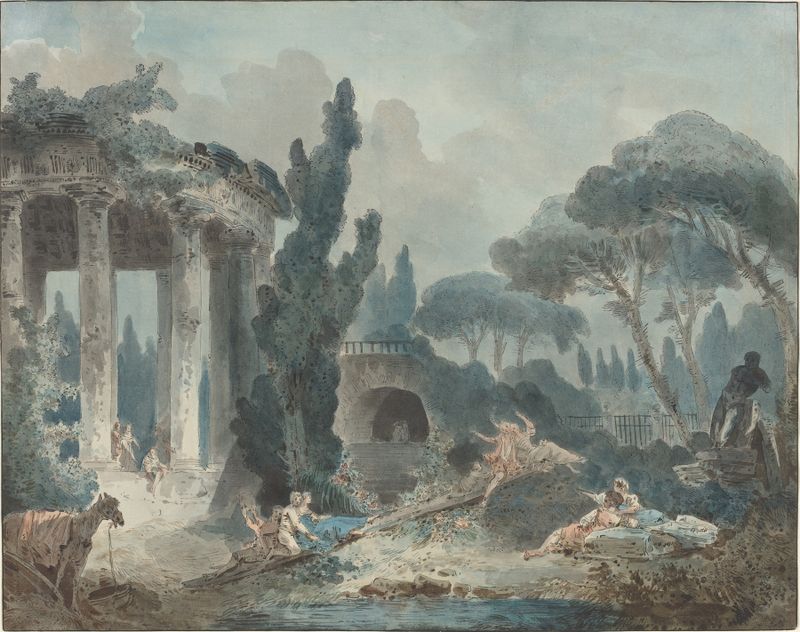
In the vibrant chaos of life, can we find the beauty in madness? Look to the center of the painting, where a serene courtyard bursts with life and intricate details. The lush, green foliage wraps around classical columns, inviting you into a world that seems both enchanted and slightly unhinged. Notice how the light dances upon the surface of the water, reflecting not just the architecture but the duality of harmony and disarray that defines this space.
Each color choice—a blend of verdant greens, soft browns, and muted stone—whispers of tranquility while hinting at an underlying tension. Deeper truths emerge upon closer inspection. The juxtaposition of the crumbling walls against the flourishing plants speaks to the fine line between decay and vitality. Hidden figures, barely perceptible amid the foliage, embody the chaotic spirit of humanity lingering within this seemingly idyllic scene.
The gentle ripples in the water could signify the fleeting nature of peace, a reminder that madness often simmers just beneath the surface, waiting to disrupt the sublime. The artist, a follower of Hubert Robert, painted this piece in an era when romanticism began to intertwine with classical ideals. While the exact date remains unknown, the late 18th century was marked by a fascination with nature and nostalgia for the past, set against a backdrop of societal upheaval in France. This work reflects a time when artists sought to blend fantasy with reality, capturing the essence of a world teetering on the brink of chaos yet striving for beauty.