Crimean Landscape — History & Facts
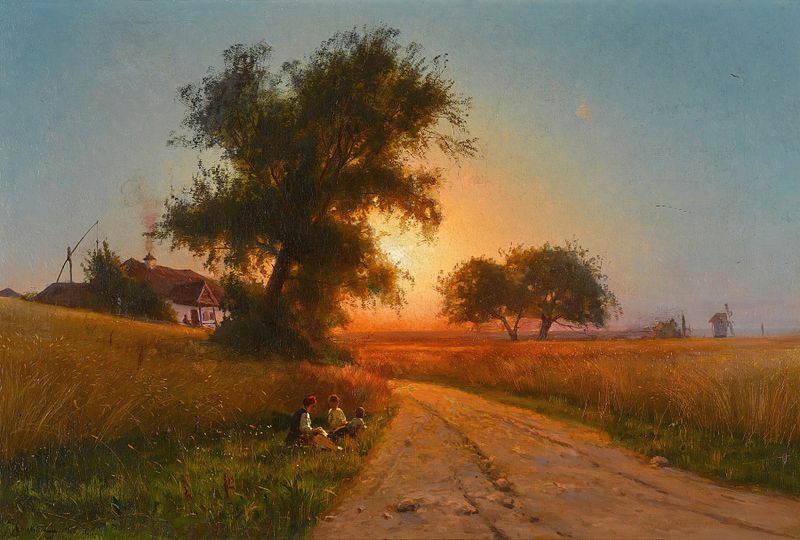
Can beauty exist without sorrow? The delicate interplay of light and shadow in an expansive landscape beckons us to ponder this question, offering a visual symphony of nature's resilience. Look to the horizon where soft, undulating hills meet an expansive sky, brushed in hues of gold and azure. Notice how the gentle strokes of the artist's brush create a textured depth in the foliage below, which flourishes in vibrant greens. The choice of color and the fluid composition draw the viewer's eye inward, suggesting a journey through layers of nature's revival, echoing whispers of life reborn amidst the vastness. Deeper meanings emerge in the contrast between the vibrant flora and the shadowed recesses in the landscape.
These areas of darkness suggest the weight of history and the passage of time, evoking a sense of loss that complements the beauty of new beginnings. The emphasis on rebirth resonates in every blade of grass, every blooming flower, as if they triumphantly defy the remnants of sorrow, symbolizing nature’s unwavering spirit. At the time this work was created, Krachkovsky was heavily influenced by the Russian landscape tradition, painting during a period of artistic awakening in the late 19th century. His commitment to realism and the emotional depth of his subjects arose amidst a world grappling with the aftermath of conflict and change.
This painting, though undated, reflects his profound connection to the land, capturing a moment where beauty and resilience coexist.