Crimean Landscape — History & Facts
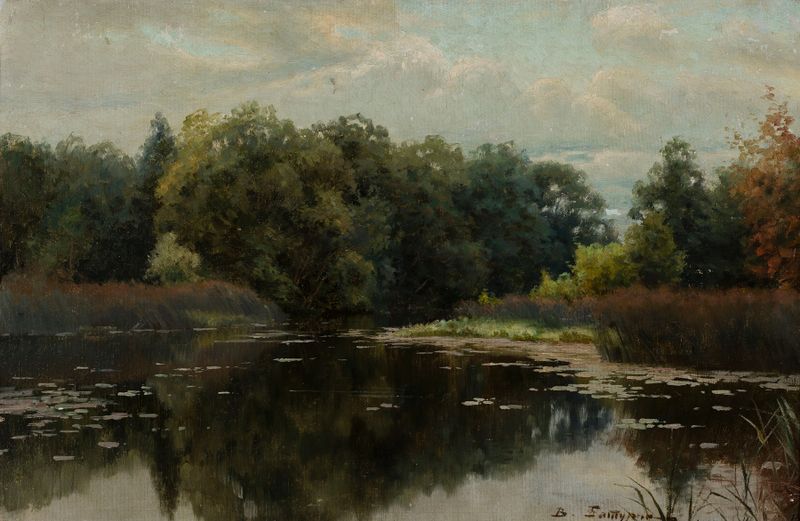
Can beauty exist without sorrow? In Crimean Landscape, the juxtap of serene vistas and shadowy undertones invites contemplation of this profound question, interweaving dreams and reality. Focus first on the gentle undulations of the hills that stretch across the canvas, their soft curves enveloped in a rich palette of greens and muted earth tones. Notice how the light dances across the landscape, illuminating patches of wildflowers that punctuate the foreground. The brushstrokes are fluid, merging seamlessly into one another, creating a rhythmic harmony that leads the eye deeper into the picture, where the horizon blurs into a misty embrace of sky and sea. Within this tranquil scene lies a tension, a whisper of melancholy that lingers beneath the surface.
The distant mountains, shrouded in mist, suggest a depth of emotion that hints at stories untold, evoking a sense of longing. The interplay between light and shadow creates a dreamlike quality, emphasizing the transient nature of beauty and the inevitability of sorrow woven into the fabric of existence. The artist created this evocative landscape during a time of introspection, possibly influenced by personal experiences and the broader societal shifts of his era. Working in Crimea at an unspecified date, Baturin was part of a period when artists sought to capture the essence of their surroundings, reflecting the tumultuous changes in both nature and humanity.
His work stands as a testament to the duality of beauty, encapsulating the enigmatic relationship between joy and loss.