Crépuscule D’hiver (Baie St. Paul) — History & Facts
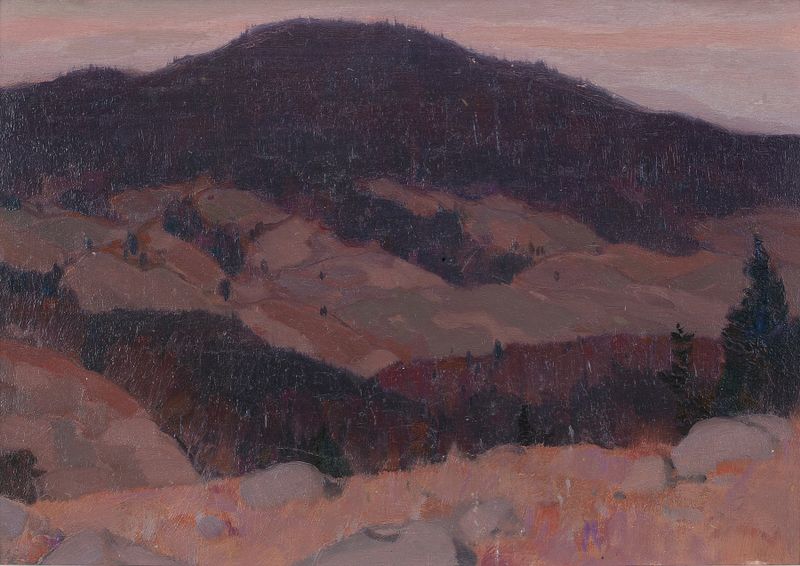
Did the painter know this moment would outlive them? In the twilight of winter, as light recedes and shadows deepen, the stillness of the scene whispers of an underlying madness—the frantic energy of nature captured in serene beauty. Look to the foreground, where a snow-laden landscape unfurls beneath a canopy of muted, icy blues and soft whites. The low horizon invites your gaze upward toward the brooding sky, where strokes of lavender and mauve mingle in a dance with the fading light. Notice how the subtle gradation of color creates a tension between day and night, reflecting the artist's mastery in expressing emotion through texture and hue.
The delicate brushwork conveys a chill in the air, evoking not just a season, but a state of being. The interplay of warmth and cold in the artwork suggests a flicker of hope amidst the harshness of winter. The few glimpses of the sky provide a contrasting vibrancy, hinting at an unseen life beyond the stark surroundings. Yet, there’s a palpable solitude that resonates—a reminder of the fragility of human existence in the face of nature's grandeur.
It speaks to a deeper narrative where madness, perhaps, lies intertwined with beauty, echoing the cycles of despair and renewal. In 1915, Gagnon created this piece while residing in Baie St. Paul, Quebec, deeply inspired by the Canadian landscape. The early 20th century was marked by shifting artistic movements, and Gagnon's work embodied the transition toward modernism, blending impressionistic techniques with a distinctly Canadian vision.
He sought to capture the essence of his surroundings, all while navigating the emotional complexities that shaped his art amid personal and collective challenges.