Csikós Working Wild Hungarian Horses — History & Facts
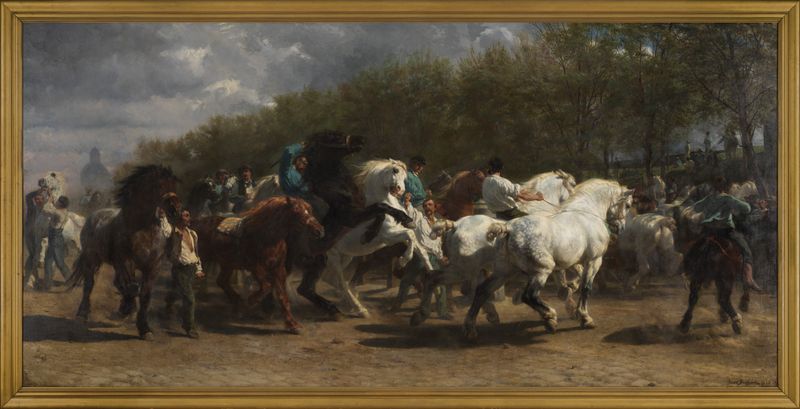
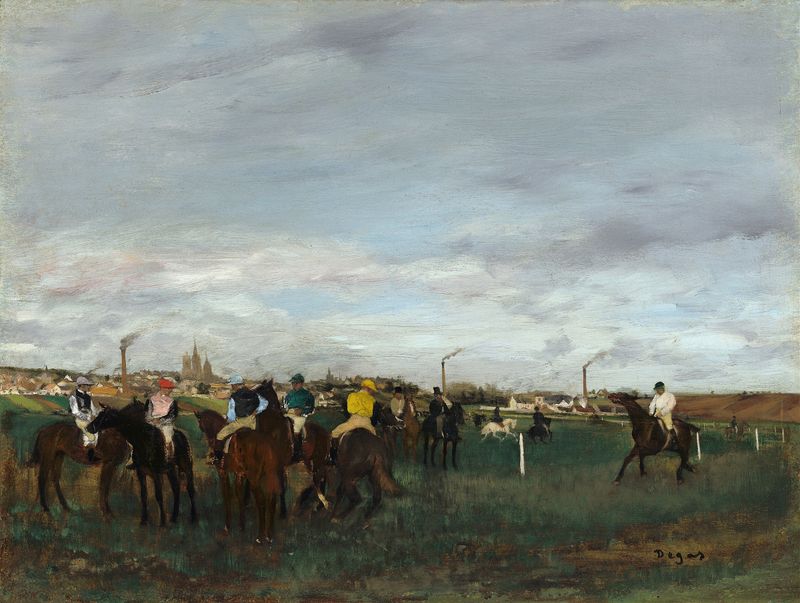
Is this a mirror — or a memory? In Csikós Working Wild Hungarian Horses, the essence of humanity's bond with nature unfolds with striking clarity, inviting contemplation on our relationship with the wild. Look carefully to the left at the horseman, his posture poised yet dynamic, a reflection of authority and reverence. The rich, earthy palette of ochres and browns envelops the scene, while vibrant greens in the background breathe life into the composition. Notice how the sunlight filters through the trees, casting dappled patterns upon the horses, emphasizing both their raw strength and gentle grace.
In this moment, the viewer is drawn to the interplay of light and shadow, a dance that reveals and obscures—much like the duality of man’s dominance and vulnerability in nature. As the viewer’s gaze shifts, subtle details emerge: the taut muscles of the horses, straining against the reins, speak to a tension between control and freedom. The way the csikós, the horseman, gazes intently at his charges reflects a deep understanding of both their power and instincts. This duality suggests not merely a labor of herding but a poignant reminder of the delicate balance between humanity's ambitions and the untamed spirit of the wild, echoing a universal theme of coexistence. In 1856, Teutwart Schmitson painted this work during a period when the Romantic movement was flourishing, emphasizing emotion and the sublime in nature.
Living in Hungary, he was surrounded by the breathtaking landscapes and rich culture that would profoundly influence his art. At this time, the representation of wild horses was not just a fascination but a commentary on the symbiotic relationship between man and nature, bringing forward themes of freedom and responsibility.