Danish Landscape — History & Facts
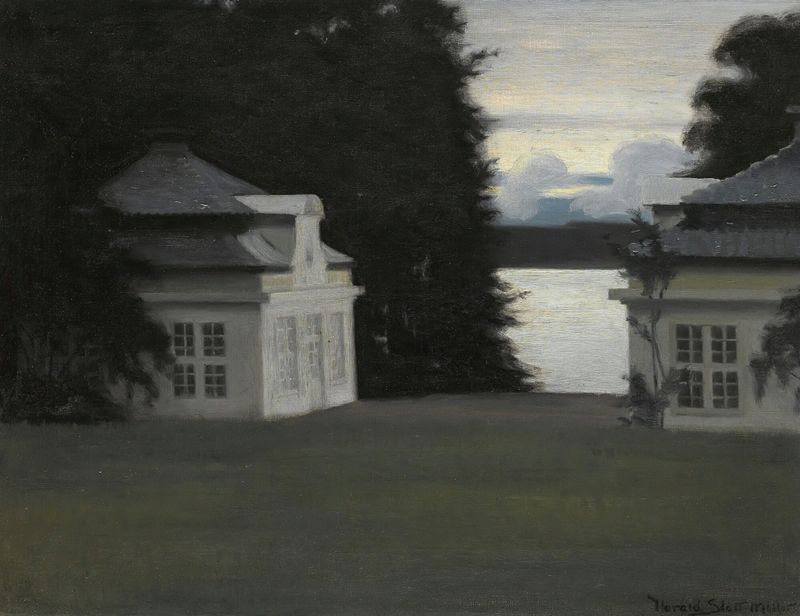
Who listens when art speaks of silence? In Danish Landscape, stillness embodies a fragile balance of beauty and madness, inviting contemplation of the unseen narratives hidden within natural scenes. Look to the left at the sweeping hills, where soft greens and muted browns intertwine in a tapestry of tranquility. The horizon stretches endlessly, light diffusing gently through a hazy sky, inviting an exploration of the serene yet haunting atmosphere. Notice how the brushstrokes blend to create a sense of depth; they softly vibrate, evoking the sensation of wind whispering through the landscape.
As the viewer, you are drawn into this tranquil expanse, but that allure is tempered by a subtle undercurrent of unease. Beneath the surface beauty lies a tension between serenity and chaos. The seemingly idyllic hills evoke a sense of peace, yet the expansive emptiness suggests an unsettling solitude, a whisper of madness lurking in the quiet. Each stroke captures not just the physical landscape but a psychological landscape—the uncharted territories of the mind where tranquility can quickly give way to disquiet.
This duality compels the viewer to question their own feelings of peace and turmoil while standing before nature’s embrace. Created between 1890 and 1891, this work emerged when Harald Slott-Møller was immersed in the Symbolist movement, which sought to convey deeper emotional truths through visual art. Living in Denmark at a time of artistic exploration, he was influenced by the interplay of light and color, which sought to challenge the boundaries of perception and reality. In this landscape, he captures the essence of an era grappling with the madness of modernity, reflecting a world in transition.