
Das Neutor mit dem Stockhaus in Wien — History & Facts
When did color learn to lie? In the stillness of Das Neutor mit dem Stockhaus in Wien, the air hangs heavy with an ineffable emptiness that transcends the mere visual. It beckons the viewer to question the essence of presence within the absence that lies before them. Look to the left where the archway stands in solemn silence, its weathered stones basking in muted light that teeters between gray and ochre. The delicate brushwork captures the nuances of time, revealing a texture that speaks of decay and history.
Notice the long shadows stretching across the cobblestone path, inviting contemplation upon the journey that was once vibrant but now seems lost to memory. The subdued palette, dominated by earthy tones, effortlessly echoes the somber ambiance of the scene, crafting a narrative steeped in nostalgia and longing. Emotional tensions pulse through the interplay of light and shadow. The symmetrical architecture looms over the viewer, suggesting security yet invoking a profound sense of isolation.
A lone figure in the distance, merely a silhouette against the structure, embodies the solitude that pervades the piece. This figure is both a participant in and an observer of the desolate space, emphasizing the juxtaposition between the bustling life of the past and the stillness of the present. In 1858, Heinrich Lang painted this piece during a period of profound transformation in Vienna. The city was emerging as a cultural hub, navigating the turbulence of social change and artistic innovation.
Lang, a local artist, found his voice amidst the shifting tides of Romanticism, capturing the essence of his surroundings with an eye for both detail and emotive resonance. This work reflects not only his personal artistic journey but also the broader context of a city caught between its storied past and an uncertain future.
More Artworks by Heinrich Lang
Browse all →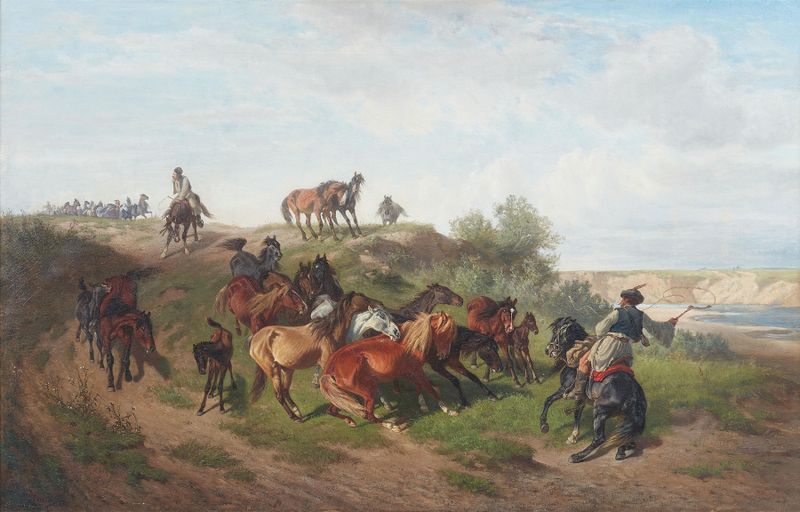
More Architecture Art
Browse all →
The statue of Liberty
Frédéric Auguste Bartholdi

View of Houses in Delft, Known as ‘The Little Street’
Johannes Vermeer

View of Houses in Delft, Known as ‘The Little Street’
Johannes Vermeer

The Cathedral in Rouen. The portal, Grey Weather
Claude Monet

The yellow house
Vincent van Gogh

The Church in Auvers-sur-Oise, View from the Chevet
Vincent van Gogh