
Das Schloss Habsburg und das Bad Schinznach — History & Facts
In the quiet spaces of transformation, we find echoes of what once was and perhaps what could still be. Focus on the sprawling landscape that unfolds before you. The castle stands resolute and commanding on the left, its ancient stones a testament to time. To the right, the gentle curves of the hills and the softly flowing river create a juxtaposition of strength and tranquility.
Notice how the muted palette of greens and browns offers a sense of nostalgia, while the delicate interplay of light and shadow breathes life into the scene, hinting at stories untold. As you delve deeper, observe the small figures dotting the landscape; they symbolize humanity’s humble place within this grand narrative. The blending of architectural strength with the organic flow of nature speaks to the duality of existence — how the permanence of human creation can coexist with the ephemeral beauty of the world. This tension captures a moment of transformation, where the solidity of history meets the mutable rhythms of life. Created in an era of shifting ideals, the artist painted this piece during a time rich with exploration and change.
While details about the specific year remain elusive, Johann Heinrich Bleuler the Younger was active in the late 18th and early 19th centuries, a period marked by Enlightenment thought and romanticism in art. This backdrop influenced his approach, favoring a reflective view of both landscape and architecture as he sought to capture the essence of transformation inherent in the world around him.
More Artworks by Johann Heinrich Bleuler the Younger
Browse all →
Rigi, Kulm
Johann Heinrich Bleuler the Younger
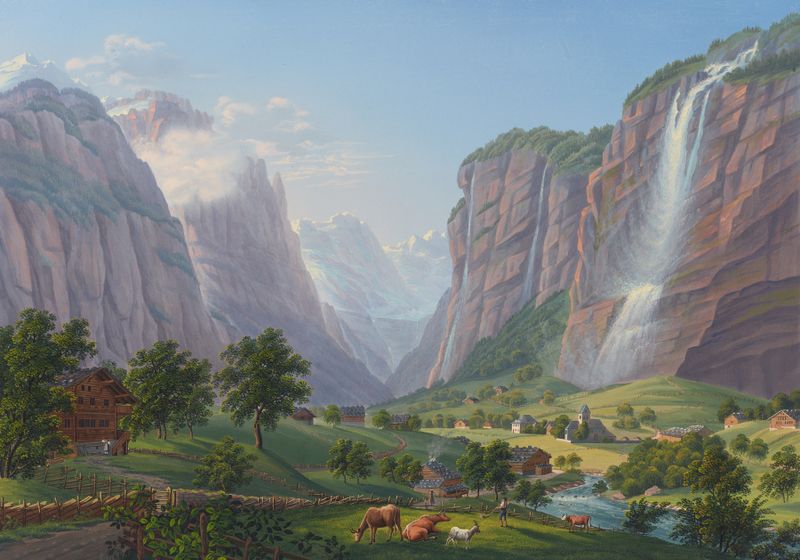
Der Staubbach im Lauterbrunnenthal
Johann Heinrich Bleuler the Younger
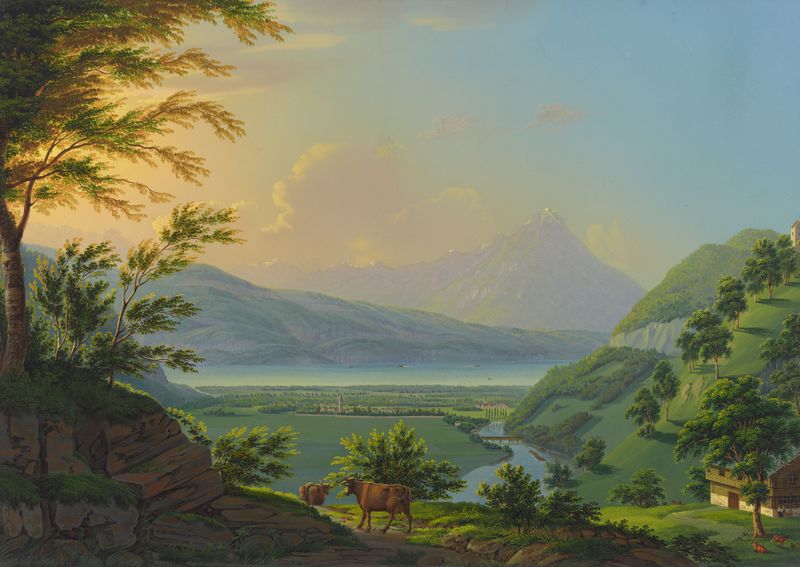
Aussicht bei Goldweil am Thunersee
Johann Heinrich Bleuler the Younger
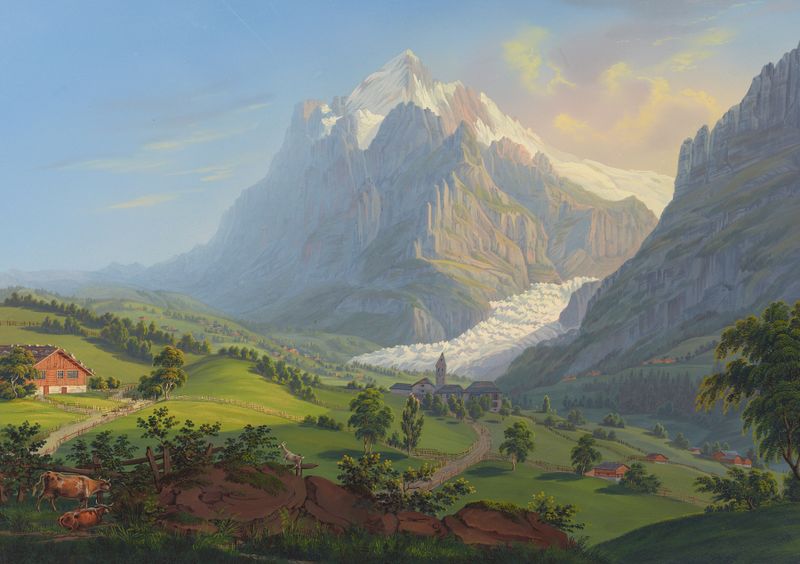
Das Wetterhorn im Grindelwald Canton Bern
Johann Heinrich Bleuler the Younger
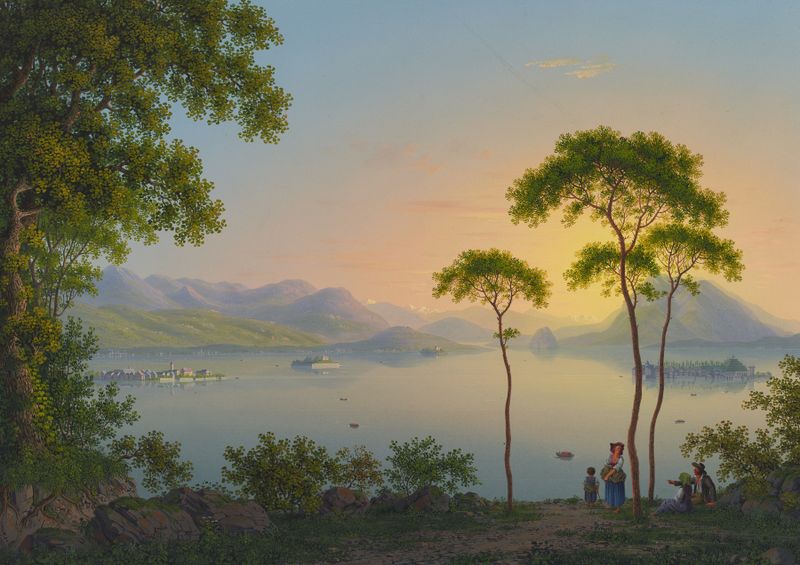
Die Boromäischen Inseln im Lago Maggiore
Johann Heinrich Bleuler the Younger
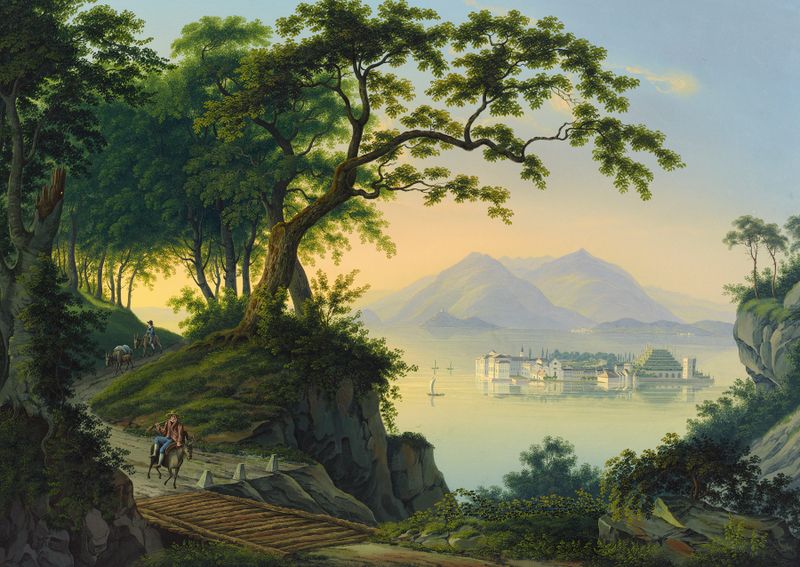
Isola Bella lago di Maggiore
Johann Heinrich Bleuler the Younger
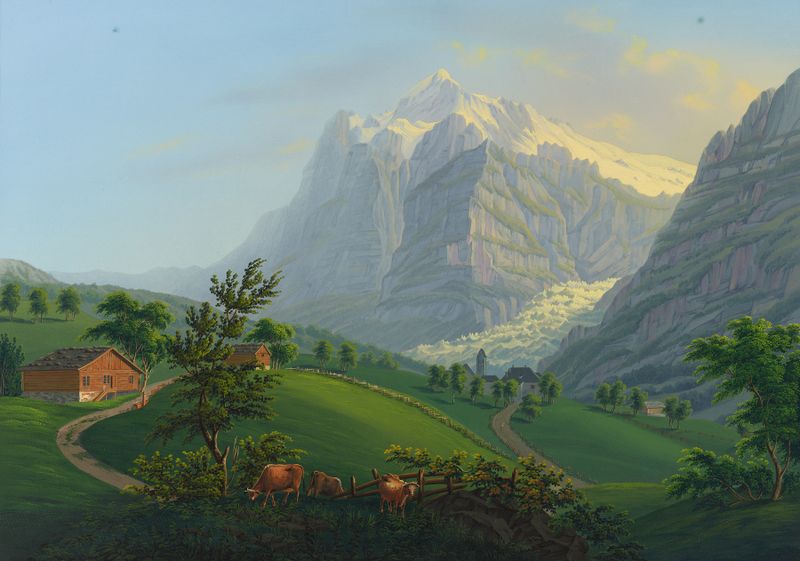
Das Wetterhorn im Grindelwald
Johann Heinrich Bleuler the Younger
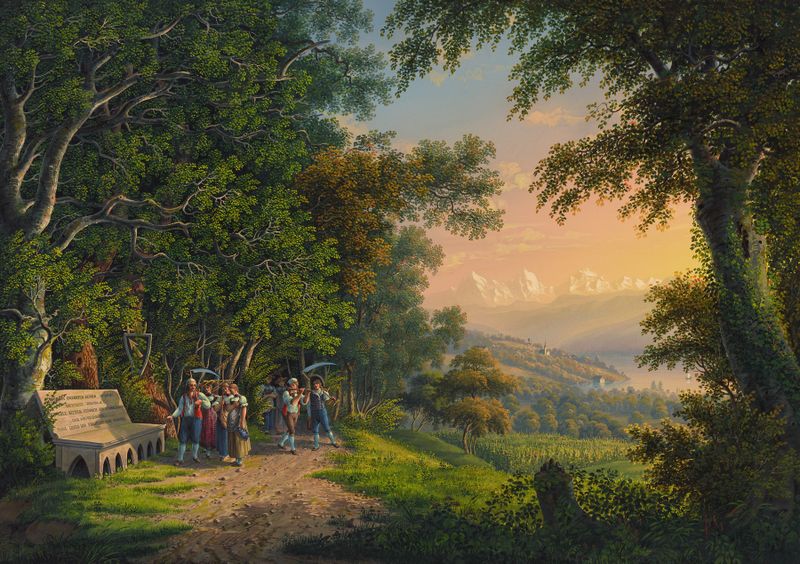
Aussicht bei Thun nach der Jungfrau
Johann Heinrich Bleuler the Younger

Grütli
Johann Heinrich Bleuler the Younger

Aufsicht vom Seelisberg über den Vierwaldstättersee
Johann Heinrich Bleuler the Younger





