
Das Ursulinenkloster in Graz — History & Facts
In the stillness of Leo Diet’s Das Ursulinenkloster in Graz, shadows dance silently across the façade, whispering untold stories of the past. Here, the interplay of light and dark captures both the grandeur and the introspection inherent in the monastery’s architecture, inviting viewers to explore the depths of its nuanced history. Look to the left, where the sun's golden rays softly illuminate the intricate stonework, casting delicate shadows that stretch across the courtyard. Notice how the artist employs a muted color palette of earthy tones and subtle blues, allowing the architecture to command attention.
The composition is thoughtfully balanced, drawing the eye towards the arched entrance, while the soft contours of the surrounding trees gently cradle the structure, enhancing its serene presence. Delve deeper into the contrasts within the piece; the sharp delineation between light and shadow mirrors the dual nature of faith and doubt, evoking a contemplative mood. Each shadow holds a secret, hinting at the lives once lived within these walls, while the warm light suggests hope and solace amidst life’s tumult. This visual dialogue between light and dark reflects the artist’s understanding of spiritual duality, creating layers of meaning that resonate with the viewer long after they leave the canvas. In 1903, Leo Diet painted this piece during a time when the Symbolist movement was blossoming, reflecting a shift in artistic expression focusing on emotion and spirituality.
Living in Graz, a city rich with cultural heritage, Diet captured this architectural gem at a time when Europe was undergoing significant change, both socially and artistically. This work stands as a testament to his dedication to exploring themes of faith and existence through the lens of his contemporary milieu.
More Artworks by Leo Diet
Browse all →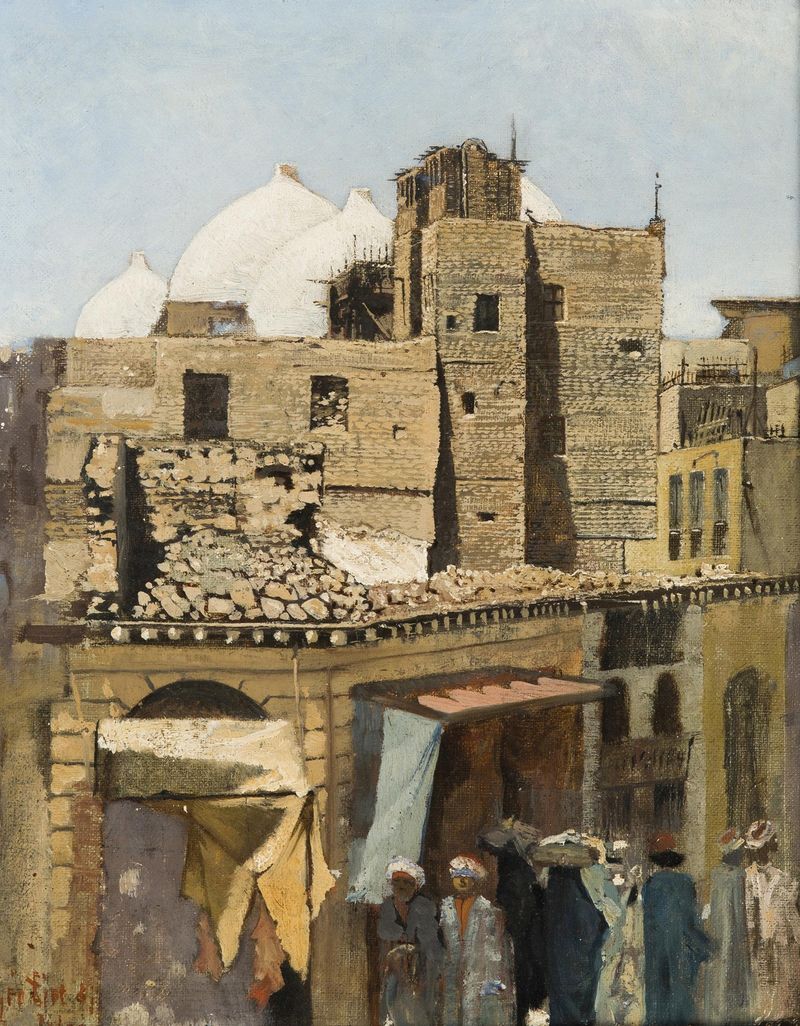
More Architecture Art
Browse all →
The statue of Liberty
Frédéric Auguste Bartholdi

View of Houses in Delft, Known as ‘The Little Street’
Johannes Vermeer

View of Houses in Delft, Known as ‘The Little Street’
Johannes Vermeer

The Cathedral in Rouen. The portal, Grey Weather
Claude Monet

The yellow house
Vincent van Gogh

The Church in Auvers-sur-Oise, View from the Chevet
Vincent van Gogh