De Amstel bij de uitspanning Lokhorst — History & Facts
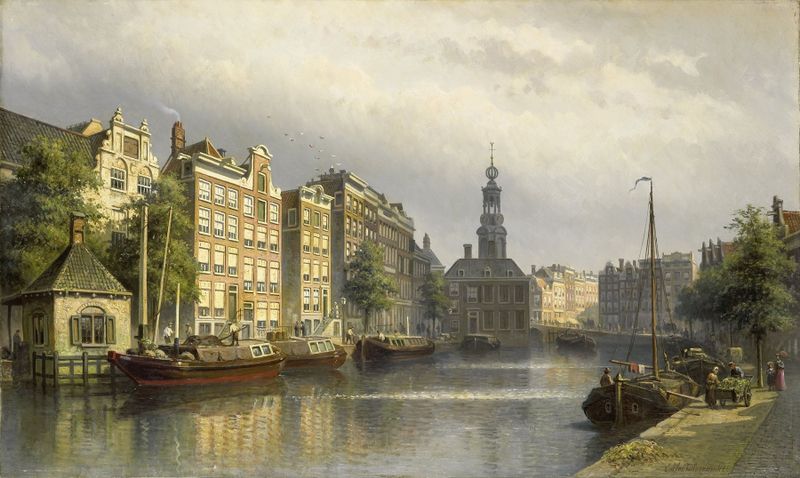
What if beauty was never meant to be finished? In De Amstel bij de uitspanning Lokhorst, the still waters of the Amstel reflect a world in transition, caught between the serene and the sublime. Look to the left, where the gentle curves of the river draw your gaze towards a quaint riverside inn shaded by leafy willows. Notice how the dappled sunlight spills onto the scene, illuminating the inn’s warm bricks and creating a contrast with the cool blues of the water. The artist employs soft brushstrokes and a palette of muted greens and browns, evoking a sense of nostalgia and tranquility as if time itself has paused to breathe in this moment. Yet, beneath the surface of this idyllic view lies a tension between nature and human intervention.
The tranquil water hints at serenity, but the presence of the inn suggests an encroachment on this untouched beauty. The artist captures a fleeting moment where life is suspended, evoking themes of transformation; the landscape is both a refuge and a site of change, illustrating humanity's delicate relationship with nature. Each stroke seems to whisper the inevitability of evolution, both personal and environmental. Eduard Alexander Hilverdink created this piece in 1885 while residing in the Netherlands, during a period marked by the rise of Realism in art.
The movement sought to depict everyday life with honesty and integrity, an ideal that resonates deeply within this artwork. As Industrialization began to reshape the Dutch landscape, Hilverdink's work serves as both a celebration and a poignant reminder of the beauty often found in moments of impermanence.