
De kathedraal van Antwerpen — History & Facts
This haunting reflection resonates deeply within the ethereal beauty of an empty cathedral, echoing with the whispers of lost souls. The interplay of light and shadow crafts a poignant narrative, where the space seems to mourn its own grandeur, revealing an emptiness that is both exquisite and profoundly unsettling. Look to the center, where the soaring arches rise, drawing the eye upwards toward the stained glass that filters the light like a fragile memory. Notice the delicate brushwork that captures the ornate details of the altar, each intricate carving imbued with an artistry that highlights the cathedral's former vibrance.
The muted color palette—soft grays and golden hues—creates a mournful atmosphere, inviting a contemplative gaze that lingers on the void left by absence. Amidst the stunning architecture lies a tension between divinity and desolation. The rich details seem to celebrate faith while simultaneously suggesting an unfulfilled yearning, as if the very walls are haunted by the prayers of those who once filled the space. This contrast between beauty and emptiness serves as a reminder of inevitable loss, challenging us to reflect on the transient nature of both artistry and devotion. In 1829, John Coney captured this masterpiece during a time of personal and artistic transformation.
Living in a period marked by Romanticism, he sought to evoke emotional depth through architectural representation, reflecting the tumult of society and his own experiences. This painting emerged as a testament to the artist's dedication to expressing the profound interplay between beauty and sorrow, crystallizing a moment where silence speaks louder than words.
More Artworks by John Coney
Browse all →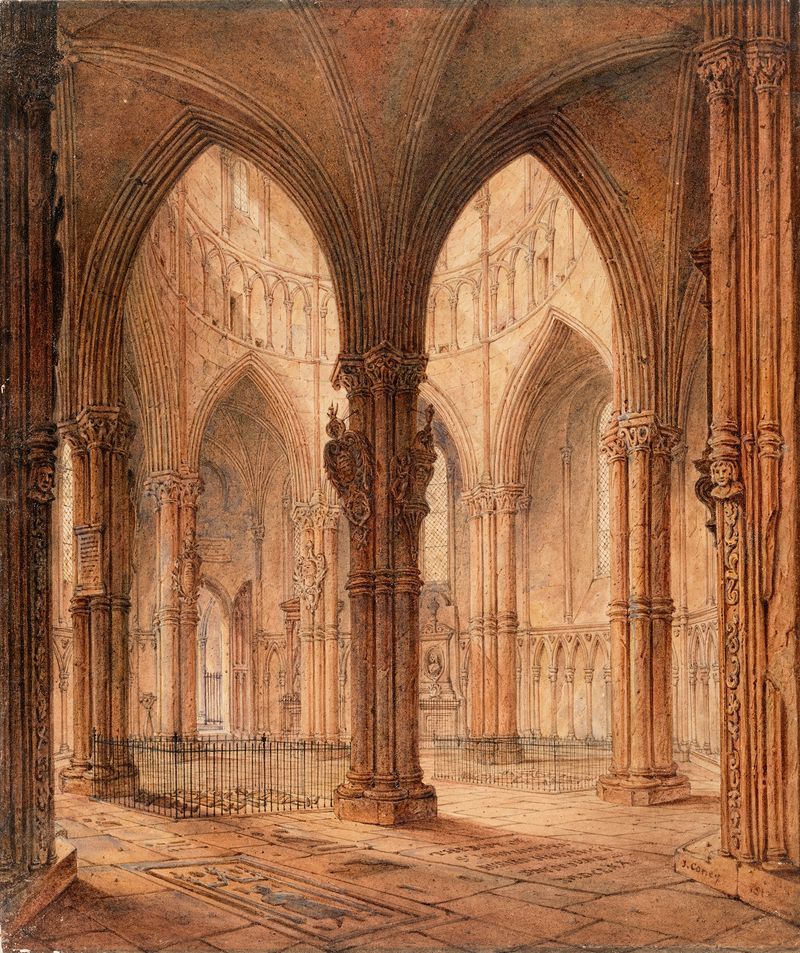
More Architecture Art
Browse all →
The statue of Liberty
Frédéric Auguste Bartholdi

View of Houses in Delft, Known as ‘The Little Street’
Johannes Vermeer

View of Houses in Delft, Known as ‘The Little Street’
Johannes Vermeer

The Cathedral in Rouen. The portal, Grey Weather
Claude Monet

The yellow house
Vincent van Gogh

The Church in Auvers-sur-Oise, View from the Chevet
Vincent van Gogh