
De kerk te Buren — History & Facts
What if silence could speak through light? In De kerk te Buren, an ethereal glow bathes the church, creating a haunting illusion that transcends mere architecture. Look to the left at the towering structure of the church, its steeple piercing the tranquil sky. The brushwork is delicate, with strokes that suggest both solidity and fragility, drawing your eye to the intricate details of the facade. The muted color palette, dominated by soft grays and warm, earthy tones, evokes a sense of serenity, while the interplay of light and shadow enhances the depth of the scene, inviting contemplation. Within this peaceful landscape, a tension unfolds.
Observe how the light subtly highlights the church’s silhouette against the backdrop, creating an almost spectral presence. The surrounding trees, depicted with muted greens, seem to whisper secrets of time, contrasting with the permanence of the stone. This duality—between the ephemeral nature of life and the enduring faith symbolized by the church—invites a deeper reflection on the passage of time and the spaces we inhabit. Jan Ekels the elder painted De kerk te Buren in 1728, during a period of burgeoning artistic exploration in the Netherlands.
At this time, he was establishing his reputation in Amsterdam as a landscape and architectural painter, blending realism with an emerging romantic sensibility. This work captures the essence of the era, where artists sought to evoke emotion and atmosphere, pushing the boundaries of illusion in their representations of reality.
More Artworks by Jan Ekels the elder
Browse all →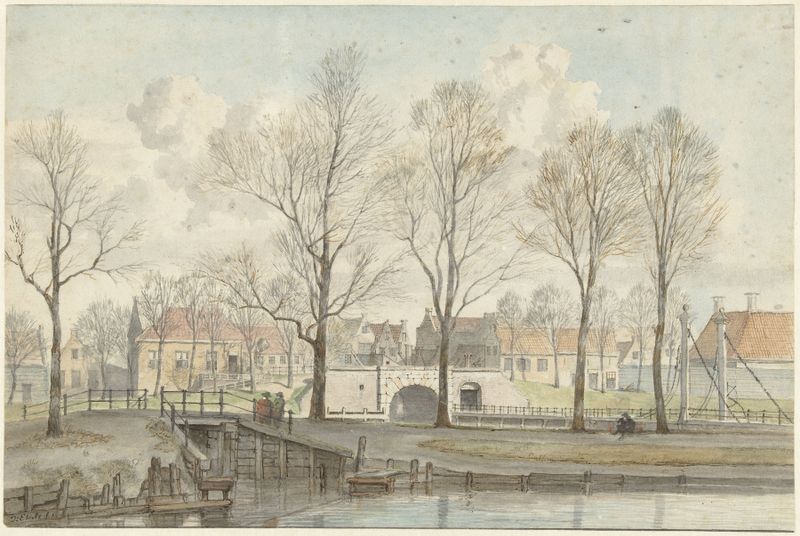
More Architecture Art
Browse all →
The statue of Liberty
Frédéric Auguste Bartholdi

View of Houses in Delft, Known as ‘The Little Street’
Johannes Vermeer

View of Houses in Delft, Known as ‘The Little Street’
Johannes Vermeer

The Cathedral in Rouen. The portal, Grey Weather
Claude Monet

The yellow house
Vincent van Gogh

The Church in Auvers-sur-Oise, View from the Chevet
Vincent van Gogh