De Leie te Astene — History & Facts
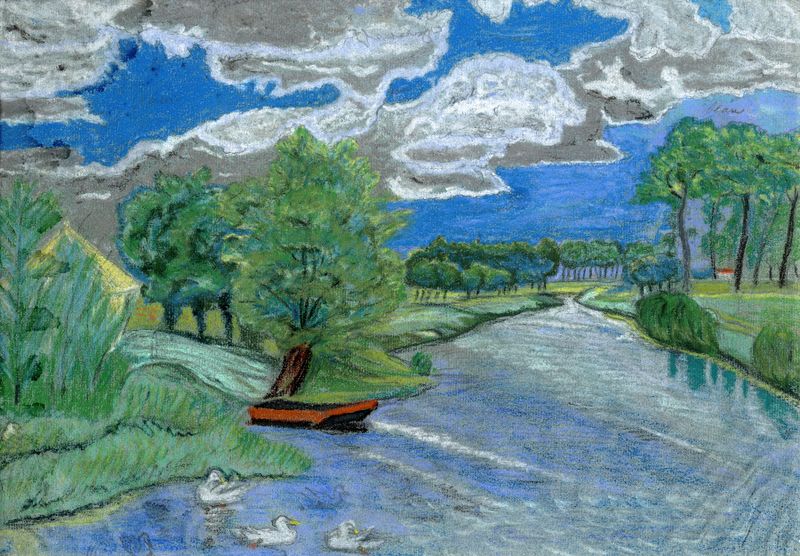
In a gentle dance between reality and imagination, we find truth whispered in every brushstroke. Look to the center of De Leie te Astene where the serene river flows, its surface mirroring the quiet secrets of the surrounding landscape. The soft blues and greens invite you in, creating a feeling of tranquility that washes over the viewer. Notice how the light filters through the trees, casting delicate shadows that ripple like memories on the water.
The meticulous detail of the foliage dances with the reflections, each stroke a testament to the artist’s skill in capturing the ephemeral interplay of light and nature. Within this tranquil scene lies a deeper current of emotion. The contrasting stillness of the river and the vibrant life of the trees suggest a paradox of serenity and movement, hinting at the fleeting nature of time. The way the water bends around the banks evokes a sense of both permanence and change, a reminder that beneath the placid surface, life continues to flow.
This duality invites introspection, urging the viewer to find their own truth in the quiet moments of life. In 1896, Pol De Mont painted De Leie te Astene during a period marked by a growing interest in Impressionism across Europe. Living in Belgium, he was part of a movement that celebrated the beauty of everyday life. At this time, artists were beginning to explore new techniques and subjects, stepping away from the rigid constraints of traditional art to embrace the emotive qualities of color and light.
De Mont's engagement with these ideals reflects not only his personal journey but also the broader evolution of art in a world increasingly attentive to the nuances of experience.