
De svaje Rør stak de flossede Dupper op i den violette Damp; og et lavt hus, hvis Yderveg var flettet av disse Rør, stak Taget op igennem Dampen — History & Facts
Did the painter know this moment would outlive them? In De svaje Rør stak de flossede Dupper op i den violette Damp, a world unfolds where shadows weave through a delicate haze, hinting at stories left untold. Focus on the lower left corner, where the soft, muted colors blend seamlessly with the violet steam that envelops the scene. Notice how the painter’s brushstrokes dance, creating a texture that mirrors the ethereal quality of the air. The shadowy forms of the pipes and the slightly dilapidated house emerge from the background; they stand as silent witnesses to a moment suspended in time, inviting the viewer to contemplate their existence. The contrast between the light and shadows speaks to fragility and resilience.
The pipes, which protrude from the low structure, symbolize industry and progress, while their ghostly outlines suggest decay and the passage of time. The violet tones evoke a sense of nostalgia, drawing attention to the beauty in impermanence. Here, Jerndorff captures a fleeting scene that resonates with the duality of life, where the mundane intertwines with the profound. In 1889, August Jerndorff painted this work during a period marked by a growing interest in atmosphere and light within the landscape genre.
He was situated in Denmark, where artistic movements were beginning to explore realism and naturalism. This painting reflects a transitional moment for the artist, infusing his environment with emotional depth and a sense of timelessness, ultimately establishing a connection between the viewer and the ephemeral nature of life.
More Artworks by August Jerndorff
Browse all →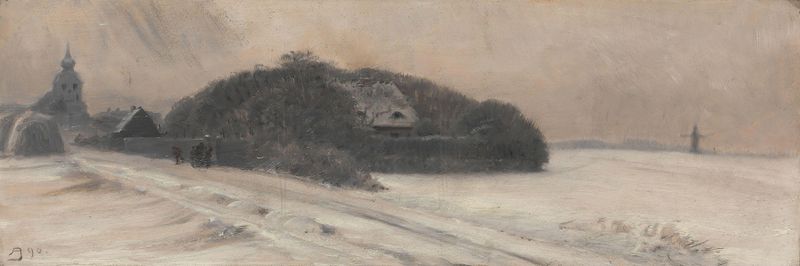
Huset laa i Byens yderste Udkant, om Sommeren ganske skjult af den tilgroede Have
August Jerndorff
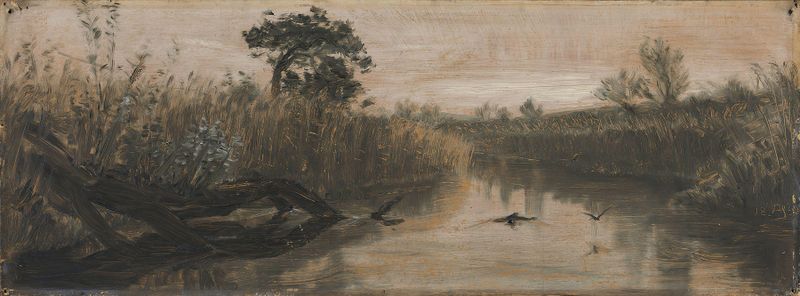
De høje Rør med de svaje, bløde Duske, og de Siv […], og de krogede Ellestammer og Buskene langs Aaen
August Jerndorff
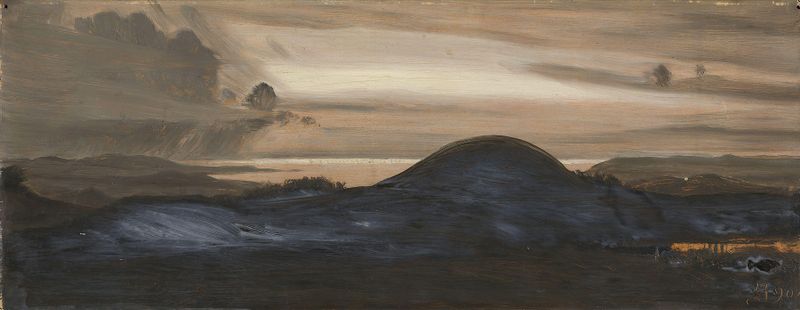
Illustrasjon til Holger Drachmanns ‘Elverkongen’ i ‘Troldtøj’, København 1889-1890
August Jerndorff





