Der alte Judenfriedhof in Lublin — History & Facts
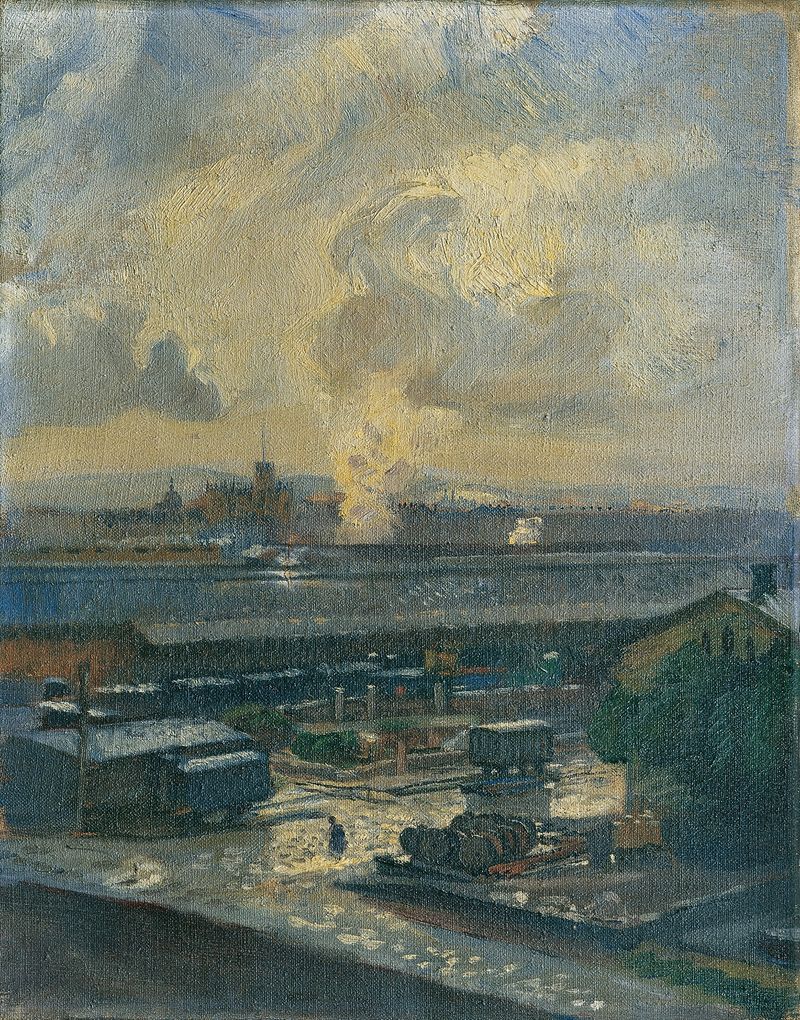
What if beauty was never meant to be finished? In the silent expanse of Der alte Judenfriedhof in Lublin, this question hangs heavily in the air, inviting contemplation of absence and memory. The painting captures an ethereal landscape where time seems to pause, suggesting a space that is both sacred and melancholic, stretching between existence and oblivion. Look to the left at the weathered gravestones, their surfaces etched with the marks of age and neglect. The muted earth tones blend seamlessly with the soft greens and grays of the surrounding foliage, creating a harmony that speaks to the passage of time.
Light filters through the trees, casting dappled shadows that dance across the ground, drawing the eye to the central path that meanders through the cemetery, inviting viewers to walk down its lonely route. The brushstrokes are deliberate yet loose, evoking a sense of both tranquility and unease. In this work, the interplay of light and shadow amplifies the emotional tension of emptiness and remembrance. Each gravestone, though worn, retains a unique character, hinting at the stories of those who once occupied this space.
The absence of figures evokes a profound solitude, forcing the viewer to confront the weight of history and the irreplaceable loss embedded within. This is not merely a depiction of a cemetery; it is a meditation on the fragility of life and the permanence of memory. Franz Hohenberger painted Der alte Judenfriedhof in Lublin during the years of 1916 to 1918, a time marked by upheaval and turmoil in Europe, especially with the ongoing World War I. Living in Lublin, Hohenberger experienced the complexities of Jewish life and culture in the region, while capturing a moment in history that would soon be overshadowed by the horrors of war.
His choice to focus on decay and emptiness signifies a deep engagement with the themes of loss and legacy amidst a world teetering on the brink of change.