
Der Erechtheion-Tempel auf der Akropolis — History & Facts
Can paint confess what words never could? In Der Erechtheion-Tempel auf der Akropolis, the landscape breathes an atmosphere of unease, as the ruins stand as a silent testimony to fears long buried beneath the sands of time. The ancient temple, steeped in history, evokes a lingering anxiety—the fragility of cultural heritage amid the relentless march of progress. Focus first on the delicate columns, rising like slender fingers toward the vast, indifferent sky. Notice how the artist captures the intricate details of the stonework, the weathered surfaces that tell tales of centuries past.
The muted palette mirrors the somber reverence of the scene, with shadows pooling around the base of the structure, hinting at the weight of history and the passage of time. This careful composition invites the viewer into a contemplative dialogue with the ruins, emphasizing their enduring yet vulnerable presence. Hidden beneath the grandeur of the temple lies a tapestry of contrasting emotions. The interplay of light and shadow reflects both majesty and decay, suggesting that beauty coexists with fear—the fear of loss, of erasure, of the unknown futures that await.
Læssøe's meticulous brushwork reveals the tension between permanence and impermanence, urging us to consider the fragility of human achievement against the backdrop of nature’s relentless power. Thorald Læssøe painted this work in 1850 during a time when the exploration of ancient ruins was booming, and Romanticism flourished in Europe. Working in Athens, he was immersed in the cultural revival that followed the Greek War of Independence, which sought to reclaim and celebrate Hellenic identity. The artist's focus on this iconic temple reflects both a personal curiosity and a broader artistic movement striving to bridge the past with the present.
More Artworks by Thorald Læssøe
Browse all →
View of Marmorpladsen withe Ruins of the Uncompleted Frederik’s Church in Copenhagen
Thorald Læssøe

Ships on a Fiord
Thorald Læssøe

View of the Terme di Caracalla in Rome
Thorald Læssøe
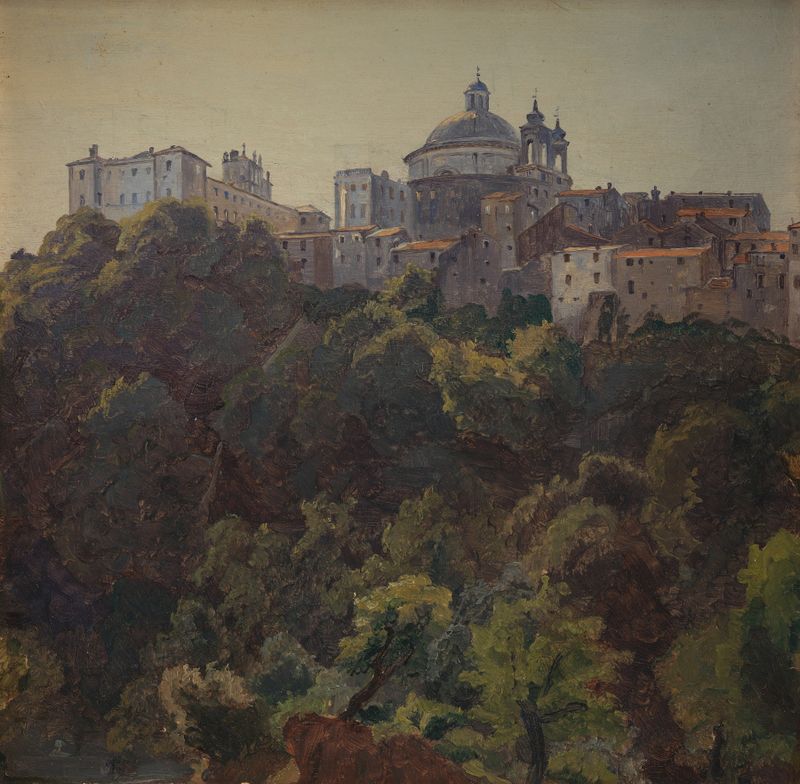
View towards Ariccia and the Palazzo Chigi and S. Maria dell’Assunzione, Italy
Thorald Læssøe
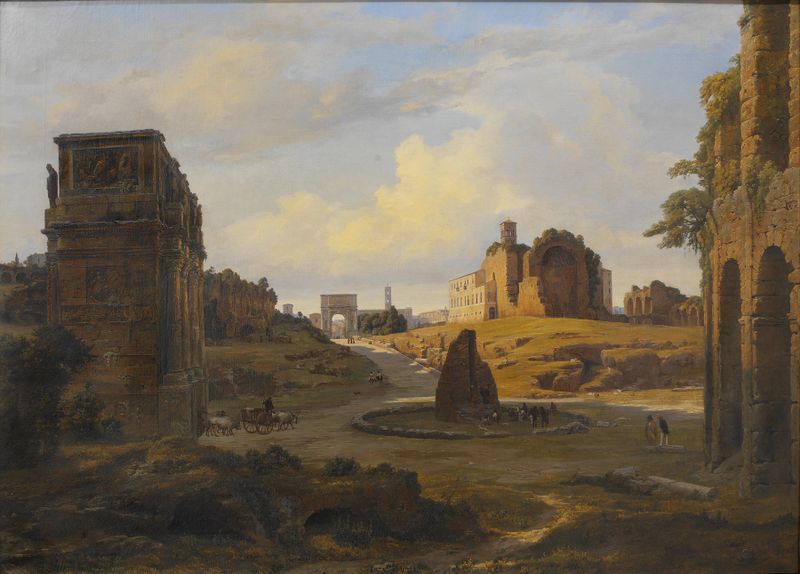
View towards Forum Romanum from the Colosseum
Thorald Læssøe
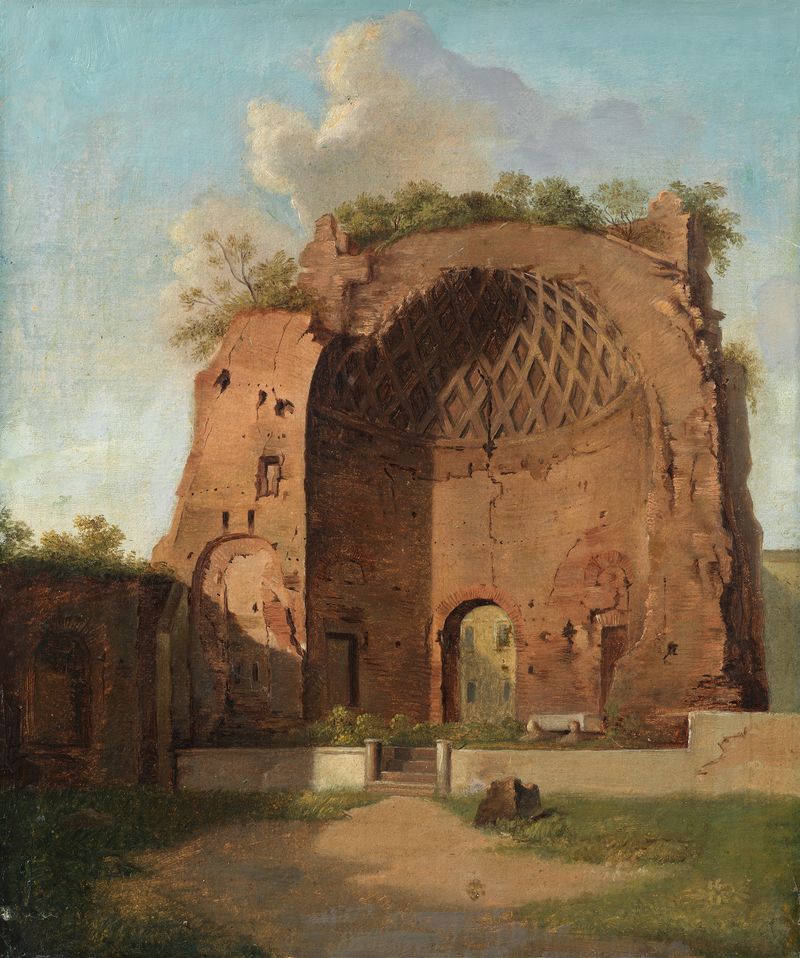
The Temple of Venus and Roma, The Roman Forum, Rome
Thorald Læssøe
More Architecture Art
Browse all →
The statue of Liberty
Frédéric Auguste Bartholdi

View of Houses in Delft, Known as ‘The Little Street’
Johannes Vermeer

View of Houses in Delft, Known as ‘The Little Street’
Johannes Vermeer

The Cathedral in Rouen. The portal, Grey Weather
Claude Monet

The yellow house
Vincent van Gogh

The Church in Auvers-sur-Oise, View from the Chevet
Vincent van Gogh