Der Franziskanerplatz in Wien — History & Facts
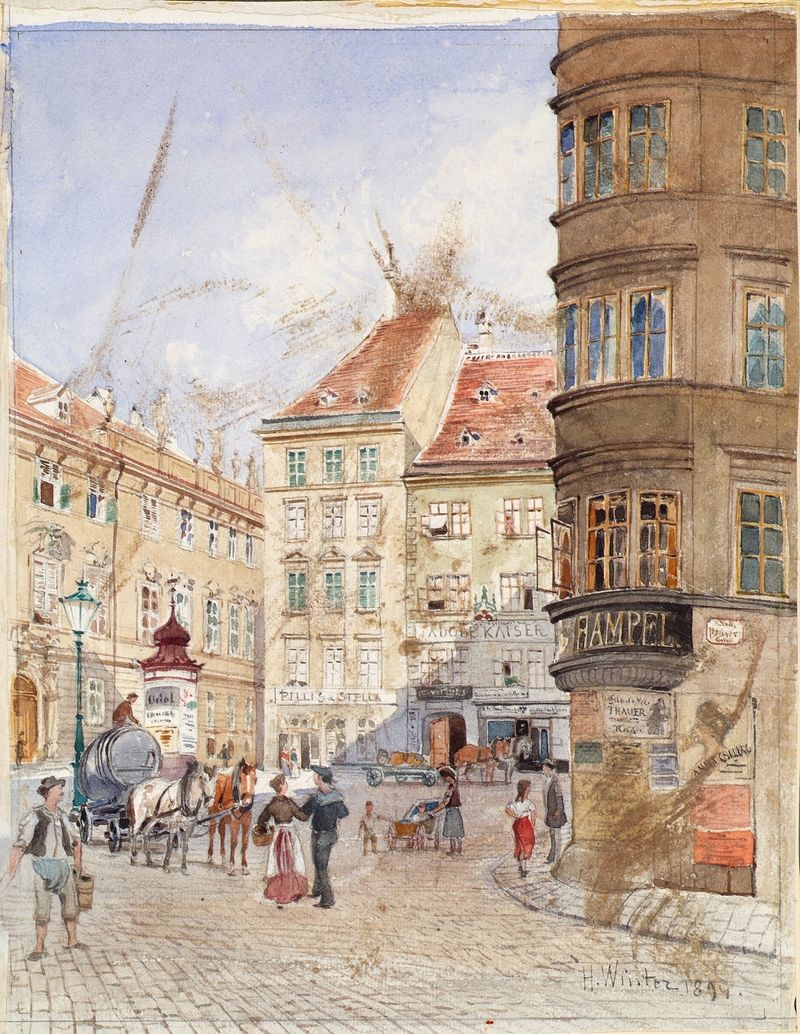
The echoes of absence resonate deeply within this portrayal, inviting contemplation of the spaces we inhabit and the voids we leave behind. Focus on the center of the canvas, where a cobblestone square emerges, seemingly untouched by time. The meticulous detail captures each stone’s jagged surface, while the surrounding architecture looms quietly, their facades bathed in muted earth tones. Notice how the soft sunlight spills across the scene, casting elongated shadows that create a sense of depth and intrigue, yet also amplify the feeling of solitude. The interplay of light and shadow speaks volumes about loneliness and introspection.
Look closely at the empty benches lining the square; they seem to mourn the absence of human presence, each splintered plank a testament to the stories that could have played out here. The distant figures at the edges suggest life beyond the frame, yet they remain ghostly and undefined, emphasizing the emotional distance inherent in the stillness of the square. In 1899, the artist was immersed in the burgeoning art movements of Vienna, where innovation met tradition. It was a time of cultural flourish amidst societal changes, and Der Franziskanerplatz in Wien reflects a moment of introspection against this backdrop.
Winter sought to capture the essence of urban life, yet in doing so, he illuminated the quiet spaces that often go unnoticed, revealing deeper truths about existence and the human experience.