Der Murgsee in der Schweiz, Glaris — History & Facts
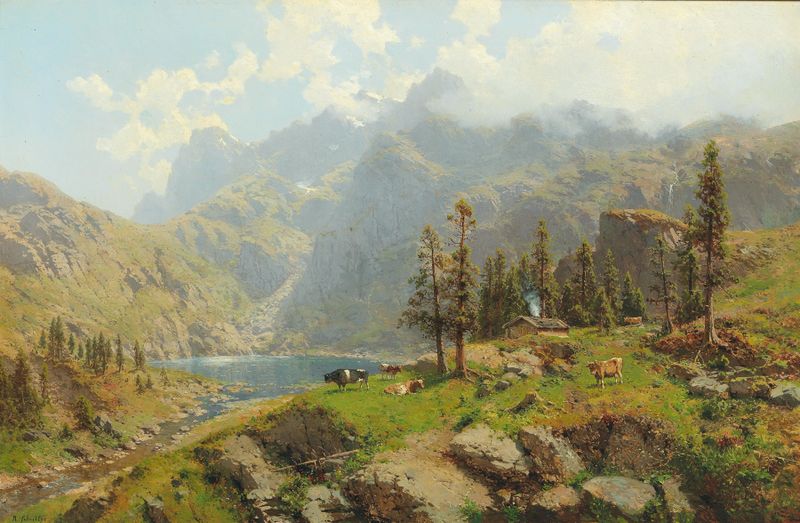
What if beauty was never meant to be finished? The tranquil surface of a mountain lake, with its glassy reflections, conceals the tumultuous emotions that simmer beneath it—a duality of serenity and violence. Look to the center of the canvas, where the lake mirrors the towering peaks surrounding it. The artist’s brushstrokes create a delicate interplay of texture, suggesting a sparkling surface that invites the viewer in. Notice how shades of blue and green blend harmoniously with the stark whites of the snow-capped mountains, yet the underlying palette hints at an unsettling tension, as darker hues lurk at the edges, reminiscent of impending storms. Within this picturesque scene, contrasts lie beneath the surface.
The idyllic beauty hides a violent past—the tumult of nature as well as the human urge to conquer it. The juxtaposition of calm water and jagged mountains reflects a struggle between tranquility and turmoil, as if the landscape itself bears witness to both creation and destruction. Each brushstroke seems to echo a heartbeat, resonating with a bittersweet reminder of fragility in the face of overwhelming power. The artist created this work during a period when the landscape was a prominent theme in art, yet Robert Schultze diverged from mere romanticism to capture the raw and visceral essence of nature.
Painting in Switzerland, likely during the late 19th century, he was influenced by the emerging Impressionist movement that emphasized light and mood while grappling with the legacy of Romanticism and its emotional depth. Schultze’s work reflects not only his personal vision but also the broader artistic dialogue of his time.