
Der Taufgang — History & Facts
Could beauty survive in a century of chaos? In Der Taufgang, Hermann Schnee tackles this question with a composition that vibrates with both serenity and the undercurrents of tension. Look to the left, where a tranquil waterway reflects the soft hues of dawn. The gentle gradient of blues and pinks melds into one another, creating a serene atmosphere that invites the viewer to linger. Notice how the figures, poised on the riverbank, are rendered with delicate brushstrokes that suggest both movement and stillness.
The play of light across their forms imbues them with a sense of purpose, yet their expressions linger between anticipation and doubt, hinting at a deeper narrative unfolding. The subtle contrasts in this work are striking; the peace of the setting is juxtaposed with an implied urgency in the figures' posture. While the landscape embodies the serene beauty of nature, the figures convey a tension reflective of their emotional state—caught between ritual and apprehension. Small details, such as the ripples in the water and the foliage framing the scene, evoke the passage of time and the inevitability of change, suggesting that beauty may be fleeting but persistent. Created during a tumultuous period that saw the rise of modernism in the early 20th century, Schnee's work embodies the push and pull of tradition and transformation.
The exact date remains undetermined, yet it reflects the artist's engagement with themes of creation amid societal upheaval and the search for meaning in a world increasingly fractured by conflict. This painting stands as a testament to the enduring power of beauty, even in the face of chaos.
More Artworks by Hermann Schnee
Browse all →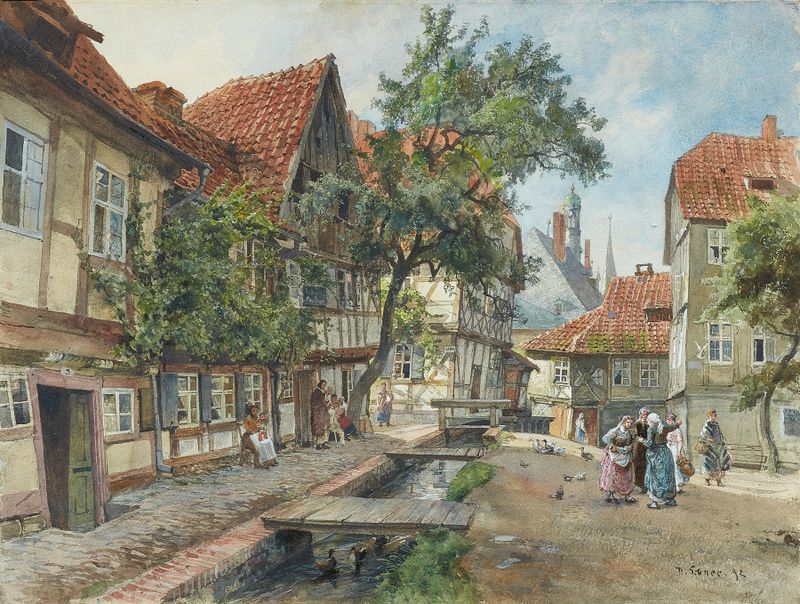
More Religious Art
Browse all →
The Return of the Prodigal Son
Rembrandt van Rijn

The Garden of Earthly Delights
El Bosco

Count Orgaz’ funeral
El Greco

The Hundred Guilder Print: the central piece with Christ preaching, the plate arched
Rembrandt van Rijn

The Descent from the Cross
Rogier van der Weyden

The return of the prodigal son
Rembrandt van Rijn