Hinter dem Rathaus in Wernigerode — History & Facts
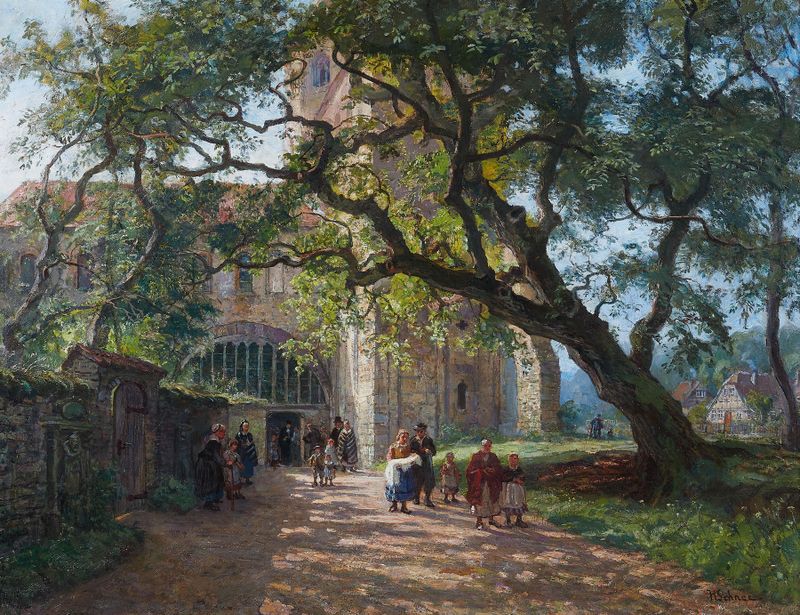
In a world where transformation lurks behind every shadow, the stillness of a scene can speak volumes about the passage of time. Focus on the gentle interplay of light and shadow in Hinter dem Rathaus in Wernigerode. Look closely at the way soft rays illuminate the rustic buildings, their wooden façades rich with texture, as though they are whispering secrets of the past. The artist’s attention to detail invites you to explore the cobblestone path, leading the eye deeper into the composition.
The serene colors—earthy browns mingled with the muted hues of the sky—evoke a tranquil atmosphere, immersing the viewer in a moment of stillness and reflection. Within this quiet landscape lies a tension between the permanence of the architecture and the fleeting nature of daily life. Notice the absence of figures, suggesting a world paused, inviting contemplation on the lives once bustling through this space. The juxtaposition of the solid, enduring structures with the ephemeral quality of light hints at the inevitability of change, where even the most steadfast locales are subject to the relentless march of time. Hermann Schnee painted this piece in 1892, a period marked by significant artistic exploration in Germany.
Living in Wernigerode, he captured the charm of his hometown against the backdrop of a rapidly modernizing world. This work reflects the broader movement in the arts, where artists began to embrace realism and the beauty of everyday life, capturing not just what was seen, but the profound emotions woven into those quiet moments of existence.