
Dernières lueurs du jour (Morgat) — History & Facts
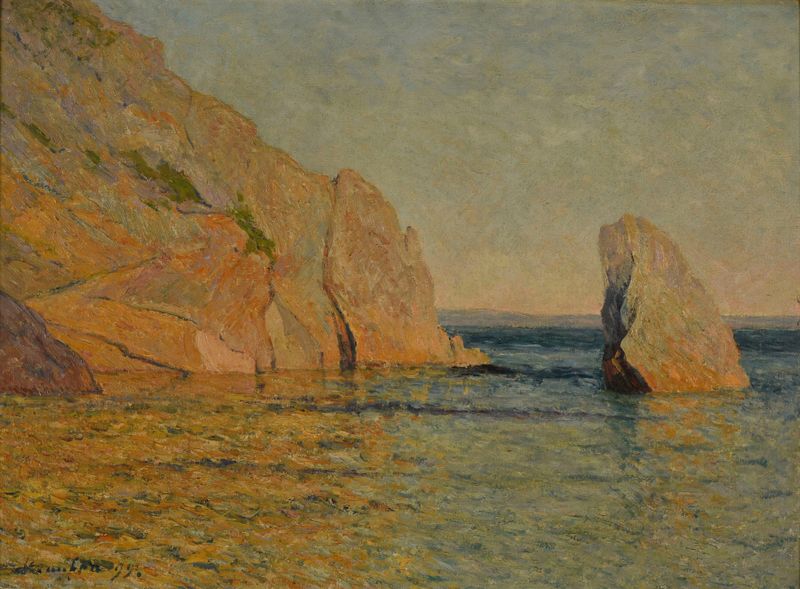
Who listens when art speaks of silence? In the quietude of the twilight hour, a delicate balance between light and shadow illuminates a world poised on the edge of day and night. Focus on the horizon where the last vestiges of sunlight spill across the water, casting a gentle glow upon the rippling surface. Notice the subtle blending of warm oranges and cool blues as they merge seamlessly, evoking a sense of calm and serenity. The composition leads the eye toward the distant cliffs, silhouetted against the fading light, while a solitary figure stands, almost ghostlike, contemplating the fleeting beauty of the moment. Yet, within this harmony lies a tension—the fragility of the day's end.
The figure appears both present and detached, suggesting a profound sense of introspection, perhaps a longing for what is ephemeral. The soft brushstrokes create an atmosphere of longing, while the interplay of light and shadow conveys the inevitable passage of time, urging the viewer to ponder the transient nature of existence. In 1899, Maxime Maufra painted this evocative landscape during a period marked by artistic experimentation and shifting perceptions of reality. Working in Brittany, he was part of the Pont-Aven School, embracing color and light as essential elements of expression.
This painting emerged from a time when artists began to explore new ways of representation, influenced by Impressionism yet seeking to imbue their works with deeper emotional resonance.
More Artworks by Maxime Maufra
Browse all →
Le pont de l’Isle-Adam ou le Vieux pont
Maxime Maufra

Féérie nocturne: Exposition Universelle Paris 1900
Maxime Maufra
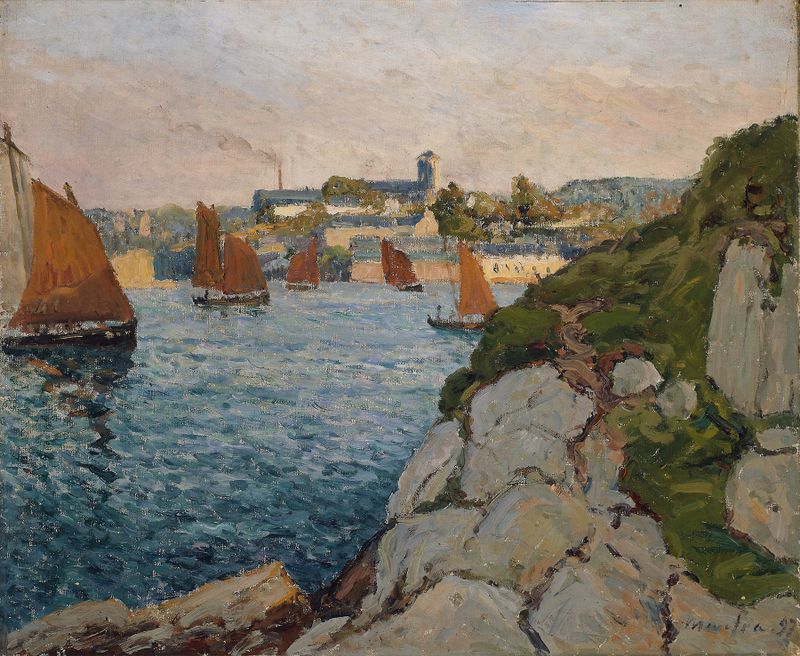
Douarnenez in Sunshine
Maxime Maufra
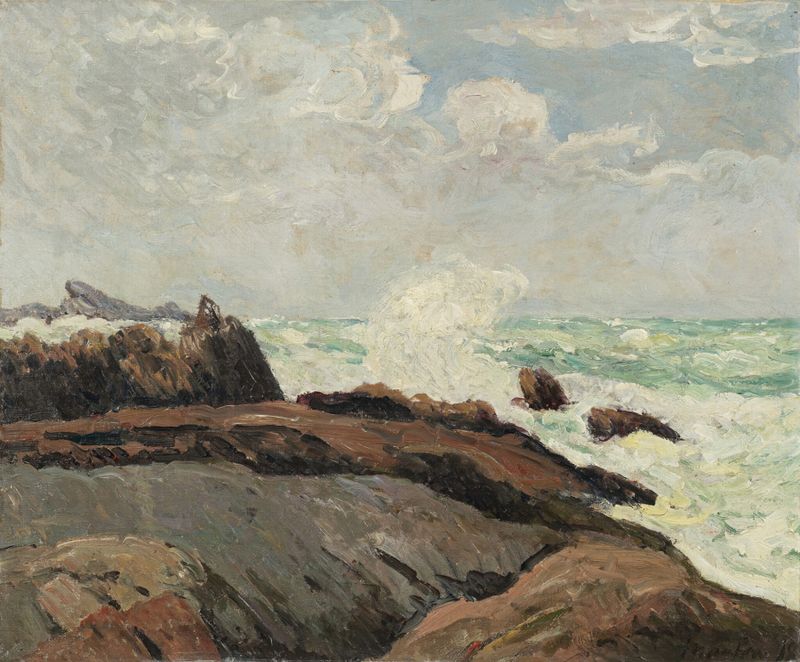
Mer forte à Saint-Guénolé Penmarc’h
Maxime Maufra

Marée Basse À La Plage De Port-Blanc, Presqu’île De Quiberon
Maxime Maufra
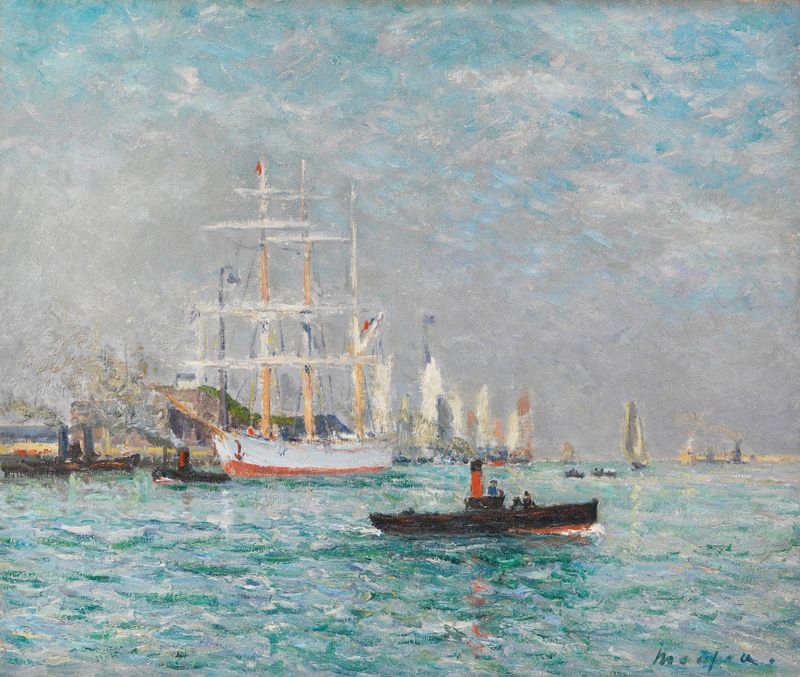
Entré d’un trois-mats, Le Havre
Maxime Maufra

Les rochers du château de Dinan, Morgat, Novembre 1903
Maxime Maufra
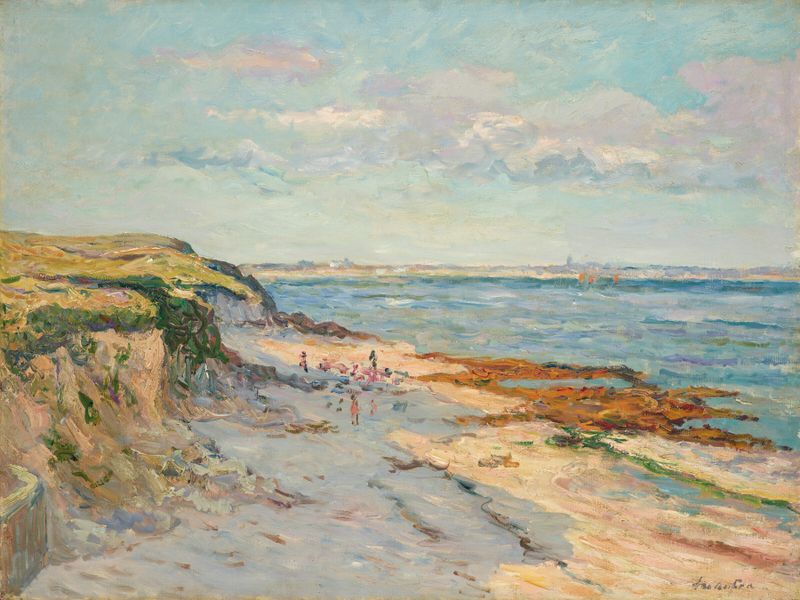
La Plage de Kerhostin, Morbihan
Maxime Maufra
Rochers au soleil couchant
Maxime Maufra
Soir D’orage À Kerhostin
Maxime Maufra





